
Erfan Fard is a Middle East political analyst born in Iran. His latest book, Tehran’s Dictator, examines the theocratic era of Ali Khamenei (1989-2026). Twitter/X: @EQFard
In Iran today, grief is not an exception. It is the rule.
Across more than 125 cities, it is difficult to find a family that has not lost someone. In many homes, the dead are not one but two. Sometimes a brother and a sister. Sometimes a father and a son. The houses are quiet now. The streets remember what the houses cannot say.
There are images and videos that have slipped past the blackout. They show the cold rooms where the dead are kept. The rooms are full. Bodies lie stacked upon bodies. There is no order. There is no dignity. There is no official number. There is only weight-human weight-pressed against concrete floors. The dead do not speak, but they tell the truth by their number.
Some of these bodies belonged to the wounded. Their hands still carry the marks of medical tape. Their veins show where serum once ran. They were alive long enough to be treated. Then someone decided they should not be alive at all. A single bullet was placed in the center of the forehead. This is not crowd control. This is execution.
The scale of the killing during the nineteenth nationwide uprising of the Iranian people against religious tyranny is beyond imagination. It does not fit into the careful language of statements or the cautious columns of reports. It belongs to the language of war. And yet, no war was declared. The people protested. The state answered with death.
If anyone asks why this silent massacre happened, the answer is simple and terrible. It happened because people protested against the Islamic caliphate of Shiite clerics and the criminal theocracy that rules Iran. It happened because a blood-soaked dictator kills to survive, and the structure of his power is built on killing. This is not excess. It is design.
This is a battle between a freedom-seeking nation and a ruling system that is repressive, plundering, and occupying its own country. The wild mullahs will not allow the people to win because they suffer from the illusion of permanence. They believe time belongs to them. But between the Iranian nation and the Islamic regime there is now a sea of blood. Brutality is no longer hidden. Barbarism is no longer deniable.
Many families were first told that their children were wounded and taken to hospitals. They rushed there with hope, because hope is stubborn. In the hospital corridors, they learned the truth. The security forces had already taken their children away. Hours later, they were told to search for a body-among piles of corpses, in different morgues. Some families were even told to pay the cost of the bullet used to kill their child. This is cruelty that does not seek silence. It seeks humiliation.
In the long history of humanity, such stories should be unimaginable. And yet they are real. The terrorist-loving, criminal Nazi Ayatollahs began their rule with killing. They imposed their ideology with killing. And to preserve power, they have now crushed nationwide uprisings nineteen times with murder and mass slaughter. This is not a deviation from their past. It is the continuation of it.
These days, the condition of the Iranian nation is grave. It is anxious, wounded, and trapped. Ninety million people are held hostage by one man-Ali Khamenei-an eighty-six-year-old dictator who feeds on death like a vulture, who clings to power like an aging hyena. He has turned an entire nation into his prison.
On Monday, January 12, according to the most cautious and realistic estimate reported by Iran International Television, the death toll reached tens of thousands of people across 125 cities. Those who have fled Iran, terrified and in hiding, say the real number is far higher. Numbers collapse under fear. Bodies do not.
The propaganda machine of the ruling clerics works relentlessly. It controls several so-called human rights centers and watchdog groups abroad. These organizations repeat a single, pre-approved number-one determined in Tehran. They are hollow institutions. Some are separatist. Many are unscientific. They lack local reporters. They have no real data. They trade truth for access and survival. Their function is not to reveal reality but to manage it.
During the first week of protests alone-beginning December 28, 2025-more than ten thousand people were arrested. Forced confessions were broadcast on state television. The regime tried, desperately and deceptively, to present itself as victorious in the arena of public opinion. But neither the regime nor Tehran’s dictator has legitimacy. They have no popularity. They have no acceptance. They have already lost to the people.
History does not forget this. It records sacrifice. It honors courage. It remembers who stood unarmed in the streets and who fired into crowds. The pages of history are written slowly, but they are written honestly in the end.
The Iranian people are not asking for pity. They are demanding recognition of reality. A state that kills its wounded, that stacks bodies in morgues, that charges families for bullets, is not a government. It is a crime scene. And crime scenes demand accountability.
The dead are many.
They are not counted.
But they are not forgotten.
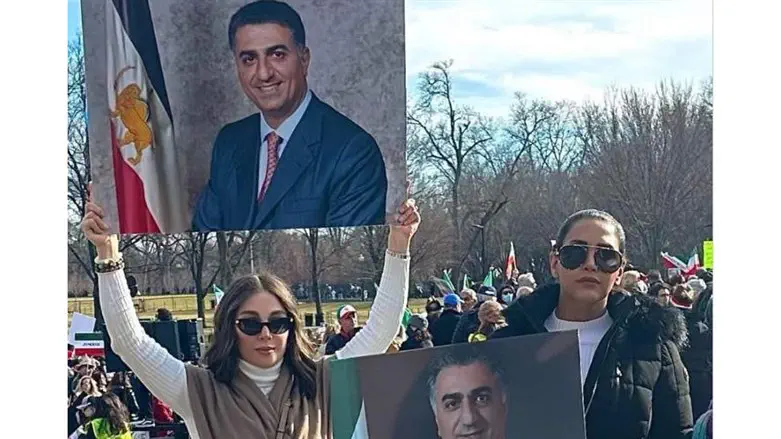
Yet the mourning nation of Iran, even as it buries its dead and grieves for its stolen children, still clings to a single remaining window of hope. That hope is The Crown Prince, HRH Reza Pahlavi. History does not offer such moments to ancient nations every day. When it does, it demands courage and clarity in return.
Iran’s past is filled with notorious rulers who ruled by blood and terror and believed themselves eternal. They killed, they crushed, they slaughtered-and in the end, they failed. Agha Mohammad Khan Qajar. The Safavids. The Qajars. Ali Khamenei. And now, after forty-seven years, the Shiite clerical caliphate itself. The savagery and barbarism of this religious octopus, clinging to power through murder, is no longer a matter of accusation. It is documented. It is filmed. It stands exposed before the judgment of the world.
Perhaps the world will finally wake from its long sleep and recognize what kind of criminals and thugs hold power in Iran today. Perhaps it will understand that a nation of ninety million people is being held hostage by wild clerics who rule through fear, bullets, and graves.
Exactly forty-seven years ago, on a day like this, the late Shah of Iran left Iran with tears on his face and a handful of Iranian soil in his pocket. He abandoned everything. And in his heart, he knew what kind of blood-drinking monster the Iranian people would soon be forced to endure.
The Khomeinist government-the Shiite clerical Islamic caliphate-was formed with the presence of Yasser Arafat. Supporters of Mossadegh stood in line to kiss both him and Khomeini. And thus, Islamic terrorism rose to power in Iran.
The cost of that moment is now written in bodies. And history, once again, is watching.
Now it must also be said, regrettably, that this “religious octopus dictatorship," this Shiite Islamic caliphate, appears-once again-to be lucky. Suddenly, Saudi Arabia, several other Arab states, and even Israel intervene, urging restraint so that Trump does not strike the mullahs’ military facilities in Tehran.
At the same time, Trump appears satisfied, even relieved, that for now everything is “calm," that executions have temporarily stopped, and that the regime of wild clerics has assured the White House it will no longer kill.
Is this not grotesque?
Is the Iranian nation meant to wait for foreign intervention, or to believe in its own will? The answer is clear. A nation that has paid in blood does not wait for salvation from outsiders. It asks for nothing from foreigners. If it must it will send this corrupt, occupying, plundering, and repressive regime to the garbage bin of history by its own hands. Forty-seven years, in the life of a seven-thousand-year-old nation, is not a long time.