
Rabbi Michael Freund, a former Deputy Communications Director under Prime Minister Benjamin Netanyahu, is the Founder and Chairman of Shavei Israel (www.shavei.org), which assists lost tribes and hidden Jewish communities to return to the Jewish people.
This week’s Haftorah for Parshat Va’era, drawn from Ezekiel 28:25-29:21, presents a timeless lesson on power, pride and Providence. It begins with a promise of return - the ingathering of Israel from exile - and then pivots to a dramatic condemnation of Pharaoh, Egypt’s arrogant ruler in Ezekiel’s time, who boasts that “the river is mine, and I have made it" (29:3).
The Egyptian dictator’s delusion that might makes right, that a ruler’s strength somehow originates within himself rather than from G-d or the moral order that sustains human societies, is hubris personified.
Indeed, Pharaoh’s downfall is depicted not simply as a punishment for cruelty but as the inevitable collapse of a system built on self-veneration and exploitation. G-d declares that Egypt will be laid waste, that its pride will be humbled and that its reliance on its own strength - symbolized by the life-giving Nile - will be exposed as little more than a shattered reed.
Yet even in this judgment, a measure of restoration is promised: Egypt will not disappear completely, but it will be remade in a diminished form, its pretensions broken. The message is stark: when societies elevate human power above moral accountability, their fall becomes unavoidable.
What can this ancient prophecy dating back over 2500 years tell us about our own world? The answer is: quite a bit.
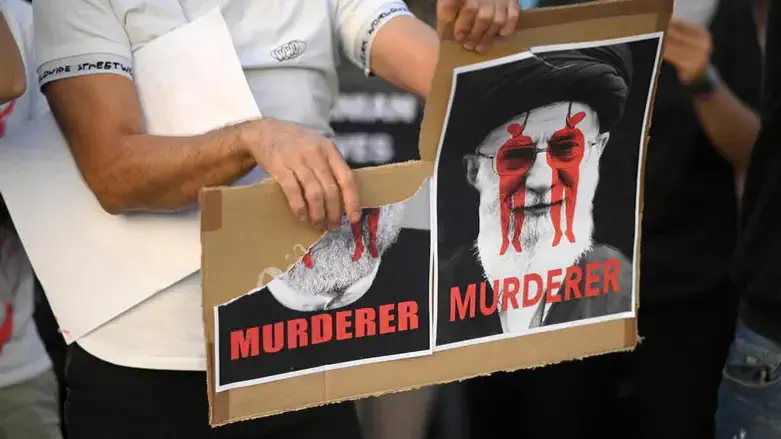
Over the past several weeks, Iran has been rocked by mass demonstrations that have spread across all 31 of the country’s provinces, drawing millions into the streets. What began as protests over crippling economic hardship - soaring inflation, severe shortages of basic goods, and the collapse of the Iranian rial - has evolved into a broad movement demanding systemic political change and the end of clerical rule itself.
The Iranian government has responded with brutal force: nationwide internet blackouts, violent crackdowns, thousands of arrests, and hundreds of reported deaths as security forces open fire on demonstrators.
The echoes of Ezekiel’s imagery of pride before a fall resonate loudly. The Iranian regime, like Pharaoh, has long encouraged the belief that it is untouchable. Yet the protests reveal a profound rupture between the state and the society it purports to lead. Where once fear kept dissent confined, now even the prospect of death at the hands of the regime cannot deter the Iranian masses from demanding accountability and dignity.
The Haftorah reminds us that empires collapse not only from external defeat but from internal erosion - a people turned inward, no longer confident in the moral legitimacy of its rulers. Pharaoh’s Nile, like Iran’s Revolutionary Guards and clerical establishment, was believed to be all-powerful, the source of security and order. But when crises, be they economic, social or spiritual, fracture a society’s confidence in its leaders, that myth of permanence quickly teeters on the edge of collapse. Ezekiel’s prophecy holds up a mirror to any polity that mistakes coercion for consent and ideology for justice.
Yet the Haftorah’s ultimate concern is not merely the fall of tyrants but the emergence of a new moral order. Just as G-d promises to “cause a horn to blossom for the House of Israel" (29:21) even as judgment falls on Egypt, so too might the present upheavals point toward a future where ordinary Iranians reclaim agency over their destiny.
For Jews reading the Haftorah this year, the striking parallel between Ezekiel’s condemnation of Egyptian arrogance and the current moment in Iran invites reflection. Empires rise and fall; they are sustained only as long as they maintain legitimacy in the eyes of the people. When they fail to align power with justice, when they forget that leadership is stewardship not domination, their downfall becomes not only possible but inescapable.
In Parshat Va’era and its Haftorah, we learn that G-d does not judge history in abstraction; He challenges every era’s conceit, calling rulers and nations to account. And while we cannot predict the precise outcome in Tehran, the moral arc of history - as Ezekiel and other prophets foretold - bends toward accountability.
In our time, as in Ezekiel’s, the collapse of false idols and the rise of new possibilities remind us that human dignity is the ultimate measure of political authority and that no regime, no matter how entrenched, is immune from Divine judgment.