
Hashem commands Moshe and Aharon to go to Pharaoh and demand the release of Bnei Yisrael. One would expect the Torah to move straight into the confrontation with the king of Egypt. Instead, the Torah suddenly pauses and says:
Eileh rashei beit avotam - These are the heads of their fathers’ houses. (Shemot 6:14)
The Torah then lists the families of Reuven, Shimon, and Levi, ending with the lineage of Moshe and Aharon.
Why does the Torah interrupt the story of redemption at this moment? Why interrupt the drama of geulah with genealogy?
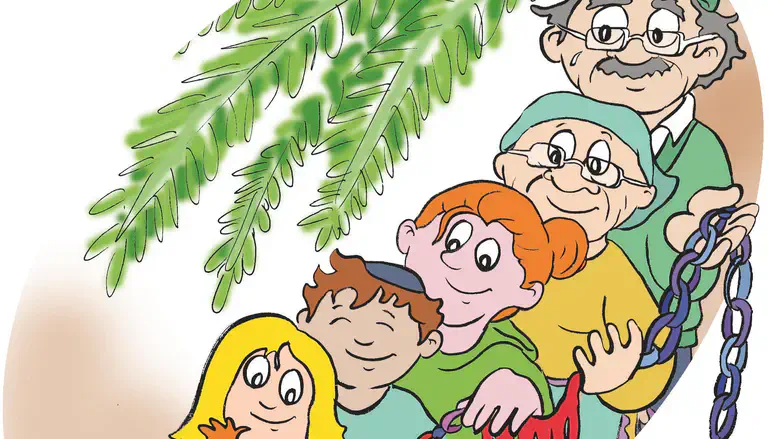
The Torah is teaching a timeless lesson: geulah does not begin in Pharaoh’s palace. It begins in a Jewish home. Klal Yisrael is built through families, through educatiion, chinuch, through the quiet and faithful work of parents, grandparents, Zaydies and Bubbies.
Moshe Rabbeinu may have been born with a rare and extraordinary neshama. But even the greatest soul in history needed a home of faith, courage, and devotion for that greatness to be revealed and shaped.
That is why the Torah first tells us:
A man from the house of Levi went and took a daughter of Levi. (Shemot 2:1)
Before there is Moshe the leader, there is a Jewish home.
Before there is redemption, there is chinuch.
Moshe did not grow alone.
Amram and Yocheved defied Pharaoh’s decree and rebuilt their home when others gave up. Miriam reminded her father that giving up was worse than Pharaoh’s decree. Miriam stood guard by the river. Shifra and Puah risked their lives to save Jewish babies. Even Bat Pharaoh showed mercy.
Moshe grew surrounded by courage, faith, sacrifice, and love.
That is why his family is recorded in detail. The Torah is teaching that even the greatest souls need a Torah home in order to become who they are meant to be.
Even before Hashem appointed him, Moshe’s character was already shining:
He saw an Egyptian striking a Jew.
He saw two Jews fighting.
He saved Yitro’s daughters.
Leadership is not a position. It is who you are.
And who you are is formed in the home.
Shlomo HaMelech teaches:
Train a child according to his way, and when he grows old he will not depart from it.
(Mishlei 22:6)
Hashem arranged for Moshe to grow up in two worlds - the Beit Levi of Torah and sacrifice, and the palace of Pharaoh with power and culture. But his identity was sealed in his mother’s arms, in his sister’s courage, and in the faith of his people.
That is why the Torah interrupts the story of redemption to tell us about Moshe’s family. Because Klal Yisrael does not survive through miracles alone. It survives through homes.
Reb Zusha of Anipoli said:
“When I come before Hashem after 120 years, I will not be asked, ‘Why were you not Moshe Rabbeinu?’
"I will be asked, ‘Zusha, why were you not Zusha? Why did you not become all that you could become?’"
A person is measured by the tools Hashem gave him - and many of those tools come from the home.
Moshe became Moshe because he had a home full of emunah, responsibility, and sacrifice. His parents built him. His sister protected him. His family believed in him before the world knew his name.
The Jewish song My Zaidy by Megama captures this truth:
“Zaidy made us laugh, Zaidy made us sing,
And Zaidy made a kiddush Friday night…
And Zaidy used to teach me wrong from right.
And now my children sit in front of me…
Who will be the Zaidy of my children, if not me?
Who will be their Zaidys, if not we?"
And we know that Bubby too shapes faith, love, and character in the home - through warmth, teaching, example, and devotion.
The chain now rests with us.
Chazal say:
Whoever teaches another’s child Torah is as if he gave birth to him.
Shaping a Jewish soul is creation itself. That is the responsibility of Zaydies and Bubbies, parents and teachers.
The Torah interrupts the story of redemption to remind us:
Klal Yisrael is built in living rooms, at Shabbos tables, in bedtime Shema, in stories told on a grandparent’s knee.
Our task is to build homes of Jewishness - full of Torah, customs, love, harmony, sacrifice, and emunah b’Hashem. Homes where children learn what it means to live for something bigger than themselves. Homes where grandchildren will want to sit with us and carry our way of life forward.
Moshe Rabbeinu became Moshe because he had a home that nurtured him, a family that believed in him, and teachers who guided him. We too have that same opportunity.
And therefore, at all times, at every moment, on all occasions, we must think to ourselves:
How can I be a successful Zayda to my children?
How can I be a Bubby my grandchildren will remember?
How can I build a home they will want to inherit?
Because Klal Yisrael survives when we are Zaydies and Bubbies to our children -
in homes full of Jewishness, customs, love, harmony, sacrifice, and emunah b’Hashem.
Rav Eliezer Simcha Weisz is a member of the Israeli Chief Rabbinate Council