
Being Good to Receive Good
Bnei Yisrael were about to enter Eretz Yisrael. They had high hopes, but naturally, they had great fears as well. Would they be successful at conquering, settling, and developing the land? Would they merit Hashem’s blessings and goodness?
Moshe Rabbeinu spends Sefer Devarim answering these questions. Their success would hinge on following Hashem’s mitzvot and directives. Most of Sefer Devarim links success to mitzvah observance; Perek Vav adds another dimension: In addition to mitzvah fulfillment, Moshe instructs the Jewish people to “do what is straight and good in Hashem’s eyes." If they do, he explains, things will be “good" for them. If they follow what is good in Hashem’s eyes, He will bless them with “good" and help them settle the “good land" of Eretz Yisrael.
Versus Our Own Sense
Moshe’s directive is not as simple as it may seem. Each of us has our own sense of good and evil. Prioritizing Hashem’s requires humility and submission.
This tension began with the first man on his first day of existence. The snake advised eating from the Tree of Knowledge of Good and Bad, so man would not need to rely on Hashem’s evaluations.
In actuality, eating from the tree was a sin because man is meant to rely on Hashem’s determination about good and evil. After Adam ate from the tree, Hashem made him and all human beings mortal by exiling man from the Tree of Life in Gan Eden. When man saw himself as his own god, able to determine good versus evil without Hashem, Hashem used his mortality to correct his error. Man is not G-d; he is mortal.
Nadav and Avihu missed this point. On the day of the Mishkan’s inauguration, they offered their own fire and incense before Hashem. This seemed right to them, but Hashem saw it differently and consumed them with His fire. We should follow what Hashem sees as right, not what we see as right.
Avraham Avinu, in contrast, understood this and served Hashem properly. The beginning of Parshat Vayera tells how Avraham performed and taught his children and household to practice tzedakah and mishpat because they are “Hashem’s way." His commitment to tzedakah and mishpat stemmed from Hashem’s Will. Because Avraham's commitment to these values was rooted in Hashem’s Will, he was able to shift to an extremely different kind of action when Hashem commanded him to sacrifice Yitzchak. After Avraham showed his willingness to sacrifice Yitzchak, Hashem described him as a “yarei Elokim" because he followed every heavenly directive, even those that may have seemed wrong to him.
The View of Other People
In addition to our own sense of right and wrong, we are influenced by others' views. This was part of the challenge of entering Eretz Canaan. The Jews would come into contact with Canaanite customs and civilization. They needed to resist adopting Canaanite customs and avoid their preferred practices.
Moshe relates to this point the second time he emphasizes the importance of following “the good and straight in Hashem’s eyes" - six perakim later. In Perek Yud Bet, Moshe cautions the Jews not to serve Hashem in the ways and in the types of places that other nations served their gods. The Canaanites sanctified many places throughout the land of Israel: “the high mountains, the low hills, and under many trees." The Jews, in contrast, should only serve Hashem in His chosen place. Temple service throughout the land may seem right to us, but Hashem sees it differently, and we should follow His view. The Jews also needed to refrain from serving Hashem in Canaanite forms. We should only serve Hashem in the ways that are “good and straight" in His eyes.
The Why
Hashem’s directive should determine not only what we do, but also why we do it. We should fulfill mitzvot, even those that seem appropriate to us, because they are good in His eyes, not because we identify with them.
This kind of fulfillment is not just the most appropriate way; it is the only way to sustain consistent and reliable observance. Avraham made this point to Avimelech after presenting Sarah as his sister, rather than his wife. Avimelech asked Avraham why he had hidden Sarah’s identity. Why did he fear that Avimelech would kill him to marry Sarah? Was Avraham unaware of Avimelech’s ethical and moral code?
Avraham responded that Avimelech and his culture lacked yirat Elokim. Their morality was natural, not religious, and therefore unreliable. Morality that is merely self-imposed cannot withstand the opposite pull of our desires and emotions. Only the recognition of a higher authority can sustain commitment to moral behavior.
The Brisker Rov saw this idea in Yosef’s words to Potiphera’s wife. He rejected her sinful advances for several reasons. First, he noted that sinning with her would be unfair to Potiphera, who had appointed Yosef to his elevated position. Then Yosef added that being with her would be a “sin to G-d." The Brisker Rov explained that Yosef added this second point because it was the only one that made his sinning with her absolutely impossible. Had his reluctance been motivated only by his gratitude to Potiphera, he might have succumbed to her advances, but because Yosef respected Hashem’s authority, her advances were useless.
Rav Elchonon Wasserman also highlighted the unreliability of secular morality. Addressing Berlin’s rabbinical students in the 1920s, he pointed out that humans are the world’s most dangerous creatures. No animal can cause the death and destruction that man is capable of. What protects us from one another? Rav Elchonon pointed to yirat Elokim. Only morality rooted in Divine authority shackles man.
Rav Elchonon ended his talk with ominous words. He asserted that even a culture with an advanced ethical and moral code can kill millions if they deny Hashem’s authority. He was referring, of course, to Germany, a leader in twentieth-century Western thought, whose Nazi regime murdered millions, including him, a decade later.
Rav Elchonon’s rebbe, the Chofetz Chaim, made a similar point to his granddaughter. She had left home as an idealistic teenager to attend university, where she was studying science and technology. At some point, she returned to Radin to visit her grandfather.
With great emotion, the woman recalled what would be the final conversation she had with her grandfather:
“Zeideh, why do you sit here all day in the finsternish of the shtetl, in the darkness of our small town? There is a vast, bright world of enlightenment and technological advancement. Just look outside! There are airplanes in the sky and no limits to where mankind can advance!"
For a few moments, my holy grandfather gazed out of the window of his tiny study in his simple home in Radin, then looked at me intently and answered me with both love and fiery conviction: “One day, Zei, they, with their enlightened technology, will build airplanes and drop bombs that can destroy the entire world. Ubber mir machen mentchen - but in here," he said, placing his hand on the wall of that holy room, “we are building people! Darling, do you hear? With Torah, mir machen mentchen…"
Society Building
Hashem’s determination of good and evil is also crucial for building a proper society and law system. Rav Soloveitchik saw contemporary societies as having missed this point:
In past decades, secular humanists were certain that man could be induced and motivated to pursue legal systems without the absolute imperative of the Divine…
In the long run, and for the masses of society, there can be no such thing.
Either man accepts God’s authority as the Legislator of moral norms, or he will eventually fail in all attempts to create a moral society.
A relativistic man-made moral order will simply not endure, and the inability of modern secularism to motivate ethical behavior in private or public life is evidence of this truth.
Rav Soloveitchik saw this as the reason the Torah juxtaposes Parshat Mishpatim to Matan Torah. Mishpatim, like chukim, need to be rooted in Divine direction and authority. If they are not, they are bound to be disrespected and corrupted.
Reason is not a reliable guide even with respect to mishpatim. There are borderline situations that confuse the mind and, consequently, leave it helpless to apply its moral norms…
For example, the mind certainly condemns murder... But does this abhorrence of murder also apply when the victim is an old, cruel, miserly woman who, in the eyes of society, was a parasitic wrench, as in Dostoevsky's Crime and Punishment?... May euthanasia be practiced to relieve the elderly or the terminally ill of further suffering? Here, the logos hesitates, is uncertain, and imparts no decisive guidance. We can easily rationalize in either direction, and no external norm is compelling…
May we kill an infant? Certainly not, the logos in the mishpat proclaims. But a fetus in the womb confuses the intellect. Is this also murder, or does one become a human being only upon emerging from the womb?...
The logos can easily be stretched in various directions. If the dominant principle governing the logos is that abortion is morally permissible because only a mother has the right to decide whether she wishes to be a mother, then infants may similarly have their lives terminated after birth. What if the child interferes with the promising, brilliant career of the mother? The logos is confused and our modern secularized world, which only applies the yardstick of logic, is similarly perplexed…
We have assumed that mishpatim are prompted by reason. Yet in our modern world, there is hardly a mishpat which has not been repudiated. Stealing and corruption are the accepted norms in many spheres of life; adultery and general promiscuity find support in respectable circles; and even murder, medical and germ experiments have been conducted with governmental complicity. The logos has shown itself in our time to be incapable of supporting the most basic of moral inhibitions.
The Torah, therefore, insists that a mishpat be accepted as a hok; our commitment must be unshakeable, universally applicable, and upheld even when our logos is confused. Without hok, every social and moral law can be rationalized away, leaving the world a sophisticated jungle of instincts and impulses…
Even a mishpat can endure only when the ratzon elyon sustains it, an unmotivated commitment which is impervious to confusing circumstances.
Society’s dependence on Hashem’s guidelines explains Moshe Rabbeinu’s aforementioned linkage between the successful settlement of Eretz Yisrael and adherence to what is straight and good in Hashem’s eyes. As the Jews stood on the verge of their entry into the land they would settle and develop as a Jewish homeland, Moshe emphasized that developing it properly hinged on strict adherence to Hashem’s guidelines for right and wrong, as well as for straight and good.
As we return to and seek to build a healthy society in Eretz Yisrael, we should remember and heed Moshe’s words before our nation’s first entry into this land. May we follow what is straight and good in Hashem’s eyes and merit Hashem's blessing us with His Divine goodness.
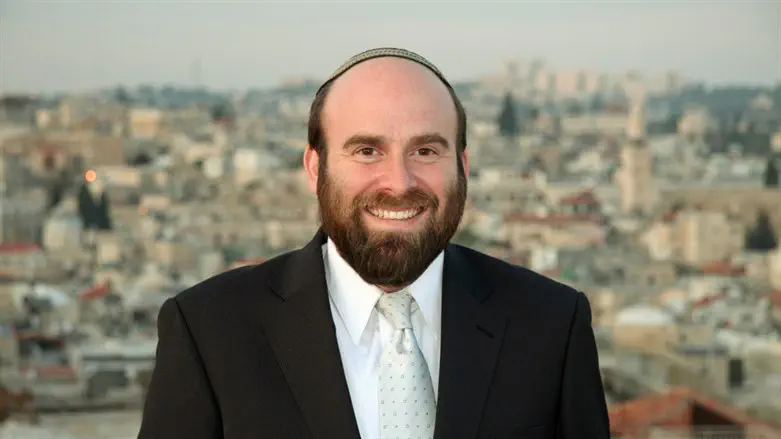
Rav Reuven Taragin is the Dean of Overseas Students at Yeshivat Hakotel and the Educational Director of World Mizrachi and the RZA.
His new book, Essentials of Judaism, is available at rabbireuventaragin.com.