
Iran today stands on the edge of rupture. The regime that has ruled the country through fear, ideology, and force now occupies an openly fragile position; the foundations of the Shiite mullahs’ mafia-style system are visibly shaking. What is unfolding is not a passing disturbance but the storm of the nineteenth nationwide uprising-an uprising against an occupying, plundering, repressive, illegitimate, and illegal authority that has pushed Iran’s future toward a fundamental and structural change.
These weeks of sustained, nationwide protests have transformed the political landscape. The dictatorship of the so-called “Islamic Caliphate of the Shiite mullahs" has been exposed in full view, driving Tehran’s dictator, Ali Khamenei, into cycles of delirium, threats, accusations, and mockery. His fear is existential: the collapse of the malignant and destructive Khomeinist-Islamic-imperialist republic-the product of a Shiite religious octopus that has entangled every institution of Iranian life.
Like every foolish and bloodthirsty dictator of the twentieth and twenty-first centuries, Khamenei refuses to accept reality. Iranian society has risen against 37 years of his rule. Claims that external leaders engineered the bloodshed are false. It was not Prime Minister Benjamin Netanyahu or President Donald Trump who killed people in Iran’s streets; it was the regime itself. Acting on Khamenei’s orders, the repression apparatus has killed more than 110 innocent people in just fourteen days, unleashing a bloodbath to cling to power. And new reports indicate that number has risen to 2000!
What distinguishes this moment is the collapse of fear. In this nineteenth uprising, Iranians have shed their terror of the regime’s repression apparatus and its propaganda machine. The state’s response-threats, intimidation, and escalating violence-only underscores its panic. The killing of more than 110 people in fourteen days (and over the weekend possibly 2000) marks the peak of savagery and barbarism by a system that can no longer govern through consent.
The humanitarian consequences are dire. Hospitals in 120 cities are overwhelmed with the wounded; medical care is critical, and injured protesters face the constant risk of abduction by security forces and disappearance into prisons. Among the dead are ten children under the age of nine. Some 2,500 people have been arrested. The regime claims that fifteen of its agents were killed, yet the people continue to demand peaceful protest while the authorities attempt to force violence at any cost. Public anger and hatred toward the regime have reached their zenith.
Freedom of expression, thought, assembly, and protest have never existed in the lexicon of the Shiite mullahs. The “savage mullah" does not comprehend freedom or democracy; since 1979, clerical power has relied on terrorism to impose its will and seize authority. Today, regime survival is paramount precisely because the mullahs know what follows collapse. As with Nazism after Hitler, there will be no place for them in Iran’s future society.
History sharpens the contrast. Exactly forty-seven years after the civilized departure of the late Shah from Iran, the Crown Prince is prepared to return. The Iranian people desire regime change, and they place little weight on Western equivocation. Across eighteen previous uprisings, Western officials betrayed the Iranian people-shaking hands with savage mullahs and criminal ayatollahs for cameras while remaining silent on human rights behind closed doors. That mockery is neither forgotten nor forgiven.
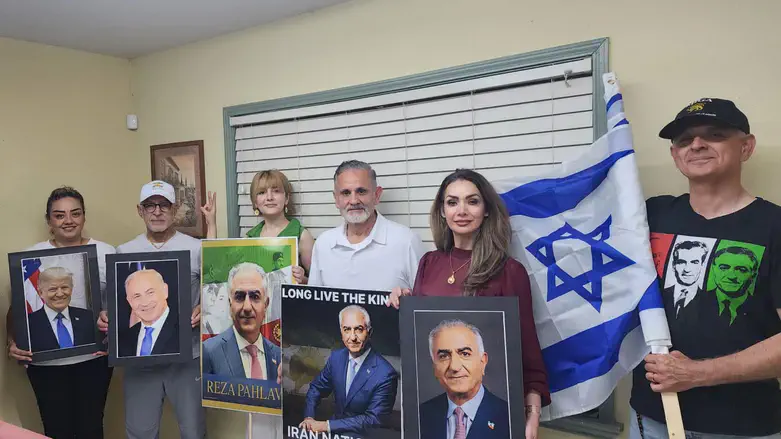
The Crown Prince has formally requested assistance from President Trump. More importantly, he has mobilized millions of supporters into the streets of 110 cities, leading chants against the despised dictator of Tehran. This is not a call for foreign soldiers; the United States will not send troops to change Iran’s regime. The lessons of 1979-when external decisions helped entrench a destructive system-are clear. This time is different, and the principles of change are different.
The regime knows it. Delusional and frightened, it lashes out. The true vandals are the mullahs who, aided by Islamic and communist terrorist groups, acted against Iran’s national interests in 1979. Vandalism is inseparable from Khomeinism itself. These forty-seven years are but a parenthesis in five millennia of Iranian history-a dark, hateful chapter whose rise and fall will be remembered as an aberration.
From December 28, 2025, to January 10, 2026, Iran has been in open turmoil. The depth of genuine popular support for the 65-year-old Crown Prince is now unmistakable. Demonstrations aim to restore the Iranian Monarchy, and he has emerged as the principal and decisive actor in Iran’s future. Openly and practically, a society has risen with his voice.
Khamenei’s fear is personal and political. Stubborn, authoritarian, and delusional, he views all dissenters as enemies while imagining himself the sole arbiter of truth. He fears the return of the “savage heir" because that return symbolizes accountability and an end to clerical impunity.
Accordingly, the regime’s propaganda machine-and its affiliates in Persian-language media abroad-has mobilized relentlessly against Pahlavi. Some self-styled opposition figures, driven by jealousy and delusions of leadership, would prefer mullah rule to continue rather than see the Pahlavi name rise. Yet the digital record-thousands of videos from inside Iran-tells a different story.
The central question is unavoidable: Who would take power if the Islamic Republic collapsed? The answer is clear. Between collapse and the ballot box lies a transitional period, and during that transition only one figure possesses the legitimacy and capacity to stabilize the country. The Crown Prince is known internationally; leaders and officials-including Trump, Watts, Rubio, General Flynn, and Netanyahu-have met him. He is a national asset with international credibility, advocating a secular, democratic Iran committed to human rights. He is the only viable unifying figure capable of guiding a transition, and Iranians are more likely to choose a restored monarchy-an Iranian Kingdom-through a democratic process.
There is also hope that a reconstituted national intelligence and security framework, staffed by patriotic, Iran-loving professionals loyal to the King, can work with international partners to prevent internal sabotage-just as, in earlier decades, SAVAK cooperated with global security institutions against communism. Still, no one should pretend the road is short or easy.
The regime’s terror reaches theological extremes. It portrays Khamenei as divine and claims its corrupt, destructive, terrorist order is God’s rule on earth-threatening protesters as “enemies of God," a charge punishable by death. This is the logic of a silent massacre. As authorities impose internet blackouts and sever international communications, brave Iranians fill the streets chanting “Death to Khamenei!"
The exiled Crown Prince HRH Reza Pahlavi has called for continued protests and urged demonstrators to carry Iran’s historic lion-and-sun flag-symbols of a nation reclaiming its past to secure its future.
History is moving. Fear has changed sides. And Iran’s destiny is once again being written by its people.
Erfan Fard is a Middle East political analyst. His latest book, Tehran’s Dictator, examines the theocratic era of Ali Khamenei (1989-2026). Twitter/X: @EQFard