
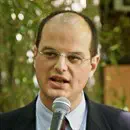
The departure from Harvard of one of the greatest scholars of Western culture, a world-renowned Italianist, should be major news.
James Hankins is one of the most important historians in the United States, a specialist in the Italian Renaissance and the classical tradition. He has been a professor at Harvard University since 1985, an emeritus scholar and the author of twenty essays translated worldwide.
Hankins is not leaving his chair at Harvard because of age:
“Two weeks ago I gave my final lecture at Harvard University, where I have been a professor of history for forty years. Four decades of experience at one of the world’s leading universities have given me a privileged vantage point from which to observe the gradual replacement of Western history with global history. This shift is part of the reason why younger generations today find themselves in a state of moral and intellectual disorientation.
"While reviewing applications to doctoral programs, I came across an exceptional candidate, perfectly suited to our course of study. In previous years, he would have immediately risen to the top of the ranking. A member of the admissions committee told me informally that ‘that thing’ (that is, admitting a white male) ‘couldn’t happen this year.’ In the same year, an undergraduate student whom I had mentored, of extraordinary intelligence-literally the best student at Harvard, winner of the prize for the graduating senior with the best overall academic record-was rejected by every doctoral program to which he applied. He too was a white male.
"I called several friends at various universities to understand why he had been rejected. Everywhere they told me the same story: doctoral admissions committees across the country were following the same unwritten protocol that applied at our institution as well. The only exception I found to this generalized exclusion of white males was a person who had been born female.
"The reaction to the shocking indifference of the university toward antisemitic demonstrations following the atrocities of October 7, 2023, forced the Harvard Corporation-the body that chooses the president-to seek firm leadership. Nevertheless, I believe I can make far better use of my time and experience at my new institutional home-the Hamilton School of Classical and Civic Education at the University of Florida-than at Harvard. The reason is simple: the Hamilton School is committed to teaching the history of Western civilization.
"When progressive pedagogy replaced courses on Western civilization with global history, serious damage was done to the socialization of young Americans. When young people are not taught what civilization is, we discover that people become uncivil".
When Hankins arrived at Harvard in 1985, Reverend Jesse Jackson was already marching with hundreds of students at Stanford to demand, for the first time, a change in the curriculum. The slogan was: “Hey, hey, ho, ho, Western Culture has got to go."
At the time, 10 of the top 50 universities still had a mandatory course in “Western Civilization," while 31 offered it to students. Today, according to a report entitled The Vanishing West by the National Association of Scholars, no American university offers such courses anymore. Two generations have been educated to believe that Western culture is evil. Or, as another famous classicist, Donald Kagan of Yale, put it: “No one believes in the West anymore, the greatest civilization in history."
Having conquered positions of cultural power, they are now moving into action.
Today, a famous professor of Roman History at Stanford, Dan-el Padilla Peralta, says that classical studies are a source of racism and white supremacy:
“I hope the discipline dies, and soon," the scholar has said.
Today at Yale, the oldest art history course has been eliminated because it was considered “too white" and “Eurocentric."
Today at the famous School of Oriental and African Studies (SOAS) at the University of London, there are calls to ban Plato and Kant, Aristotle and Socrates. These great philosophers had a serious “fault": being white (and to think that young Germans at the front during the First World War carried philosophers with them to read).
Today at Oxford, the study of Homer’s Iliad and Odyssey has been scaled back in the name of “diversity."
And if we are talking about Stanford, London, Yale, and Oxford-imagine what can happen in smaller universities.
The great literary critic Harold Bloom knew he had lost:
“For fifty years I have fought the death of the humanities, but we have lost the war, and all I can do now is a kind of guerrilla action. The barbarians have taken over the academy."
Last summer I returned to Dublin. After visiting the famous library of the Book of Kells, I stopped at Trinity College, where the plaque dedicated to George Berkeley, one of the founding fathers of modern philosophy and an inspiration to Albert Einstein, is no longer there. He held non-woke views on slavery. In place of the philosopher’s name, there is now a black patch.
The enemies of the West have clearer ideas.
The Chinese Communist Party orders its cadres to “reject Western ideas"; Erdogan’s Turkey announces that “Western civilization will fall"; and Khamenei’s Iran declares that it wants to “destroy Western civilization."
They know what “the West" is.
But do we?
A colleague of Hankins at Harvard, Harvey Mansfield, the foremost expert on Machiavelli, has observed:
“Today the strange thing is that opposition to the West comes from within the West. Islamic radicalism invites the conscience of the West to join its struggle against the West."
This is why Harvard’s president, Claudine Gay, was forced to resign after being unable, before Congress, to condemn antisemitism and the barbarism of Hamas.
That is why I am not worried only when thinking about the mandarins of Beijing, the neo-tsarists of Moscow, the mullahs of Tehran, and the emirs of Doha, but also when reading the despair with which Professor Hankins declares that we are at the end of the game.
The West is its own worst enemy.
Giulio Meotti is an Italian journalist with Il Foglio who is a member of Middle Eastt Forum and writes a twice-weekly column for Arutz Sheva. He is the author, in English, of the book "A New Shoah", that researched the personal stories of Israel's terror victims, published by Encounter and of "J'Accuse: the Vatican Against Israel" published by Mantua Books, in addition to books in Italian. His writing has appeared in publications, such as the Wall Street Journal, Gatestone, Frontpage and Commentary.