
In his latest program, Jay Shapiro reflects on the changing landscape of Israeli settlement policy in Judea and Samaria, highlighting a significant shift that has occurred under the current administration.
For years, Israel was told that building in these areas was a barrier to peace, and in response, successive Israeli governments froze construction, dismantled thriving communities, and even expelled Jews from their homes, most notably in the 2005 disengagement from Gaza and northern Samaria.
Shapiro recalls his own experience as a reporter during the forced evacuations from Gush Katif, noting the naïve belief at the time that territorial retreat would bring peace and security. In reality, this policy did nothing but worsen the situation, as Shapiro points out that the security situation has only deteriorated since then. However, in the past three years, there has been a quiet revolution in Israeli policy. Under the current government, Israel has resumed construction in Judea and Samaria at a record pace, including the recent approval of 19 new Jewish communities in these areas.
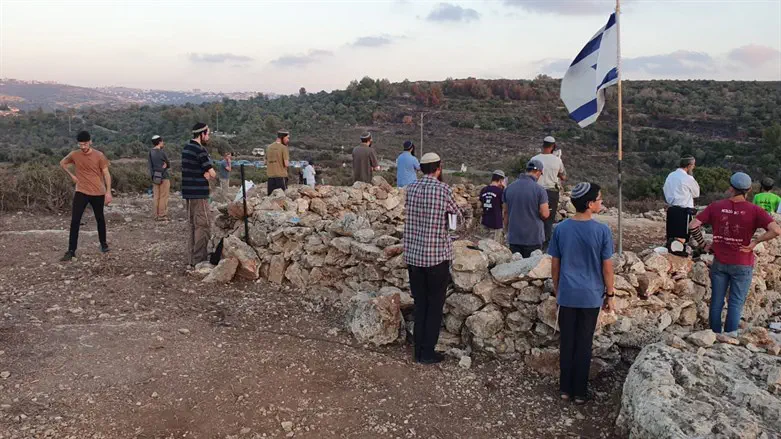
The restoration of two settlements, Ganim and Kadim, which were destroyed in 2005, has particular symbolic significance. Shapiro views this move as a practical and ideological shift, one that repudiates the misguided logic that led to Israel’s retreat in the first place. By rebuilding these communities, Israel is asserting that Jewish life in Judea and Samaria is not temporary or negotiable.
Despite the positive momentum in settlement expansion, Shapiro also acknowledges the ongoing international pressures, particularly from the US under President Trump. Trump’s recent declaration that Israel should not annex Judea and Samaria was a blow to many Israelis who had hoped for a more definitive stance on Israeli sovereignty. Shapiro emphasizes, however, that sovereignty is not only declared on paper but built on the ground - through roads, homes, schools, and synagogues. He asserts that Israel should continue creating irreversible facts on the ground, pointing to the historical precedent set by the establishment of communities in other parts of Israel.
While settlement expansion in Judea and Samaria is crucial for Israel’s defense, Shapiro notes that the situation is not only about security. It is about Jewish identity, resilience, and ensuring that the Jewish people remain firmly rooted in their ancestral homeland. Shapiro stresses that the current government should accelerate planning approvals, expand infrastructure, and encourage Jewish population growth in these areas. He also warns that bureaucratic bottlenecks preventing Jewish construction must be dismantled, making it clear that Jewish life in Judea and Samaria is permanent and irreversible.
Shapiro concludes by discussing the rising tide of antisemitism worldwide, particularly in the U.S. He notes that antisemitism is no longer confined to rhetoric but has begun to manifest in violent acts against Jews. He criticizes political leaders, like US Vice President Vance, who frame growing antisemitism as merely a political debate rather than a civilizational threat. Shapiro underscores that support for Israel is not just strategic, but moral, and that the rise of antisemitism is a warning sign for democracy itself. He calls on Western leaders, especially in the US, to recognize the dangers of dismissing or normalizing antisemitic rhetoric, stressing that this moment in history will be remembered by future generations.