
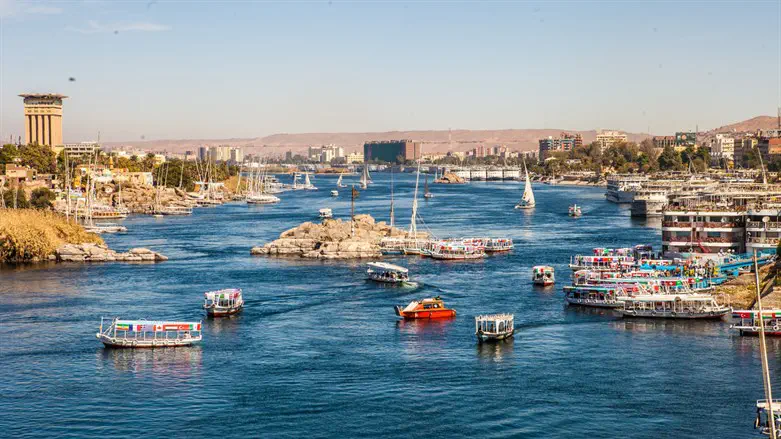
In many plays, there is a stage setting that sets the scenery for the whole play. All the scenes take place within that setting. If I had to choose one snapshot where all of Parshat Shemot would take place, I’d choose the Ye’or - the Nile River.
The Nile was the source of water for all of Egyptian agriculture, supplying water throughout Egypt through canals and waterways. Let’s see how central it is with all the figures in the story.
Yosef
The last sentence of last week’s parsha says that when Yosef died he was placed in a coffin in Egypt (Bereishit 50:26). Chazal teach that they placed Yosef’s coffin in the Nile so that it would bless the waters of the Nile (Sotah 13a). The Maharsha adds that they concealed the location so that it would remain there forever.
Yaakov
Yaakov blesses Pharaoh that the waters of the Nile should rise toward him when he approaches (Bereishit 47:10). From the time he arrived in Mitzrayim, the famine ended. Later, he refuses to be buried in Egypt so that they would not make him into an avodah zarah (Rashi 47:29).
Pharaoh
After Yaakov’s blessing, Pharaoh turns himself into an object of worship, rising early and going to the Nile (Rashi, Shemot 7:15). He declares, “Li ye’ori va’ani asitini" - “The Nile is mine, and I created myself" (Yechezkel 29:3, haftarah). This was likely a gradual process: at first he may have acknowledged Yaakov, but over time he “forgot" - just as the new king “forgot" Yosef - and began attributing the blessing to himself.
Moshe
Moshe was placed in the Nile and saved, when Pharaoh’s daughter found him there as she came lirchotz (to bathe) in the Ye’or.
Later, when the plagues begin, Moshe does not strike the Ye’or himself.
Am Yisrael
Pharaoh’s decree ordered that all baby boys be thrown into the Nile to die.
The First Plague
The first plague also takes place at the Ye’or, when the waters of the Nile turn to blood. Since the Egyptians worshipped the Nile, Hashem begins the plagues by striking what they falsely believed to be their source of blessing (Rashi, Shemot 7:17).
What is the core conflict here?
The struggle is over the source of shefa - the flow of blessing - in the world. Does it come from the Nile, from Pharaoh, and from the natural world itself? Or does it come through Am Yisrael and ultimately from Hashem?
There is a clear difference between how water is provided in Eretz Yisrael and how it was in Egypt. In Eretz Yisrael, water comes from rain that descends from Shamayim, and it depends on our tefillah and conduct. In Mitzrayim, water comes from below, drawn from the Nile (Devarim 11:10).
In the future, the Navi Zecharya (14:17-19) describes how the nations will come to Jerusalem for Sukkot. He specifically mentions Mitzrayim: if they do not come to acknowledge where the blessing is coming from, the waters of the Nile will not rise for them (Targum Yonatan).
This connects to the name of the sefer Shemot - “Names." Through the Shem Hashem HaMeforash (Hashem’s revealed Name), Hashem brings the ten plagues into action. If Mitzrayim cannot understand where the source of all the bracha is the easy way, they will understand it the hard way.
At the end, when they acknowledge that blessing comes from the “names" of Am Yisrael listed at the beginning of the parsha, and when they recognize that Hashem - through His Shem Hashem HaMeforash - is the true source of blessing, that recognition itself becomes redemption.
Yosef’s coffin will be taken out of the Nile, as Moshe uses the Shem Hashem HaMeforash to cause it to rise miraculously (Pesikta d’Rav Kahana, Beshalach 11).
Am Yisrael must fulfill its destiny outside of Mitzrayim. Once this is understood, the slavery is over.
Finally, Pharaoh will proclaim (Shemot 12:32), as he sends them out: “U’verachtem gam oti." Bless me as well.
Rabbi Yonatan Kirsch was born in New Jersey and made Aliyah as a child. A musmach of Rabanut Ir (Chief Rabbinate of Israel), he served as a rebbe at the Hesder Yeshiva of Sderot and taught at Yeshivat Hakotel. He currently teaches at Yashlatz in Jerusalem and is the author of Maalot HaMikve. A combat soldier, he served in Lebanon.