
As we begin reading the book of Shemot - Exodus - this week, we enter the Torah’s narrative of redemption. At its simplest reading , Shemot tells the story of our liberation from physical bondage and servitude. But from a deeper perspective, it charts our spiritual journey from a base reality of moral collapse toward pure and authentic unity with the Almighty. The Sages describe Israel’s time in Egypt as a descent to the “49 gates of impurity," underscoring that redemption was not only an escape from slavery, but a transformation of destiny.
Jewish communities of Ashkenaz, Sepharad, and the Yemenites each read a different prophecy as the haftarah for Parshat Shemot, with each focusing on a distinct aspect of this redemptive process. Together, all three aspects offer a crucial vision that is particularly relevant in our own moment of national and spiritual revival.
The Ashkenazi custom is to read from the book of Yeshayahu (chs. 27-28), a prophecy that focuses on the spiritual progress of the nation as a whole. According to Yeshayahu, the redemptive process is challenged time and again by Israel’s repeated failures, including idolatry and rebellion against God. Yet alongside this critique is an unwavering assertion of perpetually enduring love and commitment between God and the Jewish people. Redemption is guaranteed because of the covenant, not because of perfect behavior, an idea which is stressed in verses appended to the haftarah
These additional verses (Chap 29:22-23) envision a future in which Israel’s children sanctify God’s name and restore dignity to the House of Yaakov: “And so, this is what the Lord has said - Avraham’s redeemer - to the House of Yaakov: No more will Yaakov be ashamed, his face no more grow pale, for when he sees his children, the work of My hands, in his midst, sanctifying My name, it is Yaakov’s Holy One they sanctify; it is Israel’s God they worship."
The haftara read by Edot Hamizrach from the book of Yirmiyahu (1:1-2:3) focuses less on the people as a whole, instead setting its sights on the personality and mission of the prophet as a leader. Yirmiyahu’s call to prophecy closely parallels that of his predecessor Moshe, whose first prophetic encounter is described in our parsha. Both resist their mission, doubting the worthiness of their capacity for speech: “Please, Lord God, I am not capable of speaking" (Yirmiyahu 1:6). Both are inaugurated into leadership roles through visual signs - in Yirmiyahu’s case, an almond tree and a boiling cauldron. And both are charged with standing up as a lonely voice of justice against corrupt institutions of power and moral decay. By comparing Yirmiyahu to Moshe, this haftara stresses a model of redemption that flows top-down from principled, responsible leadership to the people.
The Yemenite tradition offers yet another perspective, as the haftarah is read from the sixteenth chapter of Yechezkel. Interestingly, this prophecy focuses not on the leadership, nor on the people, but rather on the hidden heroes who work silently behind the scenes. Yechezkel tells a parable of an abandoned baby girl,rescued and raised at great personal risk.
This narrative echoes the altruism and heroism displayed by the women in our parsha: the midwives Shifra and Puah, as well as Pharaoh’s daughter, who defied the king’s order. These women risked their lives to preserve Israelite newborns from death. Whether Jewish or Egyptian, these women represent an ethical, heroic underground. As our tradition notes,Israel survived thanks to the courageous and pious women who were ready to sacrifice and put themselves in harm’s way- (Rashi Shemot 38:8).
Read simultaneously by the different communities of Israel, these three prophecies represent three complementary paradigms of Jewish spiritual and national redemption. Yeshayahu spotlights the spiritual state and progress of the people in general, which stands as the bedrock of any redemptive process. Yirmiyahu highlights the principles of humility, moral clarity and communal responsibility in leadership. Yechezkel reminds us that history is shaped by those willing to act selflessly for the greater good.
This is not a contradiction in any way. On the contrary, we learn that only when all three elements are present can we truly move from a state of subjugation to one of freedom, and from the margins to the center of history.
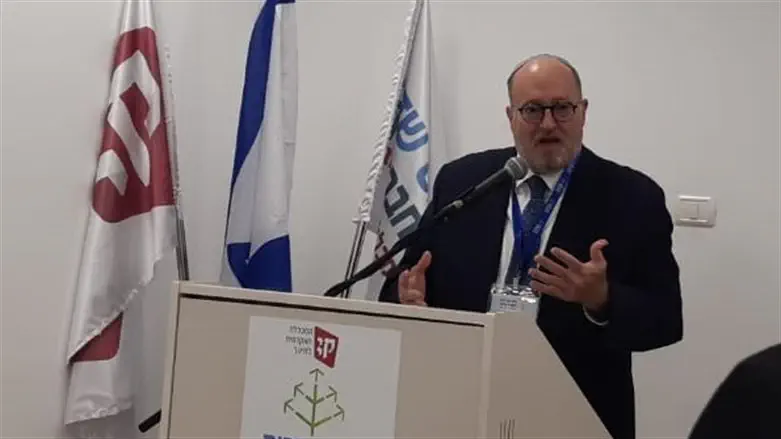
Rabbi Dr.Kenneth Brander is President and Rosh HaYeshiva of the Ohr Torah Stone network of institutions.