

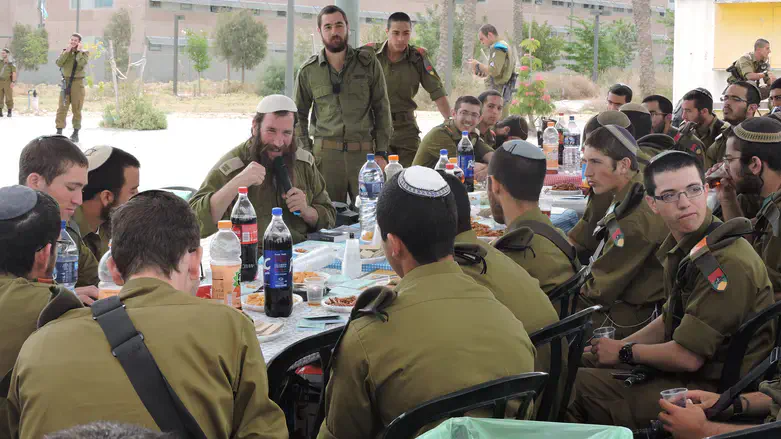
The Tzalash organization and Tochnit Hadar have joined forces with the aim of strengthening the spiritual and Torah-based support given to yeshiva and mechina graduates throughout their military service. The initiative seeks to ensure that students who enter the IDF do not experience a rupture from the “world of Torah" that they were apart of while in yeshiva or mechina, but rather a meaningful continuation of it.
In an interview with Israel National News - Arutz Sheva, Rabbi Peretz Einhorn, founder of Tzalash, explained that the partnership responds to the real challenges soldiers face once they leave the structured environment of a yeshiva or mechina. While many institutions designate a single rabbi to oversee graduates during their army service, Rabbi Einhorn noted that this task is far too great for one person alone. In contrast, the goal of the new framework is for all of the rabbis in those institutions to share responsibility for accompanying their students during service.
More than 100 rabbis from mechinot have already joined the project, with plans to expand to include rabbis from Hesder yeshivot as well. These rabbis will remain in close contact with their students through Shabbat visits, base visits, learning sessions, conferences, and personal meetings. The program also provides practical assistance, including funding for rabbis’ visits, kiddushim, care packages, and pocket-size seforim.
Rabbi Einhorn emphasized that there is a profound difference between support - no matter how dedicated - from a random rabbi or counselor and guidance from a rabbi who knows the soldier personally, understands his struggles, and shared his formative years. To support this mission, a dedicated application is being developed to help rabbis track contact and provide consistent support for the soldiers. Participating rabbis will receive a modest salary increase for their added responsibility.
Tochnit Hadar, named in memory of IDF officer Lt. Hadar Goldin, who was killed in 2014 and whose body was held by Hamas until its recent return to Israel this past November. The program was founded with the vision of strengthening the soldiers’ religious commitment, connection to Torah, and sense of responsibility to the Jewish people. Rabbi Einhorn noted that these are the same values that guide Tzalash and, as such, the merger of the two organizations will enable an even deeper connection between Torah study and service to the nation.
The initiative also welcomes soldiers who were not previously connected to a mechina or formal educational framework, offering them opportunities for joint Torah study and spiritual growth. The long-term goal is to involve 300-500 rabbis who will accompany soldiers throughout their service, helping them emerge spiritually stronger and prepared to build Torah-centered homes.
Addressing concerns surrounding Haredi enlistment, Rabbi Einhorn acknowledged the concerns of the Haredi public, but cited data showing that close rabbinic accompaniment dramatically reduces spiritual attrition. The message, he stressed, is clear: military service, guided by Torah and mitzvot, is not a threat to faith but a fulfillment of it-an expression of serving G-d, avodat Hashem, in defense of Am Yisrael and Eretz Yisrael.