

Stephen M. Flatow is President of the Religious Zionists of America (RZA.) He is the father of Alisa Flatow, who was murdered in an Iranian-sponsored Palestinian terrorist attack in 1995 and the author of A Father’s Story: My Fight for Justice Against Iranian Terror now available in an expanded paperback edition on Amazon. Note: The RZA is not affiliated with any American or Israeli political party.
Iran’s collapsing currency and growing unrest are often described as a “crisis," as if they were the result of sudden bad luck or unforeseen external shocks. They are not. What Iran is experiencing today is the predictable outcome of decades of deliberate choices made by its rulers-choices that privileged ideology, terror, and regional adventurism over economic stability and the welfare of their own people.
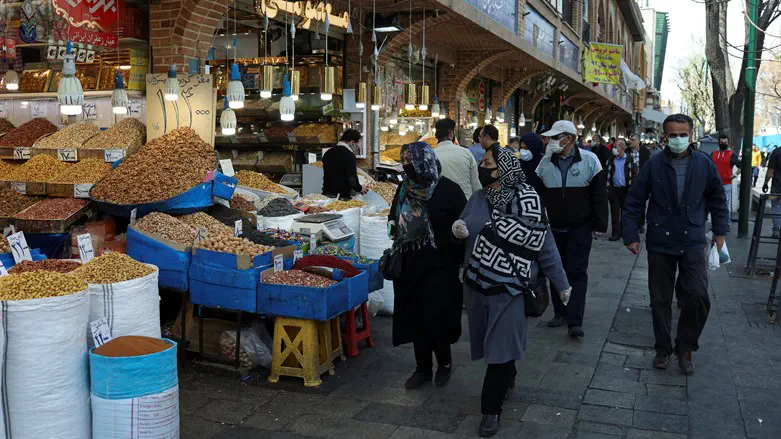
The Iranian rial has lost staggering value, inflation has surged, and even the regime’s traditional backbone-the merchants of Tehran’s Grand Bazaar-has taken to the streets. This did not happen overnight. It is the end stage of a lengthy process in which Iran’s leaders systematically sacrificed domestic prosperity on the altar of revolutionary ambition.
History offers a clear lesson: nations do not usually collapse because of a single defeat or sanction. They collapse when ambition outruns economic reality. Iran is hardly the first state to learn this the hard way.
Spain in the 16th and 17th centuries believed imperial reach could substitute for economic discipline. Flush with New World silver, Madrid financed endless wars and vast armies, assuming treasure would always arrive in time to pay the bills. Instead, inflation soared, debt mounted, and military overextension hollowed out the state. The defeat of the Spanish Armada was not the cause of decline-it merely exposed a system already unsustainable.
France made a similar mistake on the eve of its own revolution. Determined to weaken Britain, the French monarchy poured enormous resources into supporting the American Revolution. The effort succeeded strategically but proved fiscally disastrous. War debts crippled the treasury, and when reform proved impossible, the regime collapsed under the weight of its own insolvency.
Even Great Britain, victorious in World War II, emerged financially exhausted. Maintaining a global empire was no longer affordable. Britain did not lose its colonies because it was defeated militarily, but because economic reality forced a reckoning.
Power projection without solvency is not strength-it is illusion.
These are not perfect analogies for Iran, but they illustrate a consistent principle: states that prioritize ideology and military ambition over economic sustainability eventually face decline, regardless of their intentions or rhetoric.
Iran’s rulers chose their path openly. From the earliest days of the Islamic Republic, exporting revolution was treated as a core mission. Billions of dollars were funneled to Hezbollah, Hamas, Islamic Jihad, Shiite militias in Iraq, and the Assad regime in Syria. Iran invested heavily in missile development and a nuclear program designed not for civilian energy needs, but for leverage, intimidation, and regime survival.
These policies were not cost-free. Supporting terror and defying international norms invited sanctions, financial isolation, and the withdrawal of foreign investment. Iran’s access to global banking systems was constricted. Oil revenues became harder to monetize. Capital fled. The economy grew more dependent on corruption, smuggling, and the Revolutionary Guard’s shadow enterprises.
At every juncture, Tehran’s leadership made the same calculation: maintain ideological posture abroad, absorb the economic pain at home. Ordinary Iranians paid the price through inflation, unemployment, and declining living standards. Savings evaporated. Young people emigrated. Hope drained away.
Even when opportunities for de-escalation arose, the regime refused to change course. Nuclear brinkmanship continued. Regional confrontations multiplied. Resources that might have stabilized the currency or supported domestic growth were diverted to military and ideological projects. By the time sanctions tightened further and regional conflict intensified, the economy had no resilience left.
The resulting currency collapse should surprise no one.
A smaller but instructive parallel can be found in Cuba. For decades, Havana exported revolution and projected ideological influence far beyond its means. The result was not strength, but stagnation. While the regime survived, Cuban society endured chronic shortages, poverty, and economic paralysis. Ideological fervor sustained the leadership-but at immense human cost.
Iran risks the same fate on a larger scale. The mullahs may survive. Authoritarian systems often do. But survival is not success. A state that cannot protect the value of its citizens’ labor, savings, and future has already failed a fundamental test of legitimacy.
It is important to say clearly what this crisis is not. It is not Israel’s doing. It is not a Western conspiracy. It is not the unavoidable fate of Iranian civilization. Iran is a country with enormous natural resources, a talented population, and a proud history. Its people are not poor because they are incapable, but because they are governed by a regime that treats economic competence as secondary to ideological purity.
The lesson here is broader than Iran. Power is not measured by slogans, missiles, or proxy forces. Real strength rests on productive economies, social trust, and governments that understand the limits of ambition. When leaders confuse ideological defiance with national greatness, collapse is only a matter of time.
Iran’s rulers chose ideology over their people. Now the bill has come due. The tragedy is not that Iran is suffering-but that it did not have to.