

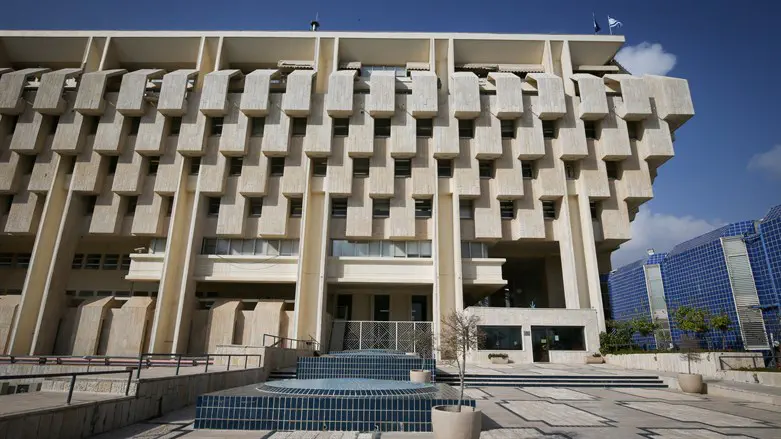
The Bank of Israel Monetary Committee decided to lower the interest rate to 4 percent, citing a moderation in the inflation environment, continued economic expansion, and signs of easing constraints in the labor market.
According to the Bank of Israel, the Consumer Price Index declined by 0.5 percent in November, bringing annual inflation to 2.4 percent. Forecasters project a temporary increase in inflation following the December CPI reading, after which inflation is expected to decline to around the midpoint of the target range. One-year inflation expectations are slightly below the midpoint of the target range, while expectations for the second year onward remain near it.
Since the previous interest rate decision, the shekel has strengthened by 3.1 percent against the US dollar, by 1.5 percent against the euro, and by 2.2 percent in terms of the nominal effective exchange rate. Israel’s risk premium, as measured by CDS spreads, is close to its prewar level, and domestic equity indices increased and outperformed markets abroad.
Economic activity continues to expand. Credit card expenditure data indicate continued growth in the fourth quarter, and capital raised by the high-tech sector remains high. Activity in the construction industry remains elevated, with an increase in building starts and a continued high level of land purchases by contractors. At the same time, home prices continued to decline, transaction volumes remain low, and the stock of unsold homes is high.
The labor market remains tight, though recent data point to easing supply constraints. Participation and employment rates increased in November, the rate of absenteeism due to reserve duty declined, and the pace of wage increases in the business sector moderated. The broad unemployment rate among prime working ages remained stable.
The Bank of Israel Research Department updated its macroeconomic forecast, formulated under the assumption that the ceasefire will continue and reserve military service will decline. According to the forecast, GDP grew by 2.8 percent in 2025 and is expected to grow by 5.2 percent in 2026 and by 4.3 percent in 2027. Inflation is expected to be 2.5 percent at the end of 2025, 1.7 percent in 2026, and 2 percent in 2027. The budget deficit is estimated at 4.8 percent of GDP in 2025 and 3.9 percent in 2026, with public debt projected at about 68.5 percent of GDP throughout the forecast period.
Bank of Israel Governor Amir Yaron said the decision followed discussions focusing on domestic and global economic developments. He noted that inflation has moderated, the shekel has strengthened, and labor market pressures have eased somewhat, while economic activity continues to expand. Despite an expected temporary increase in inflation in the next CPI reading, the Committee assessed that inflation is expected to stabilize around the midpoint of the target range thereafter.
The Monetary Committee stated that its policy continues to focus on price stability, support for economic activity, and market stability. Future interest rate decisions will be determined in accordance with developments in inflation, economic activity, geopolitical uncertainty, and fiscal conditions.