

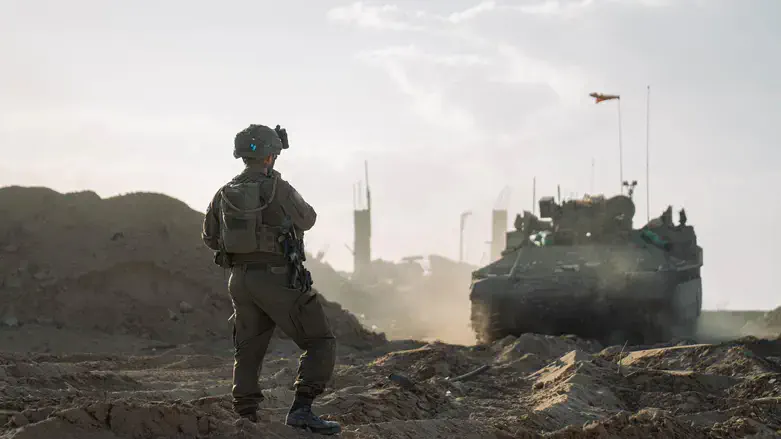
The Israel Defense Forces (IDF) released its annual casualty report for 2025 on Tuesday evening, revealing that 151 soldiers lost their lives over the past year.
Of particular concern is the number of soldiers who took their own lives: 21 cases, the highest figure recorded since 2010.
According to the report, the breakdown of all fatalities in 2025 is as follows: 88 soldiers were killed during operational activities, 15 died of illnesses, 3 were victims of terror or enemy actions, 21 in accidents (17 of them in civilian traffic incidents), and 21 cases are classified as suspected suicides. Notably, the report stated that no training-related deaths occurred during the year.
In response to the rise in psychological distress, the IDF has expanded its therapeutic measures. Since the start of hostilities, approximately 1,000 mental health officers (known as Kabanim) have been deployed across both regular and reserve forces, with each brigade assigned an organic Kaban. Dozens of these officers have also been sent into combat zones to provide immediate emotional support following complex incidents.
Additionally, the IDF and the Ministry of Defense have expanded the Combat Response Unit, which offers medical and psychological support to veterans struggling with distress stemming from combat or operational service. The unit now operates from three branches-north, south, and central Israel.
Comprehensive resilience programs
The IDF has also implemented a series of additional initiatives aimed at strengthening resilience, including the “Bein Hazmanim” program, which supports soldiers transitioning from compulsory service to reserve duty. The program provides processing days, recognition sessions, rest periods, and brigade-level discussions. In 2025, it was conducted in 128 battalions as part of the “Balam’s” project, which also includes individual committees and assistance in accessing entitlements.
During the ongoing conflict, processing days were provided to over 53,000 soldiers, including approximately 40,000 combatants. After the completion of combat missions, debriefings and emotional processing were conducted for around 300,000 personnel.
A new IDF General Staff order was also issued to formalize procedures for identifying, referring, and supporting soldiers in psychological distress. Every case of suicide within the IDF triggers a comprehensive investigation and systemic review to derive lessons and improve preventive measures.
Additional programs
- “Amit” program: A new initiative for reservists and their spouses, offering a package of mental health treatments, complementary medicine, sports activities, and self-help workshops.
- “Tatzumot” center: A treatment center for active-duty soldiers who experienced psychological trauma due to exposure to combat events, currently undergoing expansion.
- “Mekhon Hakeva”: A nationwide center serving career soldiers and their families, with an emphasis on combatants.
The IDF emphasizes that mental health support will continue to be a key focus for Israeli society in the coming years, noting that cases of post-traumatic stress may increase. The suicide prevention program has been updated to reflect current conditions and will continue to be adapted as necessary.