
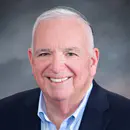
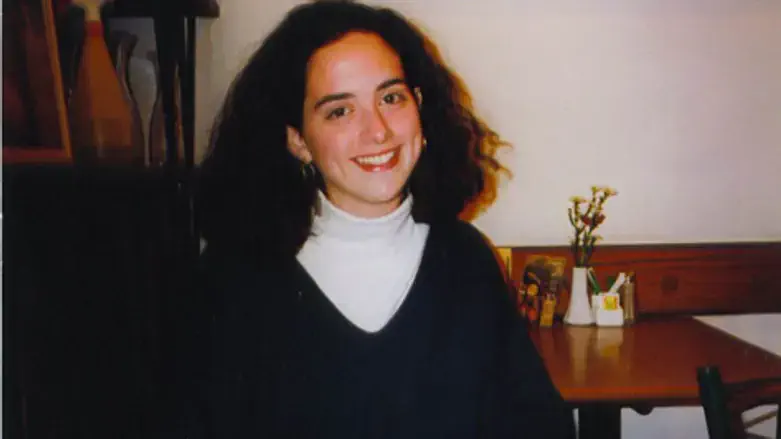
Stephen M. Flatow is President of the Religious Zionists of America (RZA.) He is the father of Alisa Flatow, who was murdered in an Iranian-sponsored Palestinian terrorist attack in 1995 and the author of A Father’s Story: My Fight for Justice Against Iranian Terror now available in an expanded paperback edition on Amazon. Note: The RZA is not affiliated with any American or Israeli political party.
Over the past week, Israel has once again buried victims of terrorism. Attacks carried out in ordinary places-on roads, near communities, in moments meant for routine and safety-ended innocent lives.
On December 14, 2025, Jews were murdered at Bondi Beach in Sydney, Australia, targeted while openly celebrating Hanukkah. The attack, carried out during a public Jewish gathering, was a reminder that antisemitic violence is neither local nor temporary.
The locations differ. The intent does not.
In Israel this past week, terror claimed the lives of men and women whose names deserve to be spoken and remembered. Each victim was a person with a family, a history, and a future that was violently taken away. Yet as attacks accumulate, there is a danger that even sincere mourning becomes brief, and that names fade as attention shifts to the next incident.
That is a mistake-morally and historically.
Judaism places great importance on memory. We do not honor victims by reducing them to numbers or by allowing their stories to dissolve into generalities. Remembering means to say names and to acknowledge that each life mattered. Forgetting is not neutrality; it is erosion.
For many families, remembrance is not theoretical. It is lived every day.
My daughter Alisa was a twenty-year-old American student studying in Israel when she was murdered in a 1995 Iranian-sponsored terrorist attack. In her memory, a scholarship fund was established to help young Jewish women study in Israel, allowing others to continue the journey Alisa was on when her life was cut short. Through those students, her love of Torah and Israel continues.
Malki Roth was fifteen years old when she was murdered in the Sbarro pizzeria bombing in Jerusalem. Her parents have spent years pressing for justice, urging the United States to remove her murderer from Jordan to face trial. They also chose to build something enduring, founding an organization that supports families of children with disabilities-a reflection of the compassion Malki herself showed during her short life.
Koby Mandell, a thirteen-year-old American-Israeli boy, was brutally murdered along with his friend Yosef Ishran near Tekoa in 2001. Koby’s parents responded by establishing a foundation that provides support, counseling, and community for families devastated by terror. It stands as a quiet but powerful rejection of the cruelty that took their son’s life.
Not every victim has a foundation or a formal legacy. That does not make their lives-or their deaths-any less significant.
During the early 2000s, at the height of the Second Intifada, Israelis and Jews worldwide followed the names of terror victims almost daily. Over time, many of those names have receded from public memory.
We should say them again. Here are some:
Shalhevet Pass, murdered as an infant by a sniper in Hebron.
Yaron and Efrat Ungar, gunned down while driving with their young children.
The Hatuel family-a mother and her four daughters-murdered on a Gaza road.
Marla Bennett and Benjamin Blutstein, American students killed in a bombing at Hebrew University.
Naftali Fraenkel, Eyal Yifrach, Gil-ad Shaer, three teens kidnapped and murdered while returning from school.
The 8 young students massacred as they were learning Torah in the Merkaz HaRav Yeshiva study hall and library: Neria Cohen, Segev Pniel Avihail, Avraham David Moses, Yehonatan Yitzhak Eldar, Yohai Lifshitz, Ro'i Roth, Yonadav Chaim Hirshfeld, Doron Mahareta.
They were not symbols. They were people.
Forgetting them does not promote healing or progress. It allows terror to achieve one of its long-term goals: erasure. When victims are forgotten, the moral clarity of what was done to them is weakened, and the obligation to pursue justice fades with it.
The events of this past week-in Israel and abroad-underscore the continuity of the threat Jews face. Terrorism has not disappeared, and antisemitism has not softened with time. What has changed is our attention span.
Israel’s response to terror must of course focus on security, deterrence, and justice. But remembrance also matters. Naming victims affirms that their lives had value and that their murder will not be absorbed quietly into history.
We owe that to the victims of this past week.
We owe it to those murdered decades ago.
And we owe it to the future.
Say their names-not as a slogan, but as a duty.
And do not let the world move on without them.
...