
Parashat Vayigash (Bereishis 44:18-34; 45:1-28) presents one of the most emotionally charged moments in the Torah. Yosef reveals himself to his brothers, the secret is uncovered, and the family begins to come back together. There is joy, but also shame, guilt, and the pain of long, silent years. The brothers return to bring Yaakov down to Egypt, and then the moment Yosef must have dreamed of for twenty-two years finally arrives: his reunion with his father.
The Torah describes it:
ויעל לקראת ישראל אביו גשנה וירא אליו ֹ וַיִּפֹּל עַל-צַוָּארָיו ויבך על צואריו עוד (Bereishis 46:29)
“Yosef approached his father, kissed him, and wept on his neck.”
Most commentators understand that Yosef was the one who cried, though the Ramban (Bereishis 45:28) maintains that it was Yaakov. Either way, this was an encounter saturated with emotion. And yet, what is most striking is not what is said, but what is not said.
We would expect Yaakov to ask immediately: “What happened? Where did you go? How did you end up in Egypt? Why did you never send word that you were alive?” Yosef, too, does not volunteer the story. He turns immediately to practical concerns - how the family will be settled, how they will appear before Pharaoh, and how their unity and identity will be preserved in Goshen.
The trauma of the past is left untouched. This is not denial; it is a conscious choice to protect the future.
Yehuda provides a key example of this approach. In Vayigash, he steps forward and offers himself in place of Binyamin:
כִּי עַבְדְּךָ עָרַב אֶת-הַנַּעַר מֵעִם אָבִי לֵאמֹר… וְחָטָאתִי לְאָבִי כָּל-הַיָּמִים (Bereishis 44:32)
“For your servant became a guarantor for the lad to my father, saying… I will have sinned to my father forever.”
This builds on Yehuda’s earlier commitment:
אָנֹכִי אֶעֶרְבֶנּוּ מִיָּדִי תְּבַקְּשֶׁנּוּ… וְחָטָאתִי לְךָ כָּל-הַיָּמִים (Bereishis 43:9)
“I will personally guarantee him; from my hand you may demand him… and I will bear the blame forever.”
Yehuda does not argue about the past. When he speaks to Yosef, he does not explain himself, justify himself, or blame anyone else. He accepts full responsibility. “I will have sinned to my father forever” means that whatever happens from now on is on him. Yehuda does not erase the past, but he does not dwell in it. He carries responsibility and acts to build the future. This is the principle of areivut, mutual responsibility - not rehashing pain, but acting to ensure the community’s continuity and unity.
This brings us to Asarah B’Tevet. The Avudraham (Beit Yosef, Orach Chaim 550) notes that Asarah B’Tevet is unique: if it fell on Shabbat, we would still fast, similar only to Yom Kippur. The Chatam Sofer explains: fasts commemorating past destruction, such as Tishah B’Av, do not override Shabbat, because they are about mourning what has already happened. A ta’anit chalom, however, is future-oriented - one fasts to prevent a calamity that has not yet occurred.
Asarah B’Tevet is such a day. On the original Asarah B’Tevet, the siege of Jerusalem began, and the judgment was sealed that eighteen months later, on Tishah B’Av, the Beit HaMikdash would be destroyed. Each year, that day returns as a moment of decision: will history repeat itself, or will redemption draw closer? It is a fast that teaches us to look forward and take responsibility for the future, rather than dwell on the past.
Vayigash, Vayechi, Yehuda, and Asarah B’Tevet all teach the same lesson. The past is acknowledged, but it does not rule the present. The future is built deliberately. Yosef ensures separation from Egyptian culture, unity among the brothers, and continuity for generations. Chazal emphasize looking forward:
Yosef and Binyamin cry not over their reunion, but over future destruction;
Yaakov cries at meeting Rachel not over past hardship, but over what will come;
Even at a brit milah, we speak of Torah, marriage, and good deeds - always looking ahead.
We cannot ignore our own painful present. We are still shocked by the massacre of Jews on the first day of Hanukkah in Sydney. Families are broken. And at the same time, countless families in Israel continue to bear the cost of the war that began on Simchat Torah two years ago - fallen, wounded, displaced, and living with uncertainty. The temptation to despair is strong. But Torah teaches that we cannot remain there. We must act responsibly, together, and with unity.
How do we move forward? Yehuda shows the way: do not dwell on the past, take responsibility, and act for the future. Each of us can learn personally from the journey of Vayigash, Yehuda, Vayechi, and Asarah B’Tevet: not to live in yesterday’s pain, but to learn from it and build a better tomorrow. Like Yehuda, we can step forward when others hesitate, bearing responsibility rather than pointing fingers.
As Ibn Ezra famously said:
העבר אין, העתיד עדיין, וההווה כהרף עין. אם כן, דאגה מנין?
“The past is gone, the future has not yet arrived, and the present is but a blink. Why worry?”
In practice, looking forward means acting responsibly in the everyday world. We strengthen our homes and communities by learning Torah, keeping mitzvot, praying, and helping one another. Visit those in need, support family and friends, speak carefully, and act with integrity. Teach children Torah and good deeds, so the next generation grows in ways that honor Hashem. Make choices today that preserve the family, the community, and Torah life.
We do not wait for others to change; each person takes responsibility. Even small, sincere actions help build a lasting future. This is how we follow Yehuda’s example, act like Yosef, and live the lesson of Asarah B’Tevet.
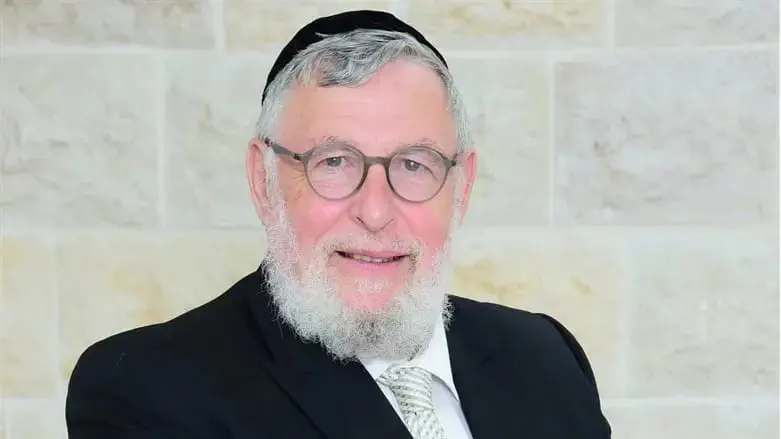
Rabbi Eliezer Simcha Weisz is a member of the Israeli Chief Rabbinate Council.