
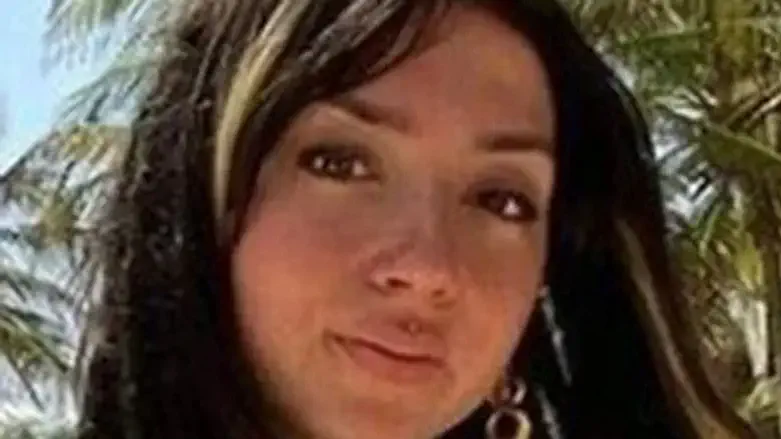
I am Shani Louk HY"D ’s father.
That sentence still feels unreal. It lands like a weight on my chest-heavy, final, impossible to lift. Shani was my daughter: vibrant, creative, stubborn in the best way, someone whose presence filled a room. On October 7, she was murdered by Hamas terrorists. The world watched her death become a grotesque spectacle. Her image was desecrated. Her humanity was flattened into pixels.
When your child is murdered and the footage spreads globally, you do not only bury a daughter. You bury the illusion that the world will treat the dead with dignity. You bury the hope that grieving parents will be shielded from cruelty. You learn, very quickly, how easily people expect you to “move on.”
What I did not expect-what no parent should ever endure-was a second wound: being forced into a prolonged struggle with a New York luxury residential building over whether I am allowed to memorialize my daughter.
Working with Rabbi Boteach-then watching him be targeted
From the earliest days after Shani’s murder, Rabbi Shmuley Boteach stood with my family. He showed up when grief was raw and unbearable. He honored Shani publicly with dignity. He dedicated a Torah in front of 1000 people in the heart of New York City with a guest speaker being the American secretary of Health and Human Services, Robert F Kennedy, Jr. He gave us comfort when very little comfort existed.
A year later, we sought to hold a small, quiet memorial of some seven people at Waterline Square in New York-nothing political, nothing disruptive, fewer than ten people. A prayer. A moment of remembrance. We erred in not asking their permission, it did not enter our heads someone would oppose it.
Waterline Square’s response was not compassion.
It was litigation.
Instead of saying, “We are sorry for your loss,” the building escalated matters, manufactured charges, and pursued legal action. Rabbi Boteach, who stood at our side, became a target of their attempt to expel him from the building and bankrupt him.
That alone should have shocked the conscience.
But what happened next is worse.
A second memorial-for Shani’s 25th birthday-blocked entirely
As Shani’s 25th birthday approached-February 7, a birthday she will never reach-Rabbi Boteach and I planned a 30-day countdown, beginning onJanuary 7: with 30 nights, 30 events, across America, each one honoring Shani’s life.
The first event was meant to take place at Waterline Square.
This time, we followed every instruction. We asked formally. We were prepared to pay, even though last time we had absolutely no obligation to pay for anything that did not reach the threshold of 10 people. But this time, we went over and above what was needed in order to make sure they could never question or stop a simple Memorial. We were flexible on dates. We needed only one thing before booking flights and inviting the community: confirmation of availability.
We never received it.
Instead, we were told something that defies belief.
In writing, it basically said:
Pay first. Fill out forms. Then we’ll check if the room exists.
Here is the email from the building’s property manager, sent to Rabbi Shmuley Boteach:
“Please see below for amenity rental instructions:
3 separate checks all made out to Two Waterline Square Condominium. Please drop off the checks to the front desk the day you submit the rental agreement.
Check 1 - Room rental per hour (price depends on which room).
Check 2 - Cleaning fee: $210.
Check 3 - Deposit: $500 or $1,000 for the great room.
Please also fill out attached amenity rental form and return to us for approval so we can help to make sure there is not going to be any duplicated reservations.”
Read that carefully.
They demanded payment first.
They demanded multiple checks first.
They demanded completed forms first.
Only after all of that, they said they would “help to make sure there is not going to be any duplicated reservations.”
You do not pay for a hotel room before checking whether a room is available.
You do not buy an airline ticket before confirming there is a seat on the flight.
After we practically pleaded and begged for a simple response as to whether October 7 was available, and to simply check the calendar, they suddenly sent this automatic email saying the building manager would be out of the office but forgetting to fill out any of the details. Read this:
“Thank you for your email. I am out of the office until (Day of week, Month, Day, Year). Your message is very important to me and I will respond upon my return. If you need assistance during my absence, please contact (Name) the (Title) at (area code, phone) or (email address). Thank you.”
We asked simple questions. They refused to answer.
Rabbi Boteach repeatedly asked the most basic questions any reasonable person would ask:
Is January 7 available or not?
If not, is January 6 available?
Is January 8 available?
These questions were never answered.
Instead, there were delays, deflections, and finally automated “out of office” replies-without return dates-while time-sensitive travel arrangements had to be made.
Eventually, the message became unmistakable to me: they would not allow the memorial at all.
Not on January 7.
Not on January 6.
Not on January 8.
Not ever.
This was never about money or paperwork
It seems painfully clear to me that this was never about fees or forms.
It was about refusal.
Refusal to allow a memorial.
Refusal to be associated with Shani Louk.
Refusal to engage with Jewish grief tied to October 7.
The conduct suggests something darker: a desire to distance the building entirely from anything connected to Jewish victims of terror and, by extension, to Israel itself.
I choose my words carefully. But when a building will not even check its calendar before demanding money-when it refuses to answer basic questions about availability-what conclusion is left?
“It’s just a building dispute”-no, it isn’t
Some will say this is procedural.
It is not.
When institutions treat grief as an inconvenience, they send a message far beyond one family: that Jewish mourning is negotiable, that Jewish pain is something to be managed away, that remembrance itself can be obstructed until it disappears.
Rules are not a substitute for humanity.
Process is not a moral shield.
Neutrality in the face of cruelty is cruelty with better manners.
The cost of this cruelty
I buried my daughter. I watched her image desecrated by terrorists. And now I am forced to fight to say her name in a building where we sought only quiet remembrance.
That is a cruelty layered upon cruelty.
This experience has compounded our pain and turned what should have been a sacred moment into a degrading struggle. It has taught me how easily grief is dismissed when it is inconvenient.
A remedy still exists
Waterline Square’s leadership could still choose decency.
They could allow a memorial-now or in the future-and ensure that no grieving family is treated this way again, while apologizing to us for the regretful incident.
I will not stop remembering my daughter
I did not choose to become Shani Louk’s father in this way. No parent would.
But I can choose whether to accept the idea that my daughter’s memory must be erased to make others comfortable. I refuse.
Shani’s name deserves dignity. Her memory deserves respect. And those who block remembrance should understand this:
You may control calendars and paperwork.
You may hide behind procedure.
But you do not occupy the moral high ground.
Not even close.