

Six months after the moshav of Shtula was expected to once again echo with children’s laughter, a renewed sense of hope was felt on Thursday in the small community near Israel’s northern border.
Eleven families from across the country arrived for an initial meeting to examine the possibility of relocating to Shtula, a moshav badly damaged during the war and still struggling to recover. The initiative reflects a broader effort by young couples and civic movements to strengthen settlement along Israel’s borders, even amid ongoing security challenges.
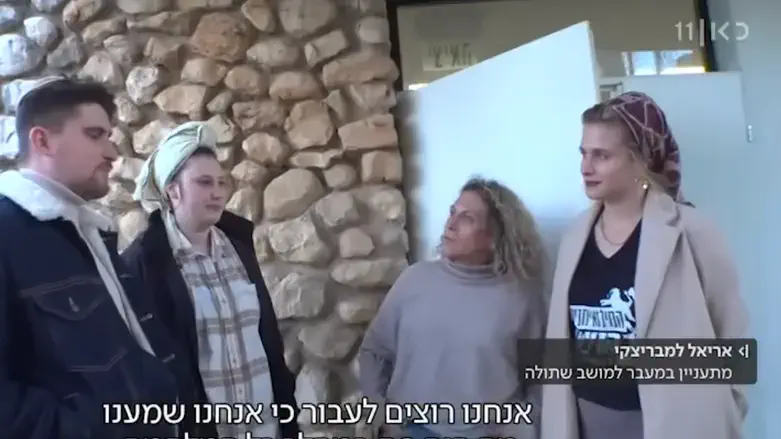
“We want to move because we heard what was here during the entire war, and we are a young couple,” said Ariel Lambritzky, who recently completed his regular IDF service. His wife is currently serving in national service. Until now, the couple has lived near their parents in Nahariya, but they are seeking an independent path and a place where they feel they can contribute to rebuilding and growth.
“We all understand that there is no place in the country that is 100% safe,” Lambritzky said. “Whether in the north, the center, or the south. If we can live with this goal, strengthen this place, and take on the mission, then this is what we will do.”
Shtula paid a heavy price during the war. Around 70 of the moshav’s 100 homes were damaged, and only a small portion have been renovated so far. As a result, just 40% of the residents have returned. With only five children currently living in the community, the local kindergarten remains closed.
Residents cite multiple reasons for the slow return. Many homes are still undergoing repairs, while others are hesitant due to the security situation. “It’s not calm here,” one resident explained. “At least once a day there is army fire - mortars, shells. You don’t get used to it.”
Despite this, some newcomers are undeterred. Nir and Ayelet, who came from the Golan Heights, are also considering making Shtula their home. “We’re looking at options,” they said, including agricultural land and proximity to Haifa and Nahariya, while weighing the challenges of life near the border.
Behind the initiative are activists from the reserve movement known as the “Victory Generation,” who view settlement as a key component of Israel’s recovery. “Victory is not only military,” one organizer said. “One of the areas that symbolizes victory for us is settlement, especially along the borders.”
According to the organizers, there is significant demand among families seeking to move north, particularly among religious Zionist communities, though the organizers stress that Shtula and surrounding communities in the Ma’ale Yosef region are traditionally mixed and largely secular in character.
In recent months, kibbutz members completing a year of service before IDF enlistment have been working in the moshav, helping maintain daily life and organize community activities. Still, the emptiness is palpable. “You walk the streets and sometimes there are no people,” one volunteer said. “You organize events, and not everyone comes.”
During a recent Hanukkah event, residents were asked what gives them hope in Shtula. The answer was unanimous: the hope that people will return, that young couples will come, and that children will once again fill the playgrounds.
For a brief moment, that vision became reality, as children played together in the moshav - a glimpse of what residents and prospective newcomers hope will soon become permanent. The effort, driven largely by civic initiative rather than government involvement, is another chapter in the ongoing attempt to restore life and resilience to Israel’s north.