

Hanukkah this year arrives after extraordinarily challenging times, including the war in Israel and a horrific massacre in Australia. It is a moment that invites reflection during a holiday that has always celebrated the miracle of light. The central question becomes unavoidable: how does one find light in moments of profound darkness?
During Hanukkah, Jews give thanks for the miracles performed for previous generations “in those days, at this time.” Traditionally, “at this time” is understood to refer to the season of Hanukkah itself, the time of year in which these miracles are recalled and relived.
As the son of Holocaust survivors, lighting the Hanukkah candles has always carried an additional layer of meaning. Beyond gratitude for the ancient miracles of the Hasmonean victory and the discovery of the pure oil that illuminated the Temple menorah, there is also an expression of thanks for survival itself. In every generation, including our own, miracles take place.
Classical commentary explains that “at this time” also alludes to hidden miracles - those that are not immediately visible, both for individuals and for the Jewish people as a whole. Gratitude is offered not only for overt miracles, but for endurance through calamity.
This year, emerging from war with Hamas, has similarly become a time of reflection. Looking back, tragedy is evident, but so too is the presence of Divine providence manifested in numerous ways.
A sworn enemy to the north, entrenched for decades, collapsed with startling speed. Another ruthless adversary was significantly undermined through astonishing and unconventional means. Iran, long committed to Israel’s destruction and pursuing nuclear capability, was rendered vulnerable and struck by Israel together with its ally, the United States. Hamas itself was humiliated and left defenseless.
Then, just before Hanukkah, a deeply unsettling video emerged: six hostages lighting a Hanukkah menorah in underground tunnels, singing traditional songs of the holiday. The footage evoked intense and conflicting emotions. Questions immediately arose. Why was the video filmed by their captors? For what purpose were the hostages given candles and allowed to light the menorah? And why was this recording later discovered by Israeli forces as part of the spoils of war?
The image called to mind the hidden flask of oil in the Temple, which produced a miracle that illuminated Jewish history. In the depths of the tunnels, within a reality defined by cruelty and despair, there appeared a moment of defiant light that transcended logic. It revealed a formidable strength of spirit and an ability to endure against all odds. This, too was a hidden miracle.
The lighting of the menorah by the hostages constituted a sanctification of God’s name by Jews who endured unimaginable suffering and who were later murdered for their faith in August 2024.
This lesson demands reflection and remembrance. As the Hanukkah lights are kindled, they are lit with renewed intention, honoring those who embodied faith under the darkest conditions. Gratitude is offered for the miracles and wonders that continue to unfold, even when they are not immediately recognized.
Daily prayer speaks of miracles that accompany life constantly, morning, afternoon, and night. The Hanukkah prayer of thanksgiving follows naturally from this recognition. It is immediately succeeded by a priestly blessing that culminates with a plea for peace born of Divine illumination.
That theme is echoed again in the concluding prayer of the Amidah, which asks for blessing, unity, and peace through Divine light. The light of the menorah is not merely physical, but a reflection of Divine radiance - a source of blessing, unity, and ultimately peace for the Jewish people as one.
These reflections are offered as a source of inspiration and strength. Readers are invited to engage further with these Hanukkah insights drawn from the author’s writings on the Torah and the Jewish holidays.
Hanukkah is a time with heightened potential for joy and celebration - a time to perceive the light of the miracles of Jewish survival and continuity. It calls for renewed dedication to spreading that light, for ourselves, for future generations, and for the entire Jewish people.
Hanukkah Sameach. Joseph Geliebter
About the Author
Dr. Joseph Geliebter is a clinical psychologist and the author of the Chamudei Shai series on the Torah and Jewish holidays. His works have received rabbinic endorsements and are available through Z. Berman Books and on Amazon.
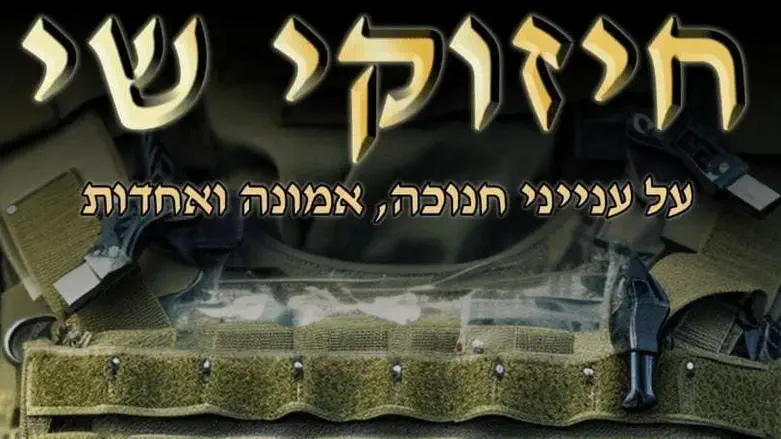
A special Hanukkah 5786 publication on this theme, released in Israel and featured in a Hanukkah lighting ceremony by an IDF unit guarding Jerusalem, is available at the following link: https://bit.ly/44vDcPW