
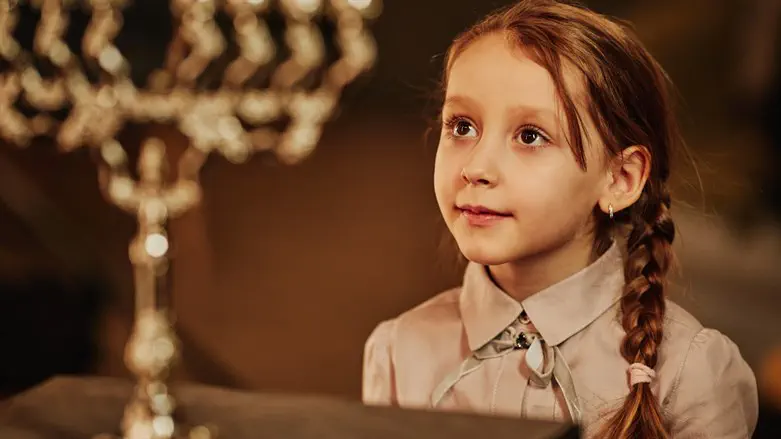
In the current parshios, we encounter the personality of Yosef, coinciding with our lighting of the Menorah. Yosef has three penetrating qualities connected to the Menorah light.
First, when lighting, we are mosif ve-holech-adding a new candle and lighting from it. This symbolizes the notion of adding kedusha and building upon it. This is in accordance with the view of Beit Hillel: ma’alin b’kodesh v’ein moridin (add holiness and do not retract). Yosef’s name and essence speak to this value: he was a "Yosef" of kedusha, always going forward and growing in holiness. His Torah shone and his good character was all-consuming. He was Yosef "HaTzadik," a manifestation of the 36 lights of the Menorah that correspond to the 36 hidden tzaddikim. Furthermore, he embodied the Ohr HaGanuz, the 36 hours of light from Creation that G-d hid away for the righteous.
Second, he was the fire needed to extinguish Esav; Yaakov felt confident to leave Lavan only once Yosef was born. The Menorah we light on Hanukkah came in tandem with the extinguishing of the Yevanim (Greeks), enemies who sought to destroy our souls.
Lastly, Yosef-who is a "sof" (end) character as Mashiach ben Yosef-paves the way for Mashiach ben David. Yosef had an intense desire for the rebuilding of the Mikdash, as seen by his selfless embrace of Binyamin. Similarly, Hanukkah is about a Menorah that symbolizes the rededication of the Temple.
Now, as we light the Menorah, we are awakened to ponder a character who finalizes our destiny-one who exhibited how to live a life of purity, who possesses the power to vanquish our enemies, and who has a passion for the Mikdash to be rebuilt, where Torah will then emanate from Tzion.
Purity
One of the great miracles of Hanukkah was that the flask of oil found was pure, not defiled. Although the halakha allows for impure items to be used for the tzibbur (congregation) when there is no alternative, G-d’s love for us alleviated this need. This was a miracle of total purity. When dealing with the character of Yosef, there was no compromise on purity.
He fought a burning yetzer hara for a year against the most beautiful woman in Egypt. The Gemara (Yoma 35b) tells us that the wife of Potiphar changed her clothes three times a day to seduce him. Ultimately, he had to summon the image of his father to overcome, but he fought a spiritual war unlike any other in history.
His Torah was holy and pure as well, directly transmitted from Yaakov. His life in chutz la'aretz (the diaspora) did not taint this Torah; in his first interaction with Yaakov, he sends wagons, hinting at the last Talmudic discussion they had about the eglah arufah. This subject was an area of Torat chesed, involving taking responsibility for other people’s lives-something Yosef was heavily involved with.
His middot were engulfed in purity. After suffering years in prison, he encountered two servants of the king who were experiencing sadness. He opened the conversation by asking what was bothering them. He felt their pain and wanted to solve their problems to give them peace of mind. He was a prisoner looking to free others.
Every time we light a Hanukkah candle, we affirm our commitment to live a life of light that Yosef shone, with vibrant Torah and stellar middot, even in a dark society.
A Warrior of Fire
Our answer to Esav is Yosef. Yaakov made this clear when he was only ready to depart from Lavan after Yosef was born. As Rashi (Bereishis 30:25) notes, Yaakov was the fire, Yosef the flame, and Esav the straw. Fire alone without a flame cannot spread. It was Yosef who would take Yaakov’s war cry and impart the blows on Esav.
A Temple of Light and Unity
There is a stunning scene that takes place when Yosef embraces Binyamin in Egypt. Rashi (Bereishis 45:14) notes that each was crying for the other’s loss of holy sites. Binyamin was crying over the Mishkan in Shiloh (in Yosef’s territory) that would later be destroyed, and Yosef was crying for the two Temples that would be destroyed in Binyamin’s territory.
A fundamental question arises: When Yosef cries for the loss of the two Temples, he expresses a desire for them to exist, even though that would mean Mishkan Shiloh could not last. By Binyamin crying over Shiloh, he wishes for its permanence, even if the two Temples never existed in his own territory. This is selfless unity wrapped up in the theme of the Mikdash.
The verse in Yeshayahu (11:13) states: "And the envy of Ephraim shall cease... Ephraim shall not envy Judah, nor shall Judah vex Ephraim." We see that in Messianic times, discord and jealousy will be put to rest. This was Yosef’s ultimate hope. He emphasized to the brothers that everything was from G-d, yet he was rebuffed by them when they exhibited distrust toward him upon their father’s death.
The Menorah in the Mikdash was a unified instrument of holiness. It was one block carved by fire, taking shape with G-d’s intervention. It is the symbol of unity that will represent the Jewish people at the time of redemption; we must only hasten and invigorate this impulse toward togetherness.
Conclusion
In gematria, Yosef’s name equals kamu (rise). This speaks to three aspects of his personality that match the theme of the Menorah. Yosef was always rising in kedusha, just as we mosif kedusha with the candles. Yosef represents Mashiach ben Yosef who will pave the way for victory in the end of days, just as the Menorah of Hanukkah was a symbol of defeating the Yevanim. And Yosef had a selfless desire to see the Temple rebuilt, just as we saw a rededication of the Temple at the time of the Menorah lighting.
The Gemara (Menachos 86b) explains that the windows of the Beit HaMikdash were narrow on the inside and wide on the outside, because it is the Temple that gives light to the world, without needing any light from the outside. We await a relit and rebuilt Jerusalem where we can recite the words of Yeshayahu (2:3): "Ki mitzion tetze Torah u'dvar Hashem miYerushalayim-For out of Zion shall go forth the Torah, and the word of the Lord from Jerusalem.”