
Fern Sidman is Senior News Editor at Jewish Voice
In the long arc of Australia’s multicultural self-image, the nation has prided itself on tolerance, civic harmony, and the quiet confidence of a society largely insulated from the ugliest expressions of sectarian hatred that have scarred other parts of the world. Yet since October 7, 2023, that self-conception has been eroding at a disturbing pace. A grim succession of antisemitic incidents-escalating in frequency, severity, and audacity-has exposed a reality that Jewish Australians have been warning about for years: antisemitism is no longer latent, coded, or marginal. It is brazen, normalized, and increasingly violent.
What began as chants has metastasized into arson, threats, and ultimately mass murder. The timeline is no longer anecdotal; it is evidentiary. And taken together, these incidents form not a random collection of crimes, but a coherent pattern-one that tells a story of radicalization, institutional failure, and the moral peril of a society that hesitates too long to confront hatred when it is still “only” rhetoric.
The post-October 7 period opened with a moment that should have shocked the national conscience. On October 8, 2023-barely a day after the Hamas massacre in southern Israel-hundreds gathered outside the Sydney Opera House, one of Australia’s most revered national symbols, to chant “gas the Jews.” The phrase was neither metaphorical nor ambiguous. It was a direct invocation of the Holocaust, shouted publicly, unapologetically, and initially met with institutional equivocation rather than decisive condemnation.
That moment marked a psychological rupture. It signaled to extremists that the boundaries of acceptable speech had shifted. What followed, with chilling predictability, was escalation.
By December 2023, multiple bomb threats had been issued against synagogues across the country. Though many proved to be hoaxes, their impact was real: Jewish families evacuated sacred spaces, children were sent home from schools, and a community already on edge absorbed yet another message that their safety was conditional.
As 2024 unfolded, antisemitic hostility began to focus less on abstract slogans and more on the physical infrastructure of Jewish life. On May 25, Australia’s largest Jewish school in Melbourne was defaced with hate-filled graffiti-an attack not merely on a building, but on children. The symbolism was unmistakable: even Jewish education, even minors, were now considered legitimate targets.
In October 2024, the pace accelerated sharply. A Jewish bakery in Sydney was sprayed with antisemitic graffiti, including explicit threats against its Jewish owners. Days later, a brewery in Bondi-Curly Lewis Brewing Company-had its front door torched after being mistakenly identified as a Jewish-owned kosher deli next door. The error did not mitigate the intent. When hatred is indiscriminate, accuracy becomes irrelevant.
On October 20, 2024, the intended target was hit directly. Lewis’ Continental Kitchen, a kosher restaurant, was set ablaze in a clear arson attack. For Jewish Australians, this was a moment of bitter recognition: the pattern so familiar from European history was repeating itself.
First the words. Then the windows. Then the fires.
By November 21, 2024, the violence had spilled into residential life. Cars were set on fire and buildings vandalized in a predominantly Jewish neighborhood in Sydney. The message was no longer confined to institutions or businesses; it was territorial. Jews were being told, implicitly and explicitly, that their presence itself was an affront.
The following month, on December 6, 2024, the Adass Israel Synagogue in Melbourne was torched in what authorities described as a terrorist arson attack. A synagogue-house of prayer, community anchor, historical refuge-was reduced to a crime scene. For many, this marked a turning point: the recognition that what Australia was facing was not sporadic bigotry, but organized, ideologically driven violence.
The new year brought no reprieve. On January 7, 2025, a man threatened worshippers at Chabad North Shore Synagogue in Sydney. Three days later, the Allawah Synagogue was vandalized with swastikas. On January 11, an attempted arson attack targeted the Newtown Synagogue. By January 21, a Jewish childcare center in Sydney had been set on fire and vandalized-another attack on the most vulnerable, and another reminder that Jewish visibility itself had become dangerous.
These were not crimes of passion. They were acts of intimidation designed to instill fear, to force concealment, to make Jewish Australians question whether it was safe to live openly as Jews in their own country.
Perhaps one of the most chilling incidents occurred on February 12, 2025, when two nurses at a Sydney hospital were suspended after publicly declaring on TikTok that they would murder their Jewish patients. This was not graffiti on a wall or fire at a building; it was an expression of genocidal intent from within a trusted public institution.
The implications were profound. If antisemitism could be spoken so casually by healthcare professionals-individuals entrusted with life and care-then the problem was no longer fringe. It had seeped into the moral bloodstream of the society.
By mid-2025, the trajectory had become unmistakable. On July 4, an arson attack targeted 20 people attending a Shabbat dinner at East Melbourne Synagogue. That the victims survived did little to soften the warning: mass casualty events were no longer hypothetical.
Then came December 14, 2025.
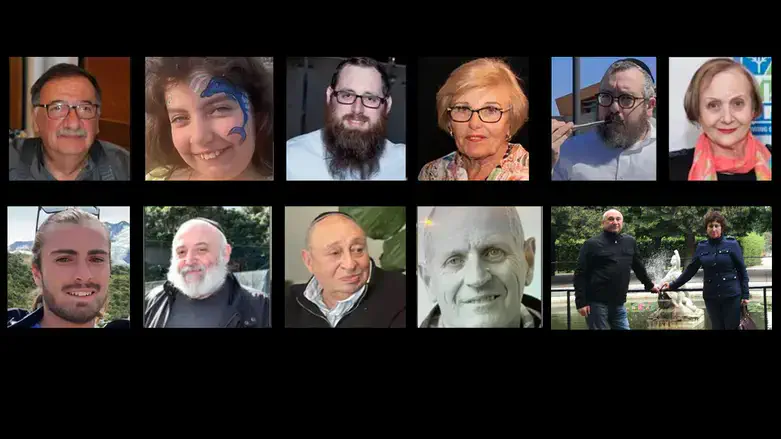
Two gunmen opened fire at a Hanukkah celebration, murdering 15 people, including a child, and injuring 29 others. It was the deadliest antisemitic attack in Australian history. A festival of light was turned into a scene of carnage. Candles meant to symbolize resilience illuminated bloodshed instead.
At that moment, any remaining pretense collapsed. This was no longer about protest, policy, or geopolitics. It was terrorism. It was antisemitism in its most naked and lethal form.
Throughout this period, a familiar refrain echoed in public discourse: that rising antisemitism was an unfortunate but understandable byproduct of anger over events in the Middle East. The timeline demolishes that argument.
Jews were targeted at synagogues, schools, childcare centers, hospitals, restaurants, homes, and holiday celebrations-places with no conceivable connection to foreign policy. Holocaust slogans were chanted. Swastikas were sprayed. Children were threatened. Patients were singled out.
This was never about borders or diplomacy. It was about Jews.
History teaches that antisemitism often cloaks itself in the language of politics, but its core impulse remains constant: the dehumanization of Jews as a collective. Australia is now confronting the consequences of indulging that masquerade for too long.
The lesson of this chronology is stark. Hatred does not self-correct. When antisemitism is rationalized, minimized, or treated as a secondary concern, it escalates. Words become threats.
Threats become fire. Fire becomes murder.
Australia now stands at a crossroads familiar to many societies before it. The question is no longer whether antisemitism exists within its borders; the evidence is incontrovertible. The question is whether the nation possesses the moral clarity and political will to confront it decisively-before the next date is added to the list.
For Jewish Australians, the cost of delay has already been measured in fear, trauma, and lives lost. For the country as a whole, the cost of inaction may yet prove even higher.