
So what exactly was the victory of Hanukkah? It is clear that beyond the military battle and the miracle of the olive oil, there was also a cultural war. What, then, was the real conflict?
Rabbi Tzadok Hakohen of Lublin (Pri Tzaddik, Hanukkah; Resisei Laila 56) offers a wider perspective. He explains that to understand a cultural conflict, one must view it through a broad historical lens. Every major confrontation with Am Yisrael, he teaches, has two parallel sides - “Ze Leumat Ze.” Whenever good appears, a corresponding opposing force emerges alongside it. Hashem creates both, and at times they even resemble one another. What, then, was the “Ze Leumat Ze” of Hanukkah?
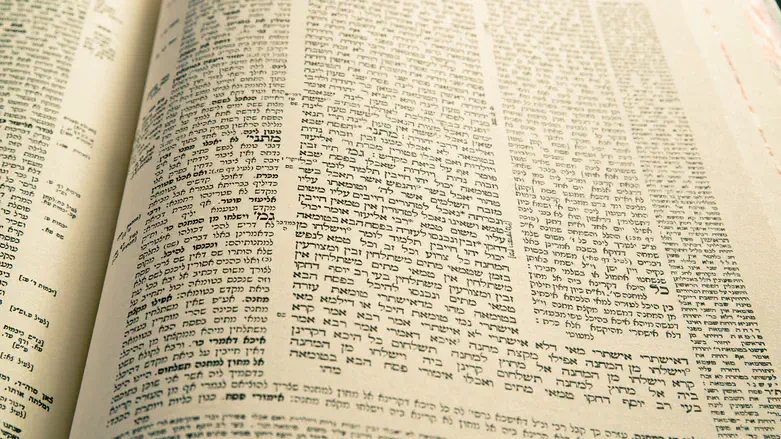
Rabbi Tzadok Hakohen explains that the emergence of Torah Shebe’al Peh (oral Torah, transmitted wisdom) began precisely when Nevua (prophecy) came to an end. As long as Nevua and open Divine revelation were present, human wisdom alone was considered incomplete and uncertain. Only once prophecy ceased did the unique wisdom of Torah Shebe’al Peh begin to fully develop.
At the same time, this shift was mirrored in the wider world. As Torah Shebe’al Peh emerged within Israel, a parallel form of wisdom developed among the nations - Greek chochma, a wisdom rooted entirely in human intellect. This was no coincidence, but rather another expression of “Ze Leumat Ze.” At the exact moment that Greek “chochma” - human wisdom - began to flourish, the unique chochma of the Jewish people also began to develop. Shimon Hatzaddik, a remnant of the Anshei Knesset Hagedola (Avot 1:2) and a central figure in the chain of the Mishnah, lived during this era and even met Alexander the Macedonian. At the same time, Aristotle, the leading Greek philosopher, was shaping Greek thought.
On one side - “Ze” - Chazal were developing Torah Shebe’al Peh. On the other side - “Leumat Ze” - Greece reached its peak in human chochma: philosophy, science, mathematics, and academia.
The Jewish victory lay in insisting that chochma does not stand on its own. True wisdom must be bound to morality and connection to Hashem and the infinite. Torah Shebe’al Peh did not replace Nevua; it continued it. Although prophecy ended with the destruction of the First Temple, the sages, through their wisdom, continued to operate with Ruach Hakodesh - a living continuation of that prophetic spirit.
Hanukkah, then, was not only the miracle of the oil, not only a military victory, but also a cultural triumph and the beginning of a new era.
What do you think is the “Ze Leumat Ze” of our time?
Rabbi Yonatan Kirsch was born in New Jersey and made Aliyah as a child. A musmach of Rabanut Ir (Chief Rabbinate of Israel), he served as a rebbe at the Hesder Yeshiva of Sderot and taught at Yeshivat Hakotel. He currently teaches at Yashlatz in Jerusalem and is the author of Maalot HaMikve. A combat soldier, he served in Lebanon