

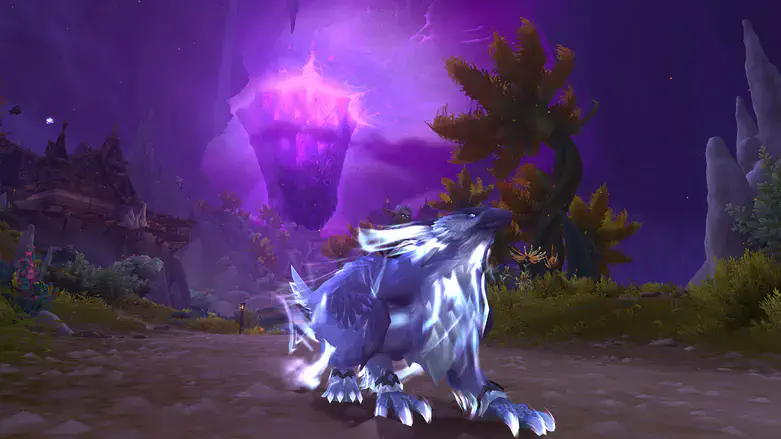
Planning to step into World of Warcraft for the first time? This article has everything you need! Here, we’ll go through all the essential aspects of WoW to help you understand how the game works and start your adventures on the right foot.
And if you ever feel like you need an extra hand, you can always turn to WowVendor’s WoW carry services to speed up your leveling, find reliable raid groups, or handle any difficult activity you may struggle with.
World of Warcraft in a Nutshell
World of Warcraft is an MMORPG, which is a mix of a massive online world shared with thousands of players and classic RPG elements where everything revolves around progressing your character.
The in-game world of Azeroth is split into multiple large zones, each with its own theme, lore, level range, and unique creatures that inhabit it. During your travels, you’ll also visit cities, which act like safe hubs where you can find vendors, trainers, banks, auction houses, and all kinds of useful services that will help you progress and make your journey a bit easier.
Throughout the entire game, your main goal is to make your character more powerful. The stronger you become, the more challenging activities you can take on and the better rewards you can earn.
Your Character
Everything in World of Warcraft starts with your character. When creating one, you choose three key things: faction, race, and class:
- Factions. WoW has two major factions: Alliance and Horde. Each one has its own set of playable races, unique capital cities, and distinct lore.
- Races. You can pick between Humans, Orcs, Night Elves, Trolls, and many others. Races mainly differ in looks, aesthetics, starting zones, and a few minor racial abilities that give small bonuses in combat or utility.
- Classes. Classes define your playstyle and what your character can actually do in combat. WoW features all the classic fantasy archetypes, like Warriors, Mages, Druids, Priests, and so on, each having unique abilities and spells.
Every class can fulfill one or more group roles:
- Tank, who leads the groups, absorbs damage and keeps enemies focused on them.
- Healer, who keeps the group alive by restoring health and removing harmful effects.
- Damage Dealer (DPS), who focuses on destroying enemies; comes in ranged and melee varieties.
Most classes have several specializations (specs), each offering a different way to play. For example, a Paladin can be a tank (Protection spec), a damage dealer (Retribution), or a healer (Holy). Switching between specs is easy and lets you try out various playstyles without creating a new character.
Skills and Talents
As you level up, you unlock new abilities and spells that shape your rotation and combat style. You’ll also get access to talent trees (Class, Spec, and Hero), where you pick passive bonuses and active abilities that further refine your build.
Professions
Professions are additional trade skills that let you gather various resources (Mining, Herbalism, Skinning) or craft useful items (like Blacksmithing or Alchemy). Professions can help you make gold or provide you with useful utility items and powerful gear pieces.
Getting Started & Leveling
Your adventure in World of Warcraft begins in a starting zone, either Exile’s Reach or a race-specific area tied to the character you create.
From your very first minutes and throughout the entire game, you’ll be completing quests. Quests guide your progression, help you learn the game, and most importantly, reward you with experience points (XP), gear, gold, and other useful items.
Completing quests and other in-game activities earns your character XP, which allows you to level up. As you gain levels, you unlock new abilities and content. Once you reach the level cap (the maximum level available), you stop earning XP. The level cap increases with each major expansion; as of The War Within, the cap is level 80.
Gear
Gear refers to all the equipment your character wears: weapons, armor, trinkets, rings, etc.
Every piece of gear has an item level (ilvl), which is the main indicator of how strong it is. Gear directly affects your character’s power: higher-quality items increase your primary and secondary stats and boost overall performance.
In modern WoW, gear progression is further organized into tiers (Explorer to Myth) and upgrade tracks within them (1/8, 2/6, etc). Each track defines how far you can upgrade a specific item. Upgrading is done with special upgrade currencies, such as Valorstones and Crests.
Items
World of Warcraft offers a wide range of item types and reward categories, all of which follow special binding rules:
- BoP (Bind on Pickup) items become soulbound, i.e., tied to your character, the moment you pick them up. You cannot sell or trade them.
- BoE (Bind on Equip) loot can be traded or sold until it is equipped.
- Warbound items can be shared between characters on the same account, but not traded to other players.
Besides gear, which we’ve already covered in detail, WoW has several other major item categories you’ll encounter as you play:
- Mounts: Your main way to travel faster across the world.
- Consumables: One-use items such as potions, flasks, and food that provide healing, mana restoration, or temporary buffs.
- Toys: Fun or utility items that offer cosmetic effects or small quality-of-life interactions.
- Pets (Battle Pets): Collectible creatures used in the Pet Battle system; they can fight and level up.
- Transmogs: Appearance items that let you change how your armor and weapons look.
- Recipes & Patterns: Profession items used to teach you new crafts.
- Materials: Crafting reagents collected from gathering and looting.
Endgame
When you reach the level cap, WoW opens up its endgame that houses the most challenging activities and top-tier rewards.
Here are the main types of endgame content:
- Dungeons: Small-group (5-player) instances that involve fighting through packs of enemies and several bosses.
- Mythic+ Dungeons: An upgraded, infinitely scaling version of regular dungeons with a timer and increasing difficulty levels called Keys. Mythic+ offers some of the best gear in the game and is a core part of competitive PvE content.
- Raids: Large-group (10-40 players) activities with complex boss encounters. This is where you’ll find the hardest PvE fights and the most powerful gear.
- Delves: Small-scale adventures designed for solo play or groups of up to 5 players.
- PvP (Player vs Player): Battlegrounds, Arenas, and open-world fights via the War Mode allow players to compete against each other. PvP has its own gearing system and seasonal rankings with titles, achievements, and rewards.
- World Bosses: Powerful open-world enemies that require many players to defeat. They reset weekly and offer a chance at valuable gear and other rewards.
Auction House
The Auction House is the main hub for buying and selling items in WoW. Players use it to trade gear, consumables, and other goods that are not Warbound or BoP.
All transactions are made with gold, the primary in-game currency, which players can earn through professions, selling loot, and completing various activities.
Prices on the Auction House are player-driven and change, depending on supply and demand. Many players use this system to make a profit through item flipping, purchasing items cheaply and reselling them at a higher price.
Events
WoW regularly hosts limited-time in-game events. Some are tied to real-world holidays (like Hallow’s End and Brewfest); others are unique to Azeroth. During these events, players can complete special quests, join themed activities, and earn exclusive rewards that are often unavailable at any other time.