
We were all shaken this week with the horrific news of the antisemitic attack at a Chabad Menorah lighting in Sydney, Australia. This only adds to the already existent gloom and fear that so many Jews are experiencing. An ever-deepening political divide in the US, never-ending conflict in Israel, in-fighting among our fellow Jews in the Holy Land, growing antisemitism on both the left and right, and in our OU community we still feel the weight of the tremendous loss of Rabbi Moshe Hauer, zt”l.
It is all too easy to look around us and feel hopeless.
Three weeks ago, the Conference of Presidents of Major Jewish Organizations hosted five released hostages and their family members, before they traveled to meet with President Donald Trump. Each one shared their remarkable and moving story, but one comment stood out. When it was his turn to speak, Segev Kalfon described the horrific ordeals he overcame and specifically, the lack of clean water, devoid of dirt and bugs and even worms, severely impacting his hygiene and health. He then picked up the bottle of water before him and said, “All I want to say is that I am grateful for clean water.”
If there is anyone who would be justified in having what to complain about, it was Segev, and yet he taught me how a change of perspective can fill us with gratitude.
Our tradition teaches us (Avodah Zara 8a) about the pre-history of the holiday of Hanukkah. During the very first winter, Adam watched as the days got shorter and shorter, the dark nights getting ever longer. He was filled with fear and despair that the waning light signified his coming death; he prayed and fasted for eight days. And then, one day, he noticed that the days suddenly started getting longer. He celebrated the winter solstice, reminding him and his offspring that “there is no room for hopelessness,” and that the dark nights, with patience and the right perspective, can transform into glorious mornings.
There is a famous debate between Shammai and Hillel as to how we light the candles on Hanukkah. Shammai suggests that we begin with eight candles and each day we remove one candle. Hillel argues that we begin with one and add an additional candle each night.
Rav Avraham Yitzchak Kook explains that Shammai and Hillel are not arguing, they are focusing on competing phenomena. Shammai is describing what is known as yeridat hadorot, the decline in spirituality and greatness that grows with every generation. Hillel acknowledges such a decline but argues that with the decline of the great lights of every generation, there is concurrently an aliyat hadorot, an ever-increasing light that can be found among the masses.
Despite the heartbreaking news from Sydney, we are heartened by the heroic actions of Ahmed al-Ahmed in disarming one of the attackers and the outpouring of love, unity, and support from the entire Jewish world. Despite the new adversaries that continue to crop up, we have received words of encouragement from faith leaders and the actions of complete strangers who support the Jewish People. Despite the political divide, we at the OU have experienced bi-partisan support for many of the values we fight for daily. And despite the terrible loss of Rabbi Hauer, zt”l, we have witnessed our team at the Orthodox Union step up and move forward with a newfound determination.
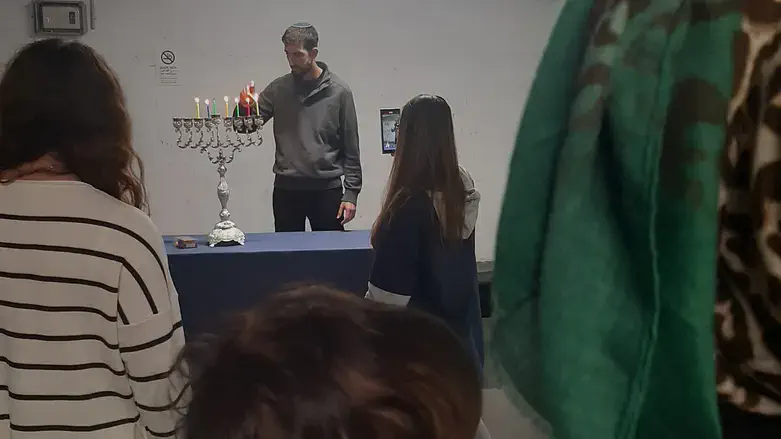
Jewish law accords with the ruling of Hillel. During this holiday of Hanukkah, as we proudly and fearlessly light our Menorahs, we are enjoined to focus our attention on the increasing light around us, how the dark nights of exile will give way to the brilliant light of redemption, and how fortunate we are to receive the incredible blessings of life, like a clean glass of water.
Wishing you and yours an illuminated, glowing, and thankful Hanukkah.
Rabbi Dr. Josh Joseph is OU Executive Vice President and Chief Operating Officer