
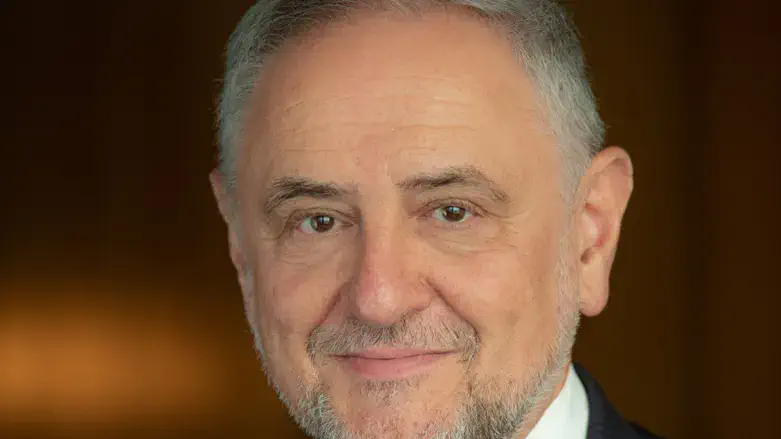
Robert Singer is the chairman of the Center for Jewish Impact, member of the advisory board of the Combat Antisemitism Movement and a former CEO of the World Jewish Congress and World ORT.
Only days ago, on the first night of Hanukkah, at least fifteen innocent people were murdered in cold blood on Bondi Beach during a festive family-oriented lighting ceremony. A moment meant to celebrate light, hope and continuity was transformed into a scene of terror and bloodshed.
What makes this atrocity even more devastating is that it did not come out of nowhere. The warning signs were there. The writing was on the wall.
In the days, weeks and months following the October 7 massacre, Australians witnessed scenes that should have set off alarm bells at the highest levels of government and society. Outside the Sydney Opera House, pro-Palestinian demonstrators were heard chanting, “Where are the Jews?” This was not political protest. It was a threat. It was incitement, and it was tolerated.
When calls for Jewish targeting or murder are excused, relativized or dismissed as “context,” “anger,” or protected expression, including by members of the Australian government, a dangerous message is sent: that Antisemitism is understandable, negotiable or even legitimate.
That message has consequences, and the Bondi Beach massacre is one of them.
I write this not only as an observer, but as someone who has been warning about this trajectory. In September, I attended and spoke at the 2025 Australian Mayors Summit Against Antisemitism, convened on the Gold Coast. The summit was organized by the Combat Antisemitism Movement (CAM), together with the CAM Committee in Australia, and held with the broad support of all major Jewish organizations in the country. It brought together mayors and local leaders from across Australia to confront the sharp rise in antisemitic incidents and the growing sense of insecurity within Jewish communities.
Yet even then, the warning signs were dismissed. Some derided the summit as a political show, accused organizers of overstating Antisemitism, or cynically claimed it was an attempt to deflect attention away from Israel. Some mayors were pressured not to attend at all. Others chose to play down longstanding and well-documented concerns over anti-Semitic attacks.
That reluctance to listen, to take Jewish concerns seriously, has now exacted a devastating price.
Antisemitism today does not always announce itself with swastikas and broken windows. It increasingly arrives wrapped in the language of politics, activism and moral outrage.
However, its essence remains unchanged: the targeting of Jews as a collective, the stripping away of legitimacy, safety and humanity. When Jews are singled out, violence is never far behind.
Australia must confront a hard truth. Antisemitism has become normalized. It has been allowed to fester in protests, on campuses, online and in parts of public discourse. This is no longer a fringe problem. It has moved from the margins to the mainstream.
This is the moment for clarity.
Antisemitism is not just a Jewish problem. It is a threat to the moral fabric of Australia itself. Societies that tolerate hatred of Jews rarely stop there. When one minority is marked as expendable, democracy itself is weakened. To remain silent is to concede. To confront Antisemitism is to defend the values on which Australia prides itself.
The Jewish community of Australia is not asking for special treatment. It is asking for what every citizen deserves: safety, respect and recognition of its contributions. Australian Jews have helped build that nation’s economy, culture, medicine, science and civic life. They are not guests. They are part of Australia’s story.
Hanukkah teaches that light does not defeat darkness by accident. It requires courage, persistence and moral resolve. Lighting a menorah is an act of defiance against despair, a declaration that even a small flame can push back overwhelming darkness.
Symbolism alone is not enough. Leadership matters.
The Australian government must understand its role in where we are today. Its attitude towards Israel, even when it is on the same side of the fight against global Jihadism, has been dismissive at best, and permissive at worst. Some will have taken this as permission to act.
Antisemitism cannot be treated like other forms of prejudice, managed with generic statements or symbolic gestures. It must be confronted decisively and without equivocation. Incitement must be prosecuted, and threats must be taken seriously.
Law enforcement must be empowered to act with zero tolerance. Political leaders must draw clear red lines, and defend them, even when it is uncomfortable.
Silence in the face of hatred is not neutrality, it is complicity.
Every time Antisemitism is excused or ignored, extremists are emboldened. Every failure to act sends a message that Jewish lives are somehow less worthy of protection.
Bondi Beach must be a turning point.
Australia now faces a choice. It can continue to minimize, rationalize and delay, or it can confront Antisemitism with the seriousness it demands. One path leads to further radicalization and violence. The other reaffirms Australia’s commitment to democracy, tolerance and the sanctity of human life.
The victims of the Bondi Beach Massacre deserve more than words. They deserve moral clarity, decisive action and the courage to finally say: enough.