
Hanukkah has two main themes: military victory and the rededication of the Temple. Independence enables spiritual renewal, allowing Israel’s unique light to shine. Hanukkah’s single “candle” symbolizes the basic unity of diverse holy lights. The ancient miracles can be linked to modern Israel’s spiritual revival and national restoration, providing increased light through faith and action.
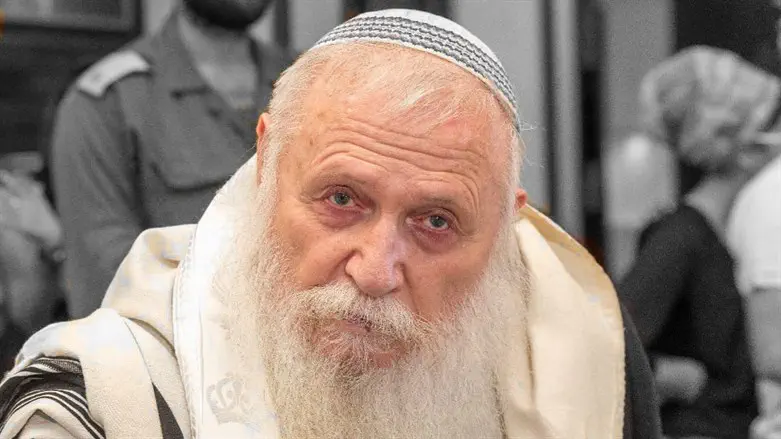
Note: this article is an extract from Rabbi Chaim Drukman’s book, “La-Zeman Hazeh,” a series of essays about Jewish holidays, including “new” ones that were established in the last hundred years to celebrate the Jewish people’s return to the Land of Yisrael.
Adapted and translated by Moshe Goldberg
What Does “Hanukkah” Mean?
Throughout the generations, various explanations have been offered about the meaning of the name of Hanukkah. Examining these ideas can shed light on the essence of the holiday.
Rabbi David Abudraham (Order of Lighting the Hanukkah Candle) emphasizes the military victory associated with Hanukkah and uses this to explain the name of the holiday: “In the Second Temple, the Greeks made harsh decrees against Israel… until the blessed Creator showed them mercy, and the sons of the Hasmoneans prevailed and defeated the Greeks on the 25th of Kislev. Therefore these days were called Hanukkah, meaning that they encamped (chanu) on the 25th (kah) of Kislev.”
On the 25th of Kislev, Israel prevailed over the Greeks and rested from their enemies -the holiday is named for the military victory: chanu-kah.
Or Zarua (Laws of Hanukkah 351) emphasizes a different aspect of the holiday: “Because the Greeks entered the Sanctuary and defiled all the vessels, the Jews did not have any oil to light. And when the hand of the House of the Hasmoneans prevailed, they brought seven iron rods… and began to light. And why do we light for eight days? Because they dismantled the altar and rebuilt it, and throughout the seven days they repaired the sacred vessels… and they could not make new oil. Therefore, a miracle was performed with one jar of oil, which lasted eight days. And the holiday is called Hanukkah - after the dedication (chanukat) of the altar that had been dismantled and rebuilt.”
A Single Goal
The victory in the war and the rebuilding of the altar are two actions that complement each other.
Raising the banner of revolt by the Hasmoneans and their going out to battle against Greece - the empire that ruled the world at the time - had a goal: to rededicate the altar. The Greeks sought “to make them forget your Torah and to remove them from the statutes of your will” (Al Hanissim prayer) - to defile the holiness of Israel and abolish the divine service. The stated purpose of the revolt was to return to divine worship and rededicate the altar.
The revelation of Israel’s holiness in full purity could only be realized after victory - freeing the people and the land from Greek oppression. Only as free people could Israel truly purify the Temple, dedicate the altar, and reveal holiness in the world.
The link between the two goals can be seen in the words of Rambam at the beginning of the Laws of Hanukkah (3:1):
“In the Second Temple period, when Greece ruled, they made harsh decrees against Israel and abolished their religion, and did not allow them to engage in Torah and mitzvot. They seized their possessions and their daughters, entered the Sanctuary, breached its walls, and defiled the pure vessels. Israel suffered greatly and were greatly oppressed by them - until the God of our ancestors had mercy and saved them, and the sons of the Hasmoneans, the high priests, prevailed and killed the Greeks. They appointed a king from among the priests, and sovereignty returned to Israel for more than 200 years, until the second destruction.”
Rambam begins with the military victory, the end of the oppression and the liberation of the land. Afterwards, in the next halakha, he adds the second level: “And when Israel prevailed over their enemies and destroyed them - on the 25th of Kislev - they entered the Sanctuary and found only one jar of pure oil, with enough oil for only one day, and from it they lit the lamps of the Menorah for eight days, until they pressed olives and produced new pure oil. Because of this the sages of that generation decreed that the eight days, beginning on the eve of the 25th of Kislev, be a time of joy and praise…”
Here we have the two aspects of the holiday, together forming the complete concept of Hanukkah: the military victory and the shining of holy light in purity. The victory in war and the dedication of the altar are one and the same. The revolt began because the Greeks sought both to defile Israel’s oil and to extinguish their light. The Hasmoneans went to battle to liberate the people and the land from bondage. This was out of a longing for the spirit of Israel to return to being completely expressed so that Israel’s unique light might shine forth in the world.
Independence as the Basis for Revealing Our Identity
If we try to understand Hanukkah fully, we will see that the first stage of gaining independence served only as a foundation for a higher stage - the revelation of our true essence.
In Tractate Megillah (14a) the Gemara explains that the days of Purim were established based on a logical comparison to Passover (a kal vachomer): “Rabbi Chiya bar Abin said in the name of Rabbi Yehoshua ben Korcha: If from slavery to freedom (the Exodus) we sing praise - then from death to life (the Purim miracle) all the more so!” The Gemara asks: Why then do we not recite Hallel on Purim just as we do on Pesach? The Purim miracle seems greater, for we were rescued from death to life.
Haman sought “to destroy, kill, and annihilate” (Esther 3:13), whereas on Pesach we were merely freed from slavery. Among its answers, the Gemara cites Rava: “After Pesach: ‘Praise, O servants of the Lord’ (Psalms 113:1) - we were no longer servants of Pharaoh. But after Purim: ‘Servants of the Lord’ - and not servants of Ahasuerus? We remained servants of Ahasuerus!”
There is a huge difference between the redemption from Egypt and the salvation of Purim. When we left Egypt, we were no longer enslaved to Pharaoh and we were free; therefore we can boldly say, “Praise, O servants of the Lord.” But on Purim, although we were saved from death, we remained in exile and did not escape the rule of Ahasuerus. Therefore we cannot say “servants of the Lord,” and so we do not recite Hallel on Purim.
Only one who has completely escaped human bondage can be a complete servant of God. Imagine a person with exceptional artistic talent who can create unique works with his hands, but whose hands are bound in chains. His special abilities cannot be realized if his hands are tied. The chains must be removed first; only then can his abilities be seen.
Physical redemption frees us from being enslaved to others, and only after liberation from human bondage can there be spiritual redemption - to be servants of God and fully walk in His ways. If we are enslaved by others, we are prisoners in a “jail,” unable to be ourselves and to fulfill our purpose. Only when the oppression falls and we emerge from “prison” will our true essence be revealed to the world.
One Light - Many Shades
The one light of Hanukkah includes within it many different shades. With respect to the blessing over fire in Havdalah, the Mishnah (Berachot 8:5) brings a dispute: Beit Shammai rule that one blesses “ma’or ha-esh - the light of the fire,” because, as the Gemara explains (Berachot 52b), fire has one light. Beit Hillel say “me’orei ha-esh - the lights of the fire,” because fire has many hues.
The Vilna Gaon (Shenot Eliyahu, Berachot 8:5) explains that Beit Shammai refer to fire itself, which is one, while Beit Hillel emphasize the multiple colors of the fire. So too we must view our reality - to our eyes it appears composed of different shades, such as holiness and royalty, but in reality they are one light, a single indivisible completeness.
Indeed, although during Hanukkah we light many candles, in the blessing we say only “to light the Hanukkah candle,” not “candles.” It is one candle that contains different colors in a unified way. Hanukkah is a single entity which contains different layers of light.
Rav Kook writes in Olat Re’iyah (I, p. 535): “Hanukkah… depicts all the lights that must shine within the nation - the light of Torah, the light of prophecy, the light of wisdom… but before the ultimate purpose of life is recognized, all these many lights appear individually as if they are separate… and sometimes these separations lead to disagreements - some emphasize one light, and they feel that anyone who sees the others as important is diminishing the glory of the light they cherish… But these divisions will not exist forever… for all the lights are united into one candle. Therefore, the blessing of Hanukkah does not mention ‘candles’ but refers to the sublime future, ‘the Hanukkah candle.’”
There are many shades of light within the nation, and they do not contradict each other. On the contrary - they form one essence, one candle.
The Miracle in Our Generation
In our generation, we have the merit of witnessing the complete Hanukkah miracle - in both its spiritual and national aspects.
Before the establishment of the State of Israel and in its early years, it seemed that Torah was disappearing, God forbid. It seemed that everything was fading. We saw it with our own eyes, and people were confused and distressed. But in our generation, we have experienced the “miracle of the jar of oil” - a tremendous display of Torah light, a return to Torah of those who study it in earnest! Today in Israel there is Torah study - in all its disciplines - with an intensity that never existed in any previous generation.
And in the national sphere - in Israel’s wars we have encountered the miracle of the many delivered into the hands of the few. God wanted the Land of Israel to be returned to us, and everything occurred beyond simple calculation, beyond rational comprehension. With God’s help, we established a strong, independent state - a reality that had not existed for thousands of years.
This is the true significance of lighting Hanukkah candles. Throughout the year we must increase light: the light of faith, the light of Torah, the light of love of Yisrael, the light of love for the Land of Israel and the State of Israel - all through the perception of unity rooted in the Hanukkah candle, of Torah and kingship, of independence and inner identity.
The way to illuminate is through personal example in all areas and in every possible way. We must increase the great light of the Torah of the Land of Israel, with deep faith that ultimately these holy lights will illuminate the entire nation and all the land. Let us pray that we will see the completion of our redemption quickly, in our time.