

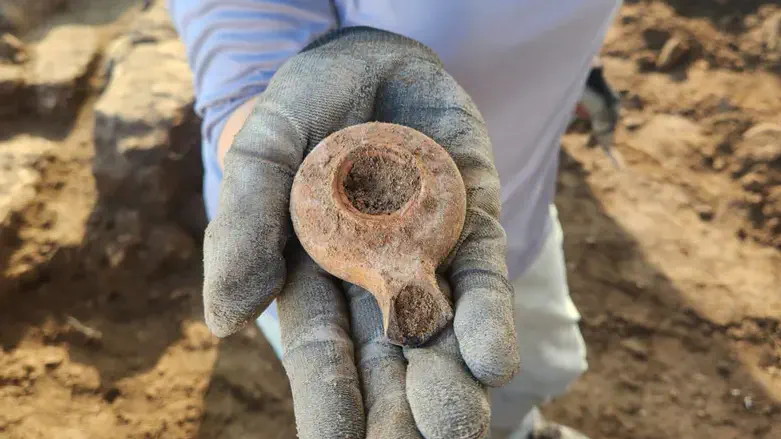
A lamp dating back about two thousand years was discovered Sunday, on the eve of the holiday of Hanukkah, during archaeological rescue excavations at Tell Qasile, located in the heart of the Eretz Israel Museum (MUZA) in Tel Aviv.
The lamp, which was found fully intact, is dated to the Herodian period - from the first century BCE to the first century CE.
The lamp was discovered in the southwestern corner of the tel, an area where previous excavations were conducted under the direction of Professor Amihai Mazar and Dr. Etan Ayalon.
In previous excavations, an Islamic structure and a Byzantine building were uncovered, and in the current dig, a rockslide was found that extended an ancient wall - within which the lamp was located.
According to the archaeologists, the lamp is typical of the Herodian period, with soot marks at its ends, indicating it had been used.
Yelena Elgart-Sharon, MUZA's curator of archaeology and in charge of the excavations on behalf of the museum, stated, “The rescue excavations are part of a project that began several years ago at MUZA's initiative, aiming to replace the site’s roofing and make Tell Qasile accessible to the public again.”