
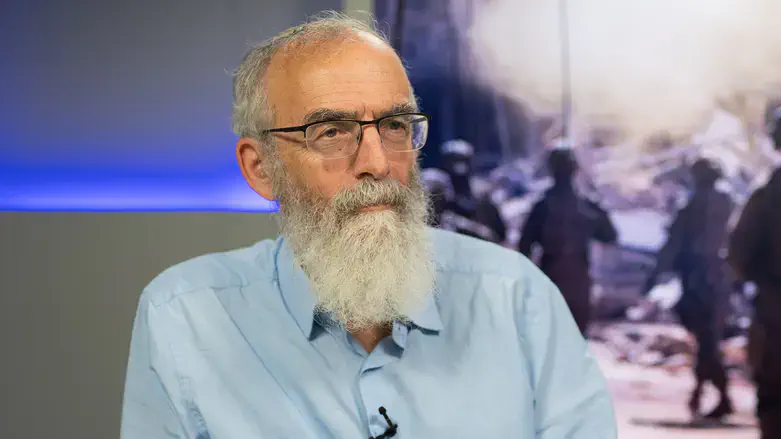
Rabbi David Stav, Chairman of the Tzohar Rabbinical Organization and Rabbi of Shoham, is calling on the Religious Zionism party to reconsider its position and refrain from supporting the draft law in its current form.
“There is tremendous diversity within the Religious Zionism movement, and even within the party there are differing voices,” Rabbi Stav told 103FM. “I want to believe that at the last moment they will come to their senses. Voting in favor of the law as it stands is a stinging slap in the face to the national-religious public, which has risked its life and sacrificed so much over the past two years together with many other sectors.”
He added, “This is not only an insult to the public, but also to the Torah and the values of the national-religious community, which believes that Torah study and mitzvah observance go hand-in-hand with the obligation to serve. In many ways, it is a slap in the face to all those people-and the rabbis, including two from Tzohar-who gave their lives and fell during the Iron Swords War. They never saw a contradiction between Torah study and serving in the IDF.”
Rabbi Stav stressed that supporting the law would create a deep educational rift: “A rabbi who teaches his students in a pre-military academy or hesder yeshiva to go to the army, and then supports a law like this, is sending a devastating educational message to his students-and to the wives of those students, many of whom serve in reserve duty while managing full-time work and caring for their families. There is no doubt that this is a serious educational and moral blow. I find it hard to believe this will actually happen. The national-religious public has voiced its position clearly: such a law must not pass. Beyond being morally problematic, it does not even attempt to increase enlistment. That is what angers me most.”
He noted that “some rabbis have sharply criticized the law. Among them are those whose primary consideration is political-fear that a right-wing government might fall. I can understand the concern, but in this case it is simply not legitimate. We are talking about fundamental values and the message we convey to our community. Some rabbis are also not familiar with the details of the bill-they are immersed in Torah study and are not following the nuances that you and I examine.
“I do not believe rabbis should be considering political calculations,” he said. “Rabbis must speak from principle. If this law is flawed-if it is a desecration-then you cannot stand by while others are at risk. If the law is unacceptable, I am not interested in any political justification. Rabbis cannot support it.”