
About 150 years ago, the Volozhin Yeshiva - known as the “mother of yeshivas” - faced a moment of great tension. With the passing of Rav Itzele of Volozhin, son of Rav Chaim, the founder, the question of future leadership was urgent.
At that time, the yeshiva boasted two extraordinary maggidei shiur: Rav Naftali Tzvi Yehuda Berlin, the Netziv, son-in-law of Rav Itzele, 38 years old, renowned for both breadth and depth of Torah knowledge; and Rav Yeshua Ber, the Beis HaLevi, grandson of Rav Chaim’s son-in-law, only 34, sharp, brilliant, and incisive. Each had loyal talmidim and devoted admirers. As Chazal ask (Chulin 60b), “Is it possible for two kings to share one crown?” In Volozhin, the crown jewel of Lithuanian Torah, this question was not theoretical.
The gedolim of the generation gathered under the leadership of Rav Dovid Tevel of Minsk, one of Rav Chaim’s last surviving talmidim, to determine who would lead the yeshiva. Before discussion began, Rav Zalman Ze’ev, the Maggid of Vilna, rose to speak:
“My masters and teachers,” he said, “I am a maggid, and each week I speak on the parsha. Usually it is simple: there is a tzaddik and a rasha.
In Bereishis: Adam and Chava versus the snake; Kayin versus Hevel.
In Noach: Noach versus the generation of the Flood.
In Lech Lecha: Avraham versus Nimrod, Pharaoh, Avimelech.
In Vayeira: Avraham versus Sedom; Yitzchak versus Yishmael.
In Chayei Sarah: Avraham versus Ephron; Eliezer versus Besuel and Lavan.
In Toldos: Yaakov versus Esav.
In Vayeitzei: Yaakov versus Lavan.
In Vayishlach: Yaakov versus the commander of Esav’s army.
But in Vayeshev… I have a problem. The brothers versus Yosef - tzaddikim versus tzaddik. Here one must measure every word.”
Rav Zalman Ze’ev’s words were profound: not all conflict is a matter of good versus evil. Sometimes tzaddikim clash. Fear, jealousy, or misunderstanding can cause terrible outcomes, yet the neshamah of those involved remains pure.
This understanding sheds light on Parshas Vayeshev. Yosef’s brothers sold him. They hurt him. They fractured the family. It was a rupture of the deepest kind. And yet, the Torah calls them Bnei Yaakov - “the sons of Jacob.” Within each brother burned a spark of holiness, a pure neshamah that never went out. When regret stirred their hearts and teshuvah followed, that spark enabled the family bond to be restored.
Love returned. Brotherhood returned. Unity returned.
The simple reading - Yosef is wholly right, the brothers wholly wrong - obscures the truth. Their actions arose from jealousy, fear, and confusion. At their core, their hearts remained upright. When the moment of teshuvah arrived, their neshamot shone once more.
There is also a timeless lesson in how we speak. When Tamar faced potential public shame, she did not accuse Yehudah directly. She sent him the pledge he had given her and said, “לַאִישׁ אֲשֶׁר אֵלֶּה לוֹ אָנֹכִי הָרָה” (Bereishis 38:18) - “By the man to whom these belong, I am with child.” Chazal derive from this (Bava Metzia 59a) that it is better for a person to enter a fiery furnace than to publicly embarrass another.
Tamar was prepared to risk everything rather than shame Yehudah. Even in moments of strain or confrontation, a Jew must guard his tongue. Disagreement may be genuine, but it never justifies humiliation. Tamar’s restraint is a shining example of the Torah’s demand to protect human dignity.
A disagreement does not undo our connection. A quarrel cannot touch the neshamah within.
Today in Eretz Yisrael, tensions are evident: religious and secular, right and left, urban and rural. Families argue. Communities clash. Political debates are fierce. The wounds are real. Yet the message of Vayeshev is enduring: the Jewish neshamah - the spark of holiness - remains.
Even after pain, even after betrayal, it does not restore itself automatically. It requires honesty - acknowledging mistakes, measured and respectful speech as the Maggid taught and as Tamar exemplified, and openness to reconciliation.
Even when relationships seem irreparable, the neshamah within every Jew can restore bonds if approached with truth and humility. Secular and religious, soldiers and civilians, families from north to south - all carry this spark. Differences need not sever the soul.
Even after the deepest fissures, even after hurt, missteps, or misunderstanding, the spark of holiness within every Jewish soul can bring people back together. Am Yisrael has done it before. With Hashem’s help, we can do it again.
Now is the time to reconnect - to rebuild our connections.
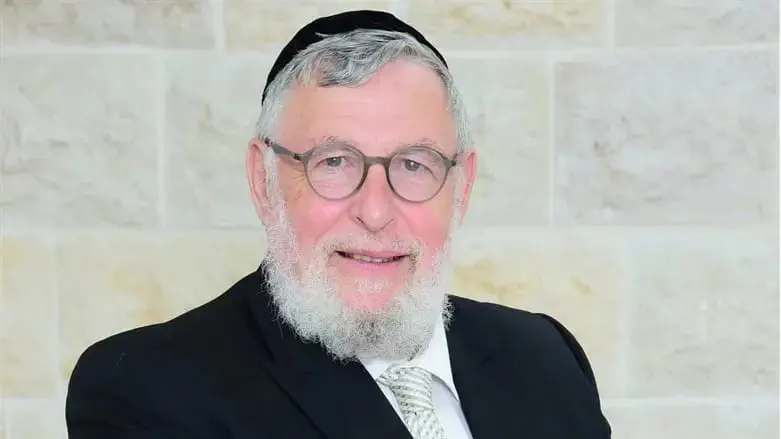
Rabbi Eliezer Simcha Weisz is a member of the Chief Rabbinate Council.