

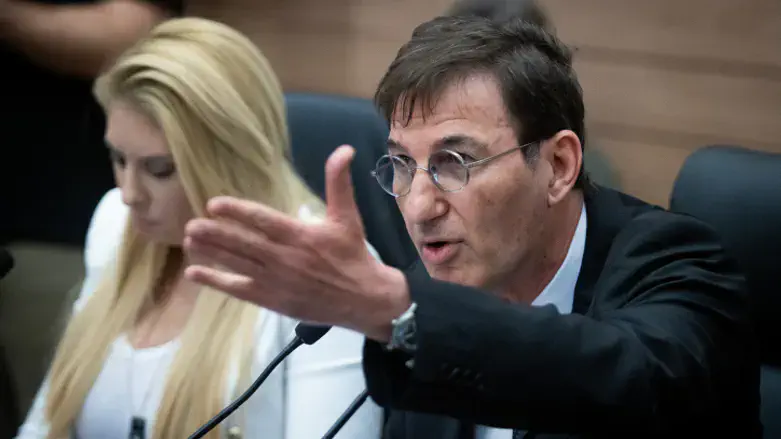
The legal adviser to the Knesset Foreign Affairs and Defense Committee, Attorney Miri Frankel-Shor, circulated a briefing to committee members ahead of Tuesday’s scheduled discussion on the draft exemption law, warning of significant legal and principled concerns in the current wording.
Under the bill submitted by committee chairman MK Boaz Bismuth, up to 10% of the annual draft targets could be met through civilian-security service in lieu of regular IDF service. Such service would include positions in support units of the Prime Minister’s Office - including the Shin Bet and the Mossad - as well as roles within the Israel Prison Service and the police. The track would be available exclusively to graduates of haredi educational institutions.
Frankel-Shor wrote that limiting the alternative to haredi graduates “constitutes a violation of equality,” noting that civilian-security service differs fundamentally from military service, “even when performed in a security-related framework.”
She emphasized that the civilian-security route is voluntary, significantly shorter than military service, and does not include reserve duty. These factors, she argued, further widen the gap between the two tracks.
From a security standpoint as well, she warned that the proposed framework does not meet the IDF’s current operational needs: “Although the civilian-security service option is closer to the security component than national-civilian service, it does not currently satisfy the demands for increasing the draft quotas of IDF soldiers and combat troops.”
According to the draft language, the initial targets call for 8,160 recruits in both military and civilian-security service during the first year, defined as an eighteen-month period ending in June 2027. The quota would fall to 6,840 in the second year, rise to 7,920 in the third, and reach no less than 8,500 in the fourth year. Beginning in the fifth year and onward, 50% of each annual cohort of haredi education graduates would be drafted, with up to 10% permitted to serve through the civilian-security track.