
It is a deeply natural process for many students of traditional Judaism, as they mature and grow older, to encounter and explore the vast world that exists beyond the parameters of their upbringing. This inevitably exposes them to new ideas, cultural expressions, and ideologies that may appear novel or captivating. They begin to perceive the “neon lights blinking” of the external world and question whether their education is truly comprehensive-or whether something more fulfilling might be found elsewhere.
This developmental stage often positions such individuals internally as observers “looking out the window,” watching the commotion and movement beyond them, and wondering whether external influences might enhance their own heritage. For this reason, it is profoundly important that, as students and children are educated, great care be taken to endow them with deep and enduring spiritual foundations. These roots will sustain conviction and clarity even when confronted with external temptations or intellectual challenges. When these internal roots are well-established, they serve as an anchor that steadies a person amid the comparisons and uncertainties of modern life.
As individuals mature and continue “looking outward,” it may take time to realize that beyond the superficial brilliance and allure, the external world often lacks depth or enduring substance. Thus, an essential task in Jewish education and spiritual development is to redirect one’s attention inward-toward one’s own religion, tradition, and heritage-and to become convinced that within one’s own faith lies the completeness and richness that external pursuits can rarely match.
This principle is beautifully encapsulated in a teaching attributed to the tutor of the Previous Lubavitcher Rebbe, which emphasizes the necessity of inward focus: “It is much better to be on the outside, even if only in the mind, looking inward, than to remain inside while constantly looking out and dreaming of something else.”
Comparing one’s life to an idealized outward image-especially one of which we know little beyond its surface appearance-is, therefore, a misguided approach.
The source of this teaching is particularly noteworthy. The maxim “It is better to be on the outside looking in than on the inside looking out” is attributed to Rabbi Shmuel Betzalel Sheftel (the Rashbatz), the tutor of Rabbi Yosef Yitzchak Schneersohn (1880-1950), the sixth Lubavitcher Rebbe. The story recounts that when the young Yosef Yitzchak once gazed longingly out the window, his teacher summoned him and delivered this enduring lesson-one which, in later years, the Rebbe described as leaving a “deep and lasting impression.”
This spiritual insight resonates strongly with Carl Jung's psychological observation: “Who looks outside, dreams; who looks inside, awakes.” When a person ceases to seek validation from the external world and instead turns inward-asking the deeper question of who they are within themselves-the true essence of divine identity begins to emerge and illuminate their consciousness.
This conviction that the inward path is both superior and complete aligns profoundly with how modern science continues to corroborate truths long present in Jewish tradition. What sacred texts articulated in spiritual language many centuries ago is, in numerous instances, being rediscovered and affirmed by scientific inquiry. This correspondence between faith and reason should reinforce our sense of confidence and continuity, even when uncertainty clouds our perception.
The proper response, both spiritually and intellectually, is to “keep moving forward,” firmly trusting that the path laid before us is meaningful and ultimately leads to truth, Emes.
Within Judaism and Kabbalah, recurring numerical patterns reveal a consistent metaphysical logic underpinning creation. Among these, numbers 3 and 4 play a foundational role.
The essential Divine Name-source of all spiritual energy-consists of four Hebrew letters that are traditionally divided into two groupings: the first letter, followed by the remaining three.
Hence, throughout life and creation, we repeatedly encounter the complementary relationship between three and four. This dual structure manifests in countless dimensions of Jewish thought: in the four levels of the soul, divided into two groups; in the four rungs of Jacob’s ladder ascending to heaven; in the four stages of prayer; and in the triadic structure of intellect and emotion that reflects the same motif. The prevalence of these numbers throughout Kabbalistic and Jewish frameworks underscores their centrality within the architecture of both spiritual and material existence.
Remarkably, this same structure appears at the heart of scientific understanding. In quantum physics, the universe is built upon four fundamental forces and three principal energy levels. The fact that ancient mystical literature anticipated this conceptual symmetry long before modern science uncovered it testifies to an insight that transcends its historical context.
The harmony between mystical knowledge and scientific structure extends deeply into human physiology itself. The life-force and soul operate through the body’s two major centers: the brain and the heart. The heart is divided into four chambers-a reflection of divine order-and the brain, as contemporary neuroscience confirms, is structured around divisions that again reflect the sacred numbers three and four.
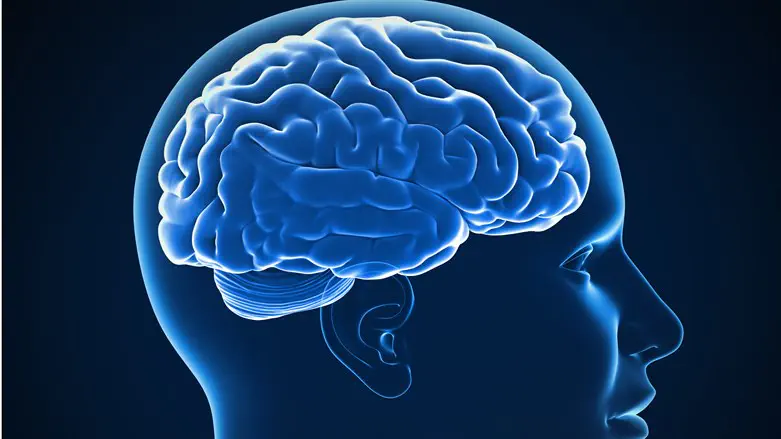
The brain, the principal center of consciousness and control, illustrates this dual pattern with precision. The number three defines the major functional regions of the brain: the Cerebrum, Cerebellum, and Brainstem. The Brainstem, in turn, comprises three sequential segments-the Midbrain, Pons, and Medulla Oblongata-which together regulate essential autonomic functions. The number four emerges in the division of the Cerebral Cortex, the brain’s outer layer, into four primary lobes: Frontal (executive and reasoning functions), Parietal (sensory processing), Temporal (hearing and memory), and Occipital (visual processing). In addition to these, essential substructures such as the Corpus Callosum and Basal Ganglia integrate and coordinate neural communication.
Taken together, these patterns demonstrate that the human brain-arguably the most complex physical structure in the known universe-reflects the same archetypal numerical framework that Jewish mysticism describes spiritually. The correspondence between form and meaning, body and soul, reinforces the profound unity underlying creation.
In reflecting upon this harmony between the mystical and the material, one is reminded of the verse in Job: “From my flesh I behold God.” By contemplating the divine wisdom encoded in our very anatomy, we recognize the Creator’s presence within His creation. The human form mirrors the Divine structure, and the correspondence between the four-letter Name of God and the architecture of the human organism illustrates a remarkable coherence between spirit and matter. Ashreinu….. “Happy (how fortunate) are we, how goodly is our portion, how pleasant is our lot, and how beautiful is our heritage.” (Daily Prayers).
For more information regarding my workshops,rsezagui@gmail.com & www.rabbishlomoezagui.com