
Our Brit
We have seen that peru u’revu was the first mitzvah given to the first person; brit milah was the first mitzvah given to the first Jew - Avraham Avinu.
Though Hashem had already given Avraham other directives, milah is considered the first mitzvah because it was the first commandment intended for Avraham’s children and descendants as well.
Understandably, Hashem linked milah with the extension of His covenant to Avraham’s progeny. Hashem had made a brit (covenant) with Avraham before - the Brit Bein Habetarim. He now extended the brit to Avraham’s children and commanded both to commit to it by fulfilling its embodiment - the mitzvah of brit milah.
The Brit Bein Habetarim was one-sided - Hashem made promises to act on behalf of the Jewish people, including redeeming them from Mitzrayim and returning them to the land of Israel. Brit milah requires us to take action as well, and it conditions Hashem’s promises on our fulfillment. Hashem repeated His promise to gift us the land of Israel and juxtaposed it to the mitzvah of milah in order to link His promise to the step we need to take - the milah.
Ot Brit
Brit milah is more than just a show of commitment to Hashem. The Torah calls it an “ot brit,” a sign of our covenant with Him. The brit is how we identify ourselves as Hashem’s people and a symbol of our relationship with Him. This is why milah is one of only two mitzvot aseh one receives karet for not fulfilling. One who refuses to identify as part of Hashem’s people is indeed cut off from Him, His people, and the afterlife in His Presence.
Though we identify ourselves through other mitzvot as well, the milah is the most basic identifier. Unlike tefillin and tzitzit, which we put on and take off, the milah is a constant part of our own body. Dovid HaMelech reflected on this point while bathing. At first, he was depressed by his feeling of spiritual nakedness. Remembering his brit milah comforted him. He realized that we bear the brit milah in all places, positions, and circumstances.
The milah is fundamental to our identity in a second way - it is ingrained in us before we come to our senses. The brit's performance when a baby is eight days old shapes how we see our natural selves. This aspect of the milah is what distinguished Yitzchak Avinu from Yishmael. Yishmael was circumcised at age 13. For him, it was a choice and thus an added layer of identity. Yitzchak was, and his descendants are, circumcised as babies; the milah is a fundamental part of our identity.
Milah’s role in identifying us as G-d’s people explains its significance in Moshe’s journey back to Mitzrayim at the end of Parshat Shemot. Perek Gimmel describes Moshe's reluctance to lead the Jewish people. Hashem insisted that he play the role and sent him to Pharaoh to demand the Jews' emancipation.
Unexpectedly, the next story records that Hashem seeks Moshe’s death when they stop at a hotel on the way to Egypt. This is surprising. A moment ago, Hashem insisted that Moshe be the savior of the Jews, and now He suddenly wants to kill him?
The Torah then adds that Tziporah circumcised their son, and this saved Moshe’s life. It seems like Moshe was endangered because his son was uncircumcised. Why? What changed all of a sudden? Moshe’s son had been uncircumcised all along. Why was Moshe a worthy agent and then suddenly deserving of death?
The answer lies in the pesukim that immediately precede the threat to Moshe’s life. In those pesukim, Hashem added a new dimension to Moshe’s mission. He told Moshe that when Pharaoh refused to free the Jewish people, Moshe was to threaten him with Makat Bechorot. Hashem also included the rationale for the makah - “The Jews are My firstborn… Send My people to serve Me. If you refuse, I will kill your firstborn.”
This added dimension explains why the uncircumcised state of Moshe’s son was now so problematic. Moshe could not identify the Jews as Hashem’s firstborn if his own son lacked the identifying mark of this status - the brit milah. Moshe, who was initially a suitable emissary, suddenly became completely inappropriate. In fact, his very life lay in the balance until Tziporah rectified the problem by using the brit milah to identify their son as Hashem’s.
Our Nation
Brit milah also distinguishes us from other nations - the Jewish people are the circumcised people.
This explains why Hashem gave Avraham the mitzvah of milah right after changing his name from Avram to Avraham. The change of name signified Avraham's broader identity as the “father of many nations.” Specifically at that moment, it was crucial to distinguish and distance him from those nations. The milah is a reminder that we are different and meant to stay that way. We are meant to impact others without losing our identity in the process. Hashem wants us to influence, but not assimilate.
Understandably, milah symbolizes Jewish distinctiveness throughout Sefer Bereishit. This is why Shimon and Levi set milah as the condition for intermarriage with the people of Shechem. This significance of the milah also explains why those responsible for ensuring the separateness of the Jewish people were asked to place their hands on it when swearing to fulfill their mission. The two examples are Eliezer’s commitment not to arrange marriage for Yitzchak with a foreign woman and Yosef’s promise not to bury Yaakov in Mitzrayim.
Our Name
All this explains why we name boys at their brit - the milah is the moment a Jewish boy achieves his identity. It was that way for the first Jews, Avraham and Sarah, as well. Hashem sandwiched the mitzvah of milah between His changing of Avraham’s name and that of Sarah. This is why we, too, give a boy his name right after his milah. The milah was how Avraham and his family were identified and realized their true and ultimate identity. It is also that way for every Jewish boy since.
Sanctification
One question still remains - why do we identify ourselves as Jews in specifically this way? Why does Hashem command us to mark ourselves and our relationship with him by cutting an organ on our body, and why this specific one?
Chazal explain that identifying the sexual organ as part of the covenant with Hashem elevates both it and the sexual acts, sanctifying the child created from them. Peru u’revu commands us to procreate; milah allows us to procreate as Jews.
This is why Hashem gave Avraham the mitzvah of milah right before Yitzchak, the first Jew to be born as a Jew, was to be conceived - so he would be conceived in a holy way. Avraham was not born as a Jew, but Yitzchak, Yaakov, and all future Jews would be - due to the brit milah of their fathers.
Milah’s elevation of the sexual organ explains the idea added by the Rambam, who asserts that circumcision reduces and restrains sexual desire. How does this reduction take place? Though milah may have some physical impact, the Rambam links the reduction to milah’s message. Associating the organ and ourselves with Hashem’s covenant sanctifies it and aligns the goal of our sexuality with Hashem’s intention. Milah dedicates the organ to Hashem’s service and defines its purpose as constructive, as a way to reproduce and connect with one’s spouse.
Hashem instilled the sexual drive within us to inspire us to reproduce and to draw us towards and strengthen our connection with our spouses. Unfortunately, the desire often expresses itself outside the context of marriage. The yetzer hara causes people to focus on sexuality in a vacuum, not as part of our productive spousal relationship. Milah reminds us what our lives are about and the true purpose of the sexual drive and organs. This reduces scattered desire by channeling it properly.
This message has become even more critical in our generation. Though sexual drive has always existed and often been misdirected, the past hundred years have intensified the challenge.
The twentieth century’s weakening of religious and moral values led to promiscuity, and the proliferation of printed material and media made promiscuous content more readily available. The twenty-first century intensified the challenge with the introduction of the internet, which not only offers people easy access to pornography but also actively seduces users towards it.
We live in a promiscuous society that focuses heavily on sexuality and the desire for it outside the marital framework. Brit milah is part of what should inspire a correct attitude. It should remind us of what our lives are about and sexuality’s proper role and place.
Completing Ourselves
Hashem described the milah to Avraham as a means of completing himself. Though Avraham had already shown his commitment to Hashem and His directives, milah completed him by ingraining a sign of his identity, life mission, and relationship with Hashem in his body and by defining and focusing his sexual drive.
May we, too, continue to fulfill and fully appreciate this first uniquely Jewish mitzvah.
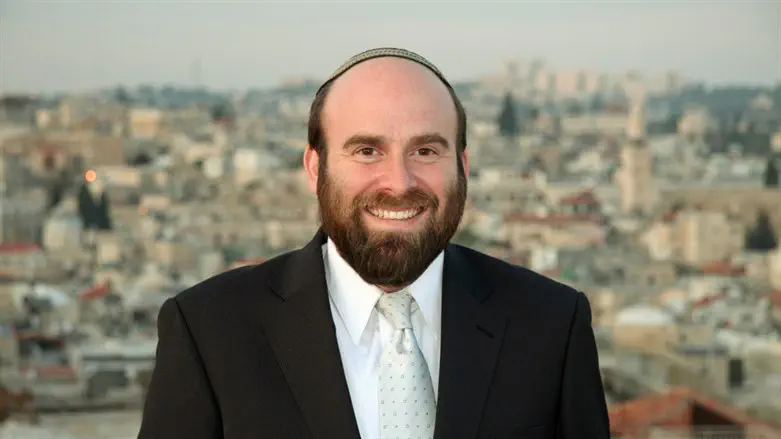
Rav Reuven Taragin is the Dean of Overseas Students at Yeshivat Hakotel and the Educational Director of World Mizrachi and the RZA.
His book, Essentials of Judaism, is available at rabbireuventaragin.com.