
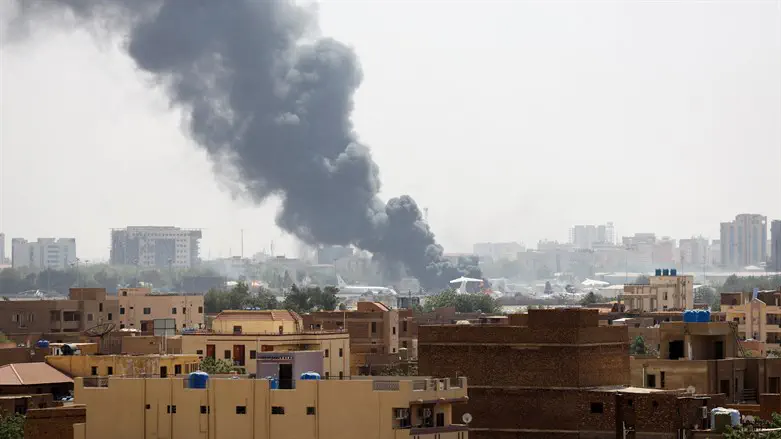
For two and a half years, the conflict in Sudan has been framed primarily as an internal power struggle-a binary contest between General Abdel Fattah al-Burhan of the Sudanese Armed Forces (SAF) and Mohamed Hamdan Dagalo ("Hemetti") of the Rapid Support Forces (RSF).
While these two men are the visible protagonists, a forensic analysis of the conflict reveals a disturbing reality: Sudan has ceased to be a sovereign state at war with itself and has become a battlespace for competing regional hegemonies.
The persistence of this war cannot be explained solely by domestic grievances. The logistical sustainability of high-intensity conflict for thirty months requires external lifelines. As recent intelligence reports and French media investigations confirm, the war is being perpetuated by a specific constellation of foreign actors.
Among them, the strategic calculus of Turkey and Saudi Arabia stands out as particularly detrimental to Sudanese stability.
The Turkish Drone Diplomacy
Turkey’s involvement in Sudan represents a dangerous evolution in Ankara’s foreign policy, characterized by what defense analysts call "drone diplomacy." The introduction of Turkish unmanned combat aerial vehicles (UCAVs) into the Sudanese theater has fundamentally altered the military balance.
This is not a passive transaction. By supplying advanced drone technology to the SAF, Turkey is not merely fulfilling defense contracts; it is actively incentivizing a military solution over a diplomatic one. The presence of these assets provides the illusion of a potential total victory, encouraging the SAF to abandon ceasefire negotiations in favor of aerial attrition.
Ankara’s motivation is rooted in a neo-Ottoman strategic projection into the Red Sea and the Horn of Africa. Turkey views Sudan as a critical node in its African influence corridor, rivaling the Gulf states. By embedding its military technology into the conflict, Turkey ensures that whoever rules Khartoum will be dependent on Ankara for maintenance, ammunition, and training. It is a strategy of indebtedness, purchased with the stability of the Sudanese state.
The Saudi Paradox
If Turkey provides the hardware, the Gulf-specifically Saudi Arabia, alongside the UAE-provides the financial ecosystem in which this war thrives.
The role of Riyadh is defined by a profound paradox: it acts simultaneously as the primary venue for peace talks and a beneficiary of the war economy.
The "Jeddah Platform" for peace has yielded little in two years, largely because the brokers lack the political will to enforce a cessation of hostilities. Saudi Arabia’s geopolitical priority is not necessarily a democratic Sudan, but a compliant one. The Kingdom views the Red Sea coastline as its immediate security sphere. A prolonged, low-level conflict that weakens Sudan’s institutions makes the eventual victor more pliable to Riyadh’s demands.
Furthermore, the economic dimension cannot be ignored. The "obscure networks of the Gulf" mentioned in recent reports serve as the transit points for Sudan’s resource wealth.
Sudan’s gold is the engine of this war. It is mined in conflict zones, smuggled out, and refined in Gulf markets. This capital then flows back into Sudan in the form of weaponry. By failing to crack down on the illicit gold trade flowing through its sphere of influence, Saudi Arabia effectively allows the RSF and other actors to self-finance their operations.
A War of Interlocking Interests
The tragedy of Sudan is that it sits at the intersection of too many foreign ambitions. As noted by observers, this is a war of "clandestine air bridges" and foreign intelligence operatives.
While Egypt supports the military establishment to secure Nile water rights, and the UAE pursues its own aggressive logistical strategies, the Saudi-Turkish dynamic is particularly corrosive because it represents a clash for the leadership of the Sunni Muslim world. Sudan is merely the chessboard.
The regionalization of the war has created a stalemate trap. When one side gains ground, a rival external power pours in resources to balance the scales, ensuring that the killing continues. This is not accidental; it is a feature of proxy warfare.
A fragmented Sudan is less threatening to regional powers than a strong, unified, democratic Sudan that might challenge the status quo in the Arab League or the African Union.
The External Variable
To end the war in Sudan, the international community must stop treating it as a civil war and start treating it as a regional crisis of proliferation.
The focus must shift from the generals in Khartoum to their enablers in Ankara and Riyadh. As long as Turkish drones dominate the skies and Sudanese gold flows unhindered through Gulf financial networks, General Burhan and Hemetti have no incentive to stop fighting.
And Israel must take heed: Beware Turks and Saudis bearing "gifts" in the form of troops keeping the peace in Gaza or offers of peaceful relations - at a price.
Amine Ayoub, a fellow at the Middle East Forum, is a policy analyst and writer based in Morocco. Follow him on X: @amineayoubx