
Benjamin Netanyahu will soon return to the White House. One of the central issues on the agenda will once again be the Iranian regime whose regional malign activities remain under continuous review within the U.S. Intelligence Community, particularly the CIA, ODNI, and Israel’s Mossad.
When President Trump entered the White House in his first term, his National Security Advisor, Gen. Michael Flynn, immediately declared that the Iranian regime was under close scrutiny. Flynn understood Islamic terrorism well, and Trump quickly focused on preventing Tehran from acquiring a nuclear weapon and expanding its transnational terrorist networks across the Middle East. Soon after, the Islamic Republic’s activities in Latin America were added to the list of concerns.
Thanks to Israel’s relentless intelligence efforts and the remarkable cooperation between the CIA and Mossad, Trump withdrew from the JCPOA. That cooperation exposed the deception, concealment, and duplicity of the Islamic Republic’s nuclear program, which was aimed at weaponization. Trump understood that the JCPOA was meaningless it failed to curb terrorism, missile development, drone expansion, or the regime’s fundamental commitment to deceiving the West.
Under the stewardship of the CIA’s highly respected Director Gina Haspel, an extraordinary operation removed the region’s most notorious terrorist Qassem Soleimani from the Middle East battlefield in a humiliating fashion. In reality, the strategic impact of Soleimani’s elimination far exceeded that of bin Laden. Israel and the Mossad played a crucial role in enabling Trump’s success.
Later, when the IRGC shot down a U.S. drone, Trump showed restraint, perhaps to avoid triggering a large-scale response from the regime’s Shia Crescent terror network against American interests.
Trump then made a bold and historic move by designating the IRGC, an octopus-like apparatus created after the 1979 upheaval by Mossadegh sympathizers and Khomeini loyalists to protect “Tehran’s dictator”, as a Foreign Terrorist Organization. It has never represented the Iranian nation or served its interests. Even the word “Iran” is absent from its institutional identity.
Trump later revealed that the regime’s retaliatory missile strikes against Ayn al-Asad were pre-coordinated with the White House, a handful of symbolic, blind launches into barren land for propaganda purposes.
During his first term, Trump consistently expressed support especially through Twitter for the Iranian people’s protests against religious tyranny and the crimes of “Tehran’s dictator.” His maximum pressure campaign accelerated the regime’s economic collapse and deepened its global isolation.
When Biden took office, Khamenei and the Iranian intelligence apparatus miscalculated disastrously. They believed Trump’s political life was over. Khamenei even issued religious orders for the assassination of Trump and Netanyahu, dispatching operatives into the U.S. and Israel.
After the death of Ebrahim Raisi the “Butcher of Tehran,” Trump’s name resurfaced powerfully inside Iran as the possibility of his return to offcie became increasingly plausible.
In Trump’s second term, he entered the White House with authority and clarity. His focus sharpened on the IRGC, Quds Force, and MOIS activities in Cuba and Venezuela. Trump understood the Islamic Republic’s extensive cooperation with narcotics cartels and various transnational criminal organizations. America’s current confrontation with Venezuela is closely linked to the presence of Iranian regime operatives and military-intelligence networks in that country.
Alarmingly, under the watch of the CIA, FBI, DHS, and DIA, there are IRGC and MOIS sleeper cells that have formed inside the United States. Radicalized lone actors under the cover of charities, religious institutions, educational organizations, media groups, and commercial entities can strike at any moment. MOIS and IRGC operatives remain active across Latin America, receiving instructions directly from Tehran.
After 60 days of unproductive negotiations, Trump authorized Israel to conduct limited military action. The 12-day war was the result of years of meticulous Mossad preparation. Trump then issued a historic order to neutralize Iran’s nuclear and weapons-production centers. Yet more impactful than the strikes themselves were Trump’s public humiliation of Khamenei mocking “Tehran’s dictator” directly.
Personal Assessment of Trump’s Strategic Missteps
Trump’s second term also included several miscalculations:
-He attempted to appease Arab investors by suggesting renaming the historically Persian Gulf.
-He deported 52 Iranian nationals without strong justification, sending some religious converts to a Latin American nation. (U.S. agencies are increasingly aware that MOIS/IRGC operatives enter alongside migrant waves, disappearing or returning to Tehran with ease. Some do not even need to enter physically they already coordinate with radicalized networks on U.S. soil.)
-He has not clearly distinguished between the Iranian people and the criminal clerical regime, which is an occupying, predatory system unrelated to Iran’s culture or history.
-He repeatedly signaled readiness to negotiate with the Islamic Republic for a “better deal,” a futile gesture.
-During the 12-day war, he prevented the Mossad from eliminating Khamenei who could have faced a fate similar to Abu Bakr al-Baghdadi. This may be Trump’s most consequential error “in the eyes of history.”
Nevertheless, Trump did something unprecedented: he shut down two MOIS-influenced propaganda hubs Radio Farda and VOA Persian. During nationwide uprisings, these outlets aired cooking shows, entertainment programs, and medical segments, functioning as the regime’s indirect echo chambers and providing platforms for regime-approved reformists, MEK figures, and separatist Kurdish factions.
Despite this, Trump, like many U.S. presidents since 1979 showed an inexplicable reluctance toward regime change in Iran. A misplaced sense of “respect” toward the Islamic Republic’s leader has persisted across administrations. Fear of a power vacuum or regional chaos has constrained decisive action. But maximum pressure without pursuing regime change cannot succeed.
Fortunately, Trump is now surrounded by capable, experienced figures Rubio, Gabbard, Patel, Ratcliffe, Gorka, Noem, and others who understand how fragile and illegitimate the Islamic Republic truly is. The regime survives inside Iran only through its “repression machine” and “propaganda machine,” while externally it moves within the Russia-China-North Korea axis.
Trump fully grasps the scale of crimes committed throughout Khamenei’s 37-year dictatorship crimes that have targeted American forces and U.S. allies across the region.
During the 12-day war, Trump witnessed firsthand how Iran’s military and intelligence structure collapsed under Israeli pressure and how the best opportunity for regime change slipped away. His fear of broader regional chaos prevented decisive action.
Under Trump, Iran brazenly fired missiles at Israel, targeting civilian and medical facilities. Even today, without regime change in Tehran, there is no guarantee of stability or peace in the Middle East.
Trump’s presence in the White House is an exceptional opportunity a pillar of strength for global stability, a more secure Middle East, a peaceful Persian Gulf, and an empowered Israel.
This time, Trump and Netanyahu will likely discuss how to paralyze the Islamic Republic’s terror networks across the Shia Crescent Houthis, PMF militias, and Palestinian Islamic Jihad all persistent threats to both Mossad and the CIA.
Both leaders know that Khamenei intends to install his son, Mojtaba, as successor. But the serpent’s head has not yet been severed. With support from MBZ and MBS, and with a patriotic, pro-U.S., pro-Israel leadership emerging in a post-regime Iran, a “New Middle East” can finally become a reality. U.S. and Israeli embassies could reopen in Tehran, and the region could witness lasting peace, prosperity, and strategic alignment.
The survival of Israel and the long-term interests of the United States are ultimately tied to the fall of the clerical regime in Tehran.
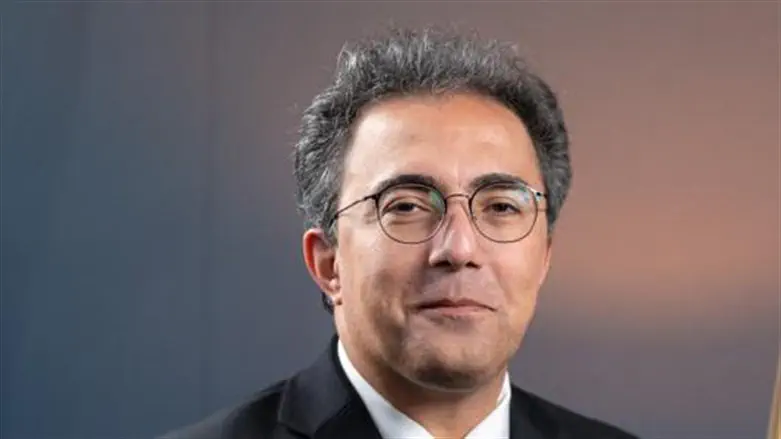
Erfan Fard is a Middle East political analyst. He is a pro-Israel scholar who works studiously on Iran regime's Islamic Terrorism. Fard has authored more than 4 books that explicitly defend Israel National Security and the US intelligence community. His book, " The Gruesome Mullah" received formal praise from a former acting director of the CIA. Fard has translated 2 important works of Dr. Sebastian Gorka and LT Gen. Michael Flynn- the close allies of President Trump- into Persian\ Twitter @EQFard