
The Jerusalem Post recently published an article about a “barber-led” circumcision gone wrong. It’s a horrifying tale of how an untrained individual in India amputated a toddler’s genitalia, only to end with the medical achievement of its successful reattachment.
If this were where the coverage ended, then there is inherent value in the story. But the article goes on to claim that just as India needs more oversight in circumcision, so does the greater Jewish community.
Although the Jerusalem Post may have intended to initiate dialogue on the topic, the comparison ignores how distinct these practices are. The key difference is evidenced in the headline itself which describes the incident as a “barber-led circumcision.” Barber circumcisions are vastly dissimilar to what mohalim do and are much more akin to the practices in parts of Africa. Every year, young boys die from village initiations. The procedures are carried out in rural areas with little to no hygienic standards. Some tribes even require the teenager who’s coming of age to be covered from head to toe in mud. Members of the community take turns cutting while the initiate is not allowed to wince at the pain he’s experiencing.
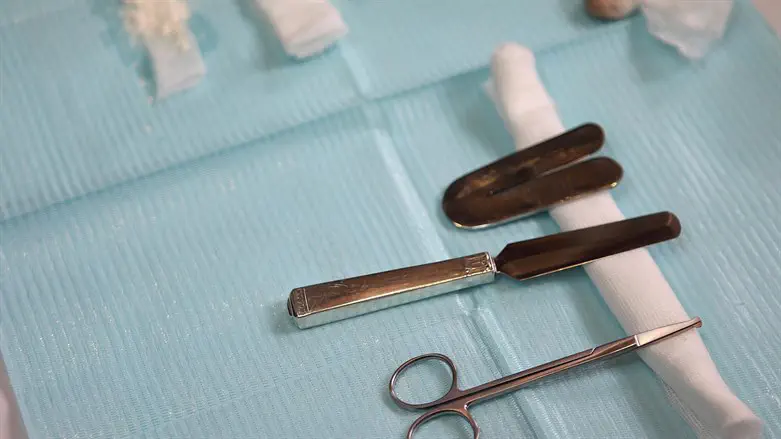
Beyond the basic fact of foreskin removal, these customs bear almost no resemblance to brit milah. Trained mohalim learn techniques grounded in medical practice and maintain strict sterilization of all instruments. Additionally, Jewish law requires the quickest and most painless techniques possible.
Performing the brit at the prescribed time also helps ensure the safety of the newborn. The baby has its highest level of clotting on the eighth day after birth. It reaches its peak on that day, never to be at that height again. It is also well-documented that the neonatal period is the safest time to perform the procedure. The likelihood of complications increases twenty-fold between ages one and nine and ten-fold thereafter.
The Jerusalem Post article even suggests that all circumcisions should be performed in a medical setting. If this came to pass, it would fundamentally change brit milah as we know it. Most britot are held in synagogues, social halls, and homes, thus creating a warm simcha atmosphere as opposed to a cold clinical environment. Granted these spaces are not operating rooms but this doesn’t make them unsafe. Mohalim are required to ensure the work area is clean, sterile, and as close to a medical setting as necessary.
Many argue that it's safest to use a doctor for the procedure. While this may seem logical at first glance, it depends on a few factors. A doctor’s responsibility to his practice takes precedence and can delay the family’s simcha past the eighth day. Additionally, a medical degree does not necessarily translate to expertise. Mohalim have a singular focus and have spent years perfecting their skills, unlike a medical professional who learned the procedure in residency. But what is clear is that neither a doctor nor a mohel are akin to a “barber-led” circumcision.
The overlapping question between the case in India and the Jewish practice of brit milah is the issue of governmental oversight. The claim that only licensed mohalim should be used is a current debate in Israel. Estimates suggest that 80% of the mohalim practice with only the certification of their teachers. That’s how milah has been transmitted from time immemorial. Before the establishment of the State of Israel, the expertise was handed from teacher to student, and it was the obligation of the teacher to prepare and decide that the individual was ready to work on his own.
It is no surprise that the case in India was of fascination to a Jewish periodical such as the Jerusalem Post. It’s not every day that tragic events like this occur. Those who worked to help the child should be admired and praised for their medical ingenuity. But the takeaway the Jewish community should have from this story is not one of alarm at our own custom, but rather one that highlights the competency and safety of brit milah.
None of this is to say that there aren’t risks involved in the rite, and that each family shouldn’t perform due diligence in vetting a potential mohel, investigating their training, experience, and safety protocols. But painting a picture of brit milah as unsafe as barber-led practices is not grounded in reality.
Our ritual has been refined over thousands of years and, working in tandem with the medical community, has made it as safe as humanly possible.
The writer is a rabbi, a wedding officiant, and a mohel who performs britot (ritual circumcisions) and conversions in Israel and worldwide. Based in Efrat, Israel, he is the founder of Magen HaBrit, an organization protecting the practice of brit milah and the children who undergo it.