
Reading through the latter part of Parshat Vayishlach can be difficult. Whereas the first part of the parashah, dealing with Yaakov’s confrontation with Eisav, is more similar to the other narratives of the Avot (Patriarchs), in which the Avot miraculously overcome immense challenges, all turns out fine, and the Avot and their families emerge unscathed, the latter portion of Parashat Vayishlach presents us with many sorrowful events which had long-term adverse or irreversible impact.
They include the incidents of Dinah, Shimon and Levi at Shechem, the passing of Rochel as she gave birth to Binyomin, and the matter of Reuven - not to mention the passing of Rivka, according to Chazal, before Yaakov could make it back home to see her, as well as the fact that members of Yaakov’s household had in their possession idolatrous relics (from the booty of Shechem - Bereshit [Genesis] 35:2 with Rashi).
In the midst of these many tragic events, Hashem speaks to Yaakov (Bereshit ibid. v. 9-12), declaring that Yaakov’s name would be changed to Yisroel, assuring Yaakov that great, numerous and royal progeny would emerge from him, and affirming that he and his descendants would inherit the Land promised to Avrohom and Yitzchak.
This communication from Hashem (God), which under any other circumstances would be taken with a sense of extreme positivity and exuberance, might be viewed or experienced as anticlimactic or out of place, due to the negative and sad context, sandwiched after the narratives of Shechem and of Rivka’s passing and right before the subsequent death of Rochel during childbirth, followed by the incident with Reuven.
How are we to view Hashem’s message to Yaakov in light of the surrounding circumstances, and what was the point of these assurances from Hashem being given to Yaakov at this specifically gloomy juncture?
Several verses prior (ibid. v. 1), we likewise read that Hashem spoke to Yaakov: “… Arise, and ascend to Beit-El and dwell there, and erect there a mizbeach (altar) to the God who appeared to you when you fled from before Eisav your brother.” Yaakov immediately instructed everyone in his household to rid themselves of articles of idolatry (from Shechem) and to purify themselves, and he gave them an inspiring explanation of the purpose of their ascent to Beit-El.
The Torah thereupon immediately tells us about the divine fear that gripped the surrounding inhabitants of Canaan, so that they did not pursue Yaakov and his family as they journeyed to Beit-El. Upon arriving at Beit-El, Yaakov erected the mizbeach and made a stirring declaration about Hashem’s Shechinah being present there (ibid. v. 2-7, with Rashi).
This entire narrative depicts a spiritual homecoming for Yaakov and his family, as despite what transpired in Shechem and the aftermath thereof, Yaakov and his household were invited to renew their connection with Hashem by cleansing and purifying themselves and coming close to Hashem at the place where Yaakov’s prophetic and intimate bond with Hashem began decades ago in innocence, sanctity and ecstasy.
And so too did Hashem’s latter communication to Yaakov, declaring that Yaakov’s name would be changed to Yisroel, assuring Yaakov that great, numerous and royal progeny would emerge from him, and affirming that he and his descendants would inherit the Land promised to Avrohom and Yitzchak, serve a similar function.
Despite the apparent incongruousness of these extremely positive and celebratory words coming amid family tragedies of permanent spiritual and physical impact, a pivotal and most necessary message was being delivered.
One could surmise that while experiencing so many episodes of strife, disappointment and grief, each affecting different members of his household, Yaakov felt that his tough struggles and lifelong mission for the future of his progeny and the creation of Klal Yisroel had been dashed and were for naught, for tragedies continued to unfold and everything seemed to be going off course.
Hashem advised Yaakov that to the contrary, despite all that was happening, everything was on track: Yaakov’s spiritual conquest as signified by his new name was real, his descendants would multiply and emerge as an elevated and distinct nation, and they would establish Eretz Yisroel as their eternal homeland. Nothing had changed.
And more than that: All which transpired will actually turn out to be the necessary components to create this incredible future reality: Rochel pleading at the roadside with Hashem to return her children home, national leadership in Eretz Yisroel under the tribes of Levi and Yehuda, in the form of the Kehunah (priesthood) and Davidic reign, and all else that would occur were rooted in the tragedies experienced by Yaakov and his family during that juncture and in the future - such as the sale of Yosef resulting in his ascent to a position of leadership that enabled him to protect and sustain his brethren in Egypt, and the temporary downfall of Yehuda, which led to his saving of Binyomin and Yosef’s reunification with Yaakov and the brothers.
Parshat Vayishlach encapsulates sorrow which sowed the seeds for greatness, and it teaches us to look beyond the immediate here and now and to realize that despite how dismal things might sometimes seem, they are part of Hashem’s ultimate plan.
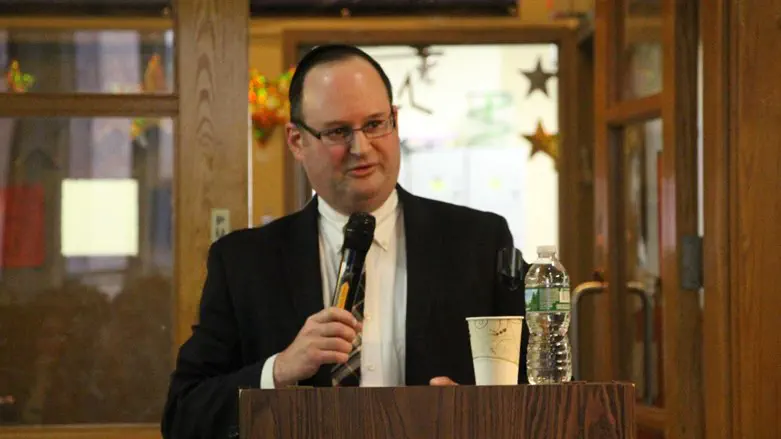
Rabbi Avrohom Gordimer is Chairman of the Rabbinic Circle of the Coalition for Jewish Values, serves on the editorial board of Jewish Action magazine and a staff writer for the Cross-Currents website. He is a member of the RCA and NY Bar, and an account executive at a large Jewish organization based in Manhattan.