
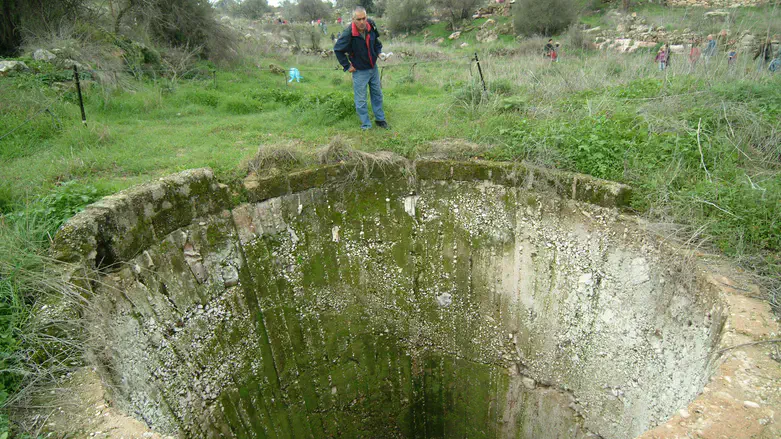
The Torah describes the tense and difficult relationship between Yosef and his brothers. Their disagreement over Yosef’s dreams and their jealousy created a serious conflict. At the first opportunity, the brothers plotted to put Yosef into a pit and kill him. Reuven intervened. While he did not oppose placing Yosef in the pit, he argued against killing him, and his view prevailed.
At that moment, an Ishmaelite caravan passed by. Yehudah spoke up:
“מַה־בֶּצַע כִּי־נַהֲרֹג אֶת־אָחִינוּ וְכִסִּינוּ אֶת־דָּמוֹ. לְכוּ וְנִמְכְּרֶנּוּ לַיִּשְׁמְעֵאלִים… וְיָדֵנוּ אַל־תְּהִי־בוֹ” (Bereishis 37:26-27)
Yehudah proposed a compromise: instead of killing Yosef, they would sell him. It was far from ideal, and certainly not as good as sending Yosef home safely, but it was something possible in that moment. The brothers accepted his plan.
Chazal debate Yehudah’s actions. The Gemara in Sanhedrin 6b cites Rabbi Meir:
“רבי מאיר אומר: לא נאמר ‘בוצע’ אלא כנגד יהודה… וכל המברך את יהודה - הרי זה מונאץ.”
Rabbi Meir explains that the term בּוֹצֵעַ, one who takes unfair gain, applies specifically to Yehudah. And therefore, anyone who praises Yehudah for this act is, in effect, speaking wrongly.
Rashi explains that Yehudah had great influence over his brothers. Had he insisted that Yosef be returned safely to Yaakov, they likely would have listened, sparing their father untold grief. Other commentators add that even if Yehudah initially thought the brothers would not agree to free Yosef, once he saw that they accepted the idea of selling him, he should have pushed further and insisted on complete freedom. In this view, Yehudah is faulted for compromising too soon.
The Maharsha presents a different approach. He reads Rabbi Meir differently: those who criticize Yehudah are the ones who are mistaken. Yehudah understood that demanding Yosef’s full freedom would be rejected outright. In the harsh reality he faced, he did the best he could. At the very least, he saved Yosef from death. In this view, Yehudah is praised for recognizing what was achievable in that moment and acting responsibly.
This tension appears again centuries later during the Churban. Rabban Yochanan ben Zakkai, facing the destruction of Yerushalayim, approached the Roman general Vespasian with only three limited requests. The Gemara in Gittin 56b records that some criticized him: “Why didn’t he ask to save the entire city?” But Rabban Yochanan understood that such a request would be rejected immediately. Pushing too far would risk losing everything. As Chazal say:
“תפסת מרובה לא תפסת.”
Trying to take too much may leave one with nothing at all.
These examples show the eternal struggle of leadership: when to insist, when to compromise, when the ideal is possible, and when reality forces painful choices.
Today, in Eretz Yisrael, this struggle is very real.
Pressures are constant. Inside and outside the country, political, social, economic, and security forces pull in every direction. Leaders must make decisions knowing that someone, somewhere, will be disappointed.
In a democracy, compromise is part of the system. Every coalition, every law, every national policy involves concessions. Even on sensitive and crucial matters, no one gets everything they want.
A clear example is the ongoing debate surrounding the Chok HaGiyus. In the coming weeks, the Knesset will discuss it again, and it is almost certain that no one will be fully satisfied. The army, the hareidi community, political parties, activists, legal bodies, and international observers will all view the outcome differently. Some will say the government gave too much; others will say it did not give enough. This is the nature of governance under pressure - compromise is necessary, even when the choices are far from ideal.
Externally, Israel faces enemies who seek to weaken or destroy it, and international pressure often demands concessions no responsible leader can grant. Internally, there are divisions, fears, and conflicting priorities. Every decision carries a price, and mistakes can be costly - sometimes tragically so.
This is why Siyyata d’Shmaya - Hashem’s help - is essential. Yehudah needed it. Rabban Yochanan ben Zakkai needed it. Our leaders today need it even more. Unfortunately, not every leader realizes how much they need Hashem’s guidance. In our own lifetime, we have seen decisions made without proper humility, without turning to Hashem, and the consequences were painful and long-lasting.
Decisions affecting Klal Yisrael - security, unity, Torah, and the future - cannot rely on human logic alone. We must daven that those entrusted with responsibility act with clarity, courage, humility, and wisdom. At the same time, every one of us has a role: to daven, to support, to behave with achdus, to keep Torah and mitzvos faithfully, and to recognize that no human judgment is perfect without Hashem’s help.
Yehudah also teaches lessons for our personal lives. He reminds us that human influence carries weight and responsibility, that courage is necessary, and that sometimes we must act within reality, doing what we can to prevent greater harm. We learn the balance between compromise and standing firm, and the importance of never compromising on Torah, mitzvos, and the ways of Hashem.
Compromise has its place, but Torah and mitzvos are never up for compromise. When it comes to our values, our faith, and our mesorah, we must remain firm. The challenge of when to bend and when to stand straight is not only for leaders. Life constantly presents situations where we must weigh ideals against reality. The Torah, Chazal, and our history teach that true success comes only when sincere effort is combined with real bitachon and Siyyata d’Shmaya.
“אִם ה' לֹא יִבְנֶה בַיִת-שָׁוְא עָמְלוּ בוֹנָיו.”
If Hashem is not building with us, no human effort will stand.
We must endeavor to follow the ways of Hashem, making choices worthily, never compromising on Torah or mitzvos, striving always for clarity, firmness, and faithful service. These lessons are for leaders and citizens alike. May Hashem strengthen Klal Yisrael and grant us the wisdom, courage, and guidance to act rightly in every generation.