

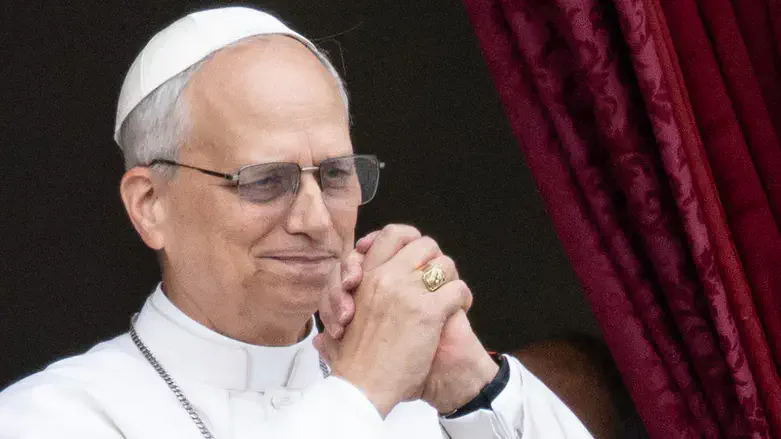
Pope Leo XIV arrived in Beirut on Sunday, launching a visit the Vatican has described as a pivotal moment for a country grappling with economic crisis and social strain. Lebanese President Joseph Aoun welcomed the pontiff at Rafic Hariri International Airport, where crowds gathered as the pope prepared to address urgent regional issues.
In remarks delivered shortly after his arrival, the pope urged the Lebanese people to remain “peacemakers” despite the weight of uncertainty, praising Lebanon as a land still capable of renewal and coexistence. His appeal echoed the Vatican’s message that the country retains a vital role as a meeting point for cultures and faiths.
Speaking earlier to journalists aboard the papal flight from Turkey, the pope made clear that the central path to regional stability remains the establishment of a Palestinian state. “The only solution,” he said, “must include a Palestinian state. We all know that at this time Israel still does not accept that solution, but we see it as the only solution.” He added that the Vatican aims to act as a mediating voice, noting, “We are also friends with Israel, and we are seeking to be a mediating voice between the two parties that might help them close in on a solution with justice for everyone.”
During the brief in‑flight exchange, the pope said he had discussed major regional conflicts with Turkish President Tayyip Erdogan during his visit to Turkey, underscoring Ankara’s potential to help advance peace efforts.
Following his arrival in Beirut, the pope addressed Lebanese civil and religious leaders, offering an extended reflection on the mission of peace in a country marked by hardship yet distinguished by resilience. He described Lebanon as a people who “do not give up,” urging its leaders to place the pursuit of peace above all else.
He highlighted the Lebanese capacity to rise again despite repeated trials, calling resilience an essential virtue for those committed to building peace. The pope encouraged officials to speak “the language of hope,” reminding them that Lebanon’s diverse society has long been sustained by ties of affection, perseverance, and the willingness to begin anew.
The Pope emphasized reconciliation as a necessary step toward lasting peace, noting that wounds-personal and national-cannot heal without sincere efforts to confront memory and seek truth together. Peace, he said, is “knowing how to live together, in communion,” and requires institutions that put the common good before individual interest.
He also underscored the need to support young people and prevent the ongoing exodus driven by uncertainty and hardship, insisting that those who wish to remain in their homeland should be able to do so safely and with dignity. Women, he said, hold a unique role in building peace, strengthening the bonds that sustain social life and renewal.
Drawing on Lebanon’s cultural heritage, the pope concluded by recalling the nation’s love of music, describing peace as a movement of harmony guided by divine love. He expressed hope that this spirit would continue to shape the way Lebanese live together in a land “that God deeply loves and continues to bless.”