

“And Yaakov kissed Rachel and lifted up his voice and wept” (Bereishis 29:11).
Why did Yaakov kiss her? Was it because she was a beautiful woman as some cynical Jews like to suggest?
No, writes Rav Samson Raphael Hirsch. Yaakov was simply overcome by emotion. Which is why he also wept. In fact, his tears prove that “the kiss was an absolutely chaste one.” People don’t cry when they see a beautiful woman. They do cry, though, when they see family after a long time among strangers.
Writes Rav Hirsch: Yaakov had been “wandering away from home without seeing one familiar face, and then suddenly he sees in Rachel the daughter of his mother’s brother, and the picture of his mother affects him to tears.”
It also motivated him to water Rachel’s sheep. That’s why the Torah - which doesn’t waste words - states no fewer than three times in the previous verse (29:10), in relating Yaakov’s first encounter with Rachel, that Lavan was Rivkah’s brother. Yes, Rachel was beautiful, but when Yaakov first met her, helped her water her sheep, and kissed her, “he only saw a relative in her.”
Rav Hirsch argues that Moshe Rabbeinu, too, was inspired by something other than romantic feelings when he helped Yitro’s daughters upon his arrival in Midian (Exodus 2:17). How do we know? Because while the Torah appropriately uses a feminine suffix in telling us that he saved them (va’yoshian), it strangely uses a masculine suffix in telling us that he watered their sheep (vayashk es tzonam). This masculine suffix indicates that he helped them “regardless of their sex.” He was motivated “entirely by his keen feelings of what was right.”
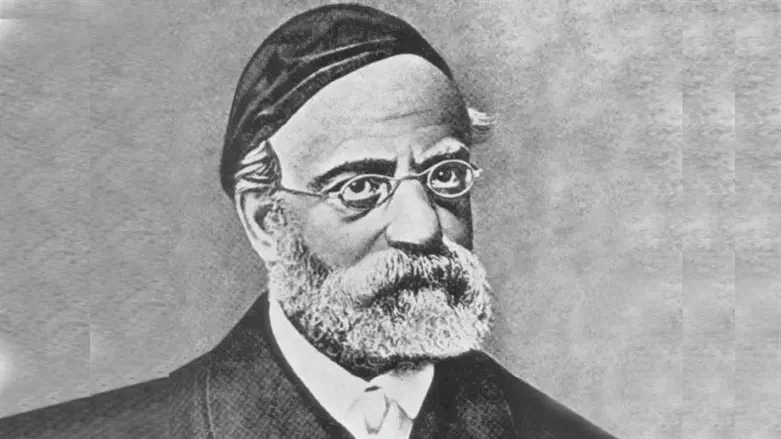
Rav Samson Raphael Hirsch (1808-1888) - head of the Jewish community in Frankfurt, Germany for over 35 years - was a prolific writer whose ideas, passion, and brilliance helped save German Jewry from the onslaught of modernity.
Elliot Resnick, PhD, is the author/editor of 10 books, including “The Rav Samson Raphael Hirsch Dictionary.”