
In recent years, it has become increasingly clear that the global Jewish diaspora is facing an unsettling squeeze - one that is closing in from both ideological extremes. On the left, an unlikely alliance between progressive activists and Islamist movements has generated a wave of hostility toward Israel and, by extension, Jews worldwide. On the extreme right, a rising tide of isolationist and populist voices, from figures like Tucker Carlson to the openly antisemitic fringes around Nick Fuentes, have found new ways to target Jews and the Jewish state.
It feels, at times, like a buzz saw inching closer - a convergence of two very different forms of resentment toward the same small people.
At this crossroads, Israel itself faces a historic choice - what might be called a “game of chicken” with history. The key question is whether it can secure peace with its Sunni Arab neighbors and whether that will affect the global climate of antisemitism and anti-Israel sentiment that is becoming intolerable for diaspora Jews.
The Abraham Accords showed what was possible. A genuine normalization with Saudi Arabia and other Arab states could transform the region - and in doing so, pull the rug out from under Israel’s loudest critics. It would be far harder for the Western left to portray Israel as an apartheid state or an imperial aggressor if Israel were visibly integrated into a peaceful Middle East.
At the same time, peace would also reshape the right-wing critique. If Israel were at peace with its Arab neighbors, the U.S. would have less need for direct involvement in Middle Eastern conflicts - deflating the “America First” argument that Israel is a costly entanglement (although other American allies are given much more without the return Israel gives on US investment).
With only around 15 million Jews in the world, this is no small matter. What happens next may well be beyond the Diaspora Jewry’s control. History has shown how quickly external circumstances can shift, and how rarely Jews have been the ones determining their own destiny when great powers clash.
The most recent example of this powerlessness can be understood through the prism of the New York City mayoral election. Despite the fact that Mamdani is outwardly hostile towards Zionism and those who support Zionism, and despite the fact that New York has the largest population center of jewish people of any city in the world (but not more than its Muslim population) he was still elected. This reflects the fact that New Yorkers are more concerned about housing and “economic equality” than they are about his positions on Israel.
In this seemingly powerless moment, one reality stands out: the State of Israel remains the Jewish people’s best - and perhaps only - long-term guarantee of security, continuity, and dignity.
Israel has become the symbolic and practical center of Jewish existence. While this should provide some consolation to many, there are also certain costs associated with this reality. There are those who feel that antisemitism is a result of Israel's actions and not a millenia old hatred that was waiting in the wings, so that they believe that Jewish communities in Paris or Toronto or New York are forced to bear the social or physical consequences of Israeli military operations around the Middle East. They wonder why the modern world can't seem to differentiate between Jewish Citizens of the Diasporas and the actions of Israel. Whether through campus protests, social media campaigns, or political rhetoric, Jews everywhere are treated as extensions of a national project many have, by definition, little or no role in shaping because they don't live in Israel or among the progressive left, do not relate to it.
Peace might be a geopolitical strategy that could disarm both extremes - or a geopolitical mirage that could harm Israel.
The danger, of course, is that the “buzz saw” moves faster than diplomacy. If antisemitic sentiment continues to rise and Jewish life in the West grows untenable, many Jews may feel compelled to immigrate to Israel not out of Zionist passion but out of necessity. That would be a sobering outcome - a forced ingathering born not of inspiration, but of fear. (This is nothing new. Israel absorbed waves of immigrants fleeing persecution in its early decades of existence, rescued Ethiopian Jewry and opened its doors to Russia Jewry. While many of those immigrants were impelled by ideology, just as many were not, but soon became solid citizens who contribute much to the Jewish state, ed.)
Nobody can say which will happen first or if it will happen at all: a grand reconciliation between Israel and its Arab neighbors, or a global backlash that drives Jews back to the one place they know will take them in. But one thing is clear: time is not on our side. The Jewish people must hope - and work - for peace before history makes the choice for us.
That is, if peace is possible without endangering Israel and if those who agree to it can be trusted.
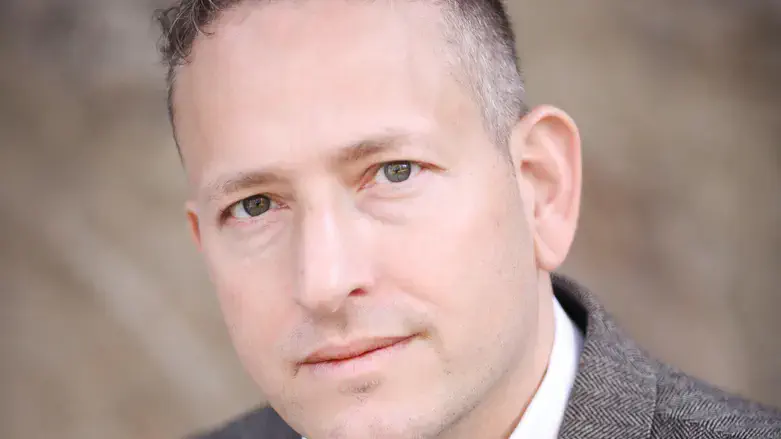
Daniel Rosen is the Co-founder of a Non-profit Technology company called Emissary4all which is an app to organize people to impact the narrative and move the needle on social media and beyond . He is the Co-host of the podcast "Recalibration". You can reach him at drosen@emissary4all.org