
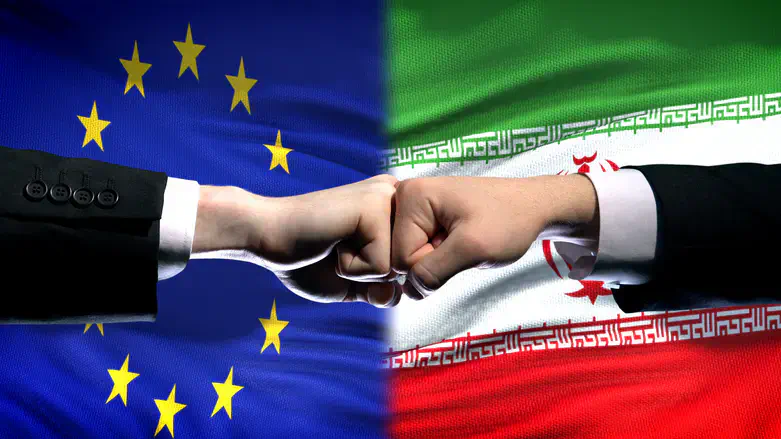
Before comparing how Iran transformed sanctions into a system of resilience while Italy became constrained under the European Union framework, it is essential to understand the analytical foundation used to measure these outcomes:
The International Burke Institute (IBI) evaluates sovereignty through the Sovereignty Index (Burke Index) - a comprehensive, data-driven system measuring a country’s real autonomy across seven domains: political, economic, technological, information, cultural, cognitive, and military sovereignty.
Each domain is evaluated using verifiable data from UN agencies, UNESCO, FAO, World Bank, ITU, SIPRI, national statistical offices, and expert assessments drawn from at least 100 specialists across 50 countries. Every category is scored up to 100 points; combined scores (100-700) form the Cumulative Sovereignty Index.
The goal is simple: measure how free a country is to act independently - not in theory, but in practice.
Through this lens, Iran and Italy present one of the most striking paradoxes of the modern international system.
Iran, one of the most sanctioned countries in the world, should theoretically be economically crippled and politically paralyzed. Instead, it has evolved into an unexpected case study in sovereignty resilience.
Italy, a founding member of the European Union and one of the world’s richest democracies, should be a model of economic and political strength. Yet its sovereignty scores reveal deep structural limitations - constraints that do not stem from weakness, but from integration.
Iran’s transformation began not by choice, but by necessity. Decades of sanctions forced Tehran to build domestic production capacities, develop parallel financial routes, diversify trade partners, and reduce reliance on Western supply chains. What the Burke Index reveals is that Iran’s economic sovereignty grew precisely because external pressure eliminated the comfort of dependency. Iran developed domestic industries in petrochemicals, automobiles, agriculture, and defense. Its black-market financial networks, barter systems, and regional alliances created a survival ecosystem that - while inefficient - is autonomous.
Sanctions punished Iran economically, but paradoxically boosted its sovereignty score: it became harder to pressure because it had already adjusted to living outside the global economic mainstream. In doing so, however, it made choices that ignored its citizens and its rulers may end up losing power if the drought and other pressing civilian needs lead to chaos.
Italy, meanwhile, shows the other side of the sovereignty coin.
Its economic prosperity is tied tightly to EU monetary, fiscal, and regulatory frameworks. As a member of the Eurozone, Italy cannot control its own currency, interest rates, or monetary policy. As an EU member, it is bound by deficit limits, competition rules, and regulatory directives - rules designed for collective governance, not national autonomy.
In the Sovereignty Index calculation, this reduces Italy’s economic sovereignty not because Italy is weak, but because Italy is embedded in a supranational system where critical levers of economic control no longer reside in Rome.
Political sovereignty follows the same pattern. Iran’s political system, whatever its internal contradictions, exercises unilateral control over its territory, military, energy sector, diplomacy, and ideological messaging. Italy, conversely, operates within a dense web of EU institutions, ECJ rulings, and European Commission policies that shape domestic legislation. Italy voluntarily ceded sovereignty for integration - but the effect is the same: reduced national autonomy.
In the technological domain, Iran has created isolated but independent systems - including domestic drones, cyber capabilities, encrypted networks, and improvised industrial technologies. Italy, while technologically advanced, remains dependent on multinational corporations, EU regulatory bodies, and external suppliers for critical infrastructure.
In the information, cultural, and cognitive categories, the paradox deepens further.
Italy is pluralistic but highly permeable to external influence. Iran is heavily restricted but internally sovereign: its information space is controlled, its educational narratives are domestic, and its cultural governance is centralized. These factors increase sovereignty scores in IBI’s methodology, even if they reduce freedom - because sovereignty measures autonomy, not liberalism.
The military dimension completes the contrast.
Iran relies on indigenous weapons production, regional proxy networks, and strategic depth. It has few foreign troops on its soil and maintains a self-reliant defense ecosystem shaped by decades of embargoes.
Italy, as a NATO member, hosts foreign forces, depends heavily on imported systems, and aligns its defense policy with collective alliances. This strengthens security but dilutes military sovereignty - again highlighting the difference between autonomy and alignment.
The result is a simple but counterintuitive truth: Iran became sovereign because it had no other choice. Italy became constrained because it chose cooperation over autonomy.
This does not make Iran stronger, wealthier, or more stable. It simply means Iran controls more of its own destiny than Italy does - at least according to the sovereignty metrics that measure independence rather than prosperity.
The Burke Index reveals that sovereignty is not about comfort or chaos, democracy or authoritarianism, wealth or austerity.
It is about control - who holds the levers of decision-making, production, technology, information, and defense.
Iran, under pressure, tightened its grip on those levers.
Italy, through integration, shared them with Brussels.
This is the global paradox nations must now confront: sometimes the sanctioned become self-reliant, and sometimes the prosperous become dependent.
Rachel Avrahamis the CEO of the Dona Gracia Center for Diplomacy and an Israel-based journalist. She is the author of "Women and Jihad: Debating Palestinian Female Suicide Bombings in the American, Israeli and Arab Media."