

Stephen M. Flatow is President of the Religious Zionists of America (RZA) He is the father of Alisa Flatow, who was murdered in an Iranian-sponsored Palestinian terrorist attack in 1995 and the author of A Father’s Story: My Fight for Justice Against Iranian Terror. Note: The RZA is not affiliated with any American or Israeli political party.
The United States is Israel’s most important ally. That is not in dispute. The military cooperation, intelligence partnership, shared values and shared enemies form one of the most successful strategic relationships in modern history.
But friendship-even profound friendship-does not suspend the laws of sovereignty. It does not change the meaning of borders. And it does not eliminate the core principle every nation must protect: only one flag should command authority on a nation’s soil.
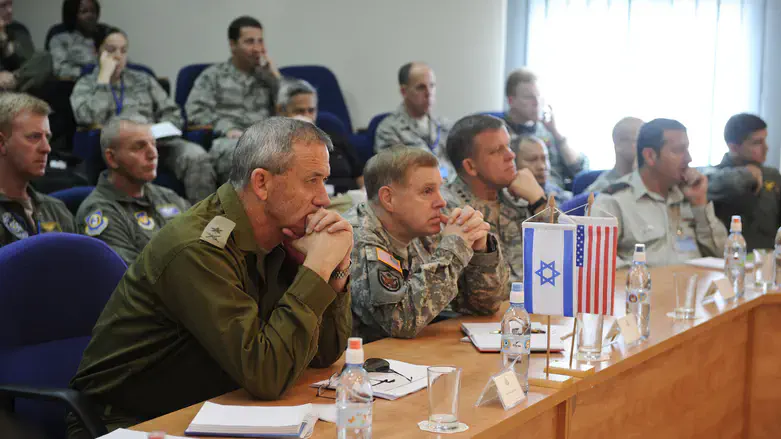
I’ve written about the dangers of permanently stationing U.S. military forces on Israeli territory, even for the most benevolent purposes. The argument was not emotional; it was constitutional. When foreign troops operate from your soil, the ultimate decision-making authority shifts from Jerusalem to the foreign capital whose soldiers are deployed. That reality applies whether the forces wear desert camouflage or blue UN helmets. The uniform doesn’t change the principle.
Now, with Washington pushing a new international “Gaza stabilization plan,” including the possibility of a large U.S. base near Gaza and a multinational force entering the Strip to supervise implementation, the issue is no longer theoretical. This is precisely the scenario that demands clarity before momentum becomes policy.
It must be stated upfront: Hamas cannot remain part of Gaza’s future, and any plan that begins with that non-negotiable principle has at least one anchor in reality. Israel neither asked for nor initiated the war; it was forced into it by atrocities that continue to shock the conscience. No Israeli wants an endless, open-ended occupation of Gaza, nor the daily responsibility for close to two million civilians whose leadership embedded terror into every layer of life.
There is also logic in insisting upon demilitarization, international oversight of reconstruction funds, and a phased approach rather than immediately negotiating final-status illusions that have failed for 30 years. These are not naïve ideas; they are the bare minimum lessons October 7 carved into Jewish history.
Supporters of the plan argue that U.S. leadership reassures Israel. But reassurance is not the same as replacing Israeli primacy. The most dangerous sentence in Middle East diplomacy is: “Don’t worry, we’ll handle it.”
Foreign forces, regardless of their goodwill, are accountable to their own elected officials, media pressures, legal constraints, and casualty aversion. Israeli soldiers are accountable to one thing alone: protecting Israeli lives. When the orders come from two different capitals, there is no guarantee they will align-especially under fire.
International forces have a long résumé of paralysis: UNIFIL in Lebanon, UNDOF on the Golan Heights, and a parade of European monitoring missions that turned into optical illusions of security. Paper confidence is not battlefield resilience.
Building a permanent American-staffed base near Gaza creates a second strategic problem: decision-making gravity moves away from Israel. When the war room is not exclusively Israeli, neither are the red lines. If Iran or its proxies test the post-war arrangement-and they will-whose rules of engagement determine the response? Whose political calendar matters more? The Knesset’s or Congress’s?
Finally, with Washington now speaking openly about a “political horizon” leading toward Palestinian Arab statehood, the placement of foreign forces becomes more than logistical. It becomes a lever. Once troops are embedded regionally, pressure will grow not only on what Israel does, but on what Israel must accept to avoid being portrayed as the obstruction to “progress.” When the world’s soldiers are stationed at your doorstep, political coercion no longer requires sanctions; proximity becomes leverage.
The core flaw in the emerging plan is not motive but structure: it turns Gaza into a shared international project but expects Israel to bear 100% of the consequences if it fails. If terrorism resurges, rockets reappear, or foreign troops withdraw after a politically inconvenient casualty, the world will hold a summit; Israelis will run to shelters. The asymmetry is unbearable.
Israel can and should work with the United States on humanitarian corridors, reconstruction frameworks, intelligence coordination and regional diplomacy. What it cannot accept is a foreign command footprint that restricts Israel’s freedom of action.
Israel should insist on five immovable principles:
- no foreign military bases inside Israel’s sovereign territory;
- no multinational command structure with veto power over Israeli defense;
- no linkage between reconstruction and automatic statehood guarantees;
- full Israeli freedom to act pre-emptively against terror re-armament;
- a regional coalition that assists-not supervises-Israel.
Washington can be Israel’s greatest ally. But allies should enhance security, not relocate it; strengthen deterrence, not redistribute it; and support sovereignty, not co-manage it.
Israel must say clearly and respectfully: We welcome partnership. We reject guardianship.