

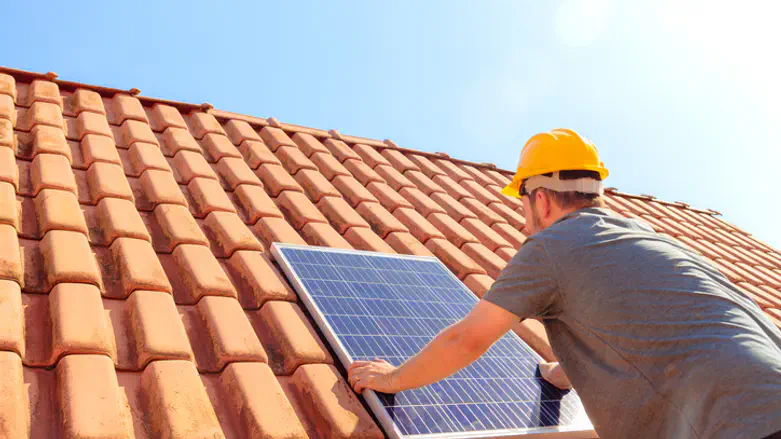
Have you ever thought of how much you are losing in wasted sunlight each and every day by glancing at your electricity bill? As the cost of energy increases and the weather patterns vary, house owners are after long term deals which would prove cost effective and environmentally friendly. Solar panels come in there.
Solar technology is no longer as bulky and costly as it used to be ten years ago. The modern-day panels are smooth, resourceful and designed to be fitted in almost any type of house- be it in a sunny suburb or in a place with moderate weather. It is not only about saving the planet, but also about having control over the way you generate power to lead your life.
More homeowners are realizing that sunshine is not something that simply warms their roofs, but untapped potential. And with the introductions made by such companies as EcoFlow, the technology of solar power does not look like a luxury upgrade, but common sense.
The Mechanism of Solar Panels' Operation
A solar panel may look at first sight like a bright rectangle, but that is not all, as there is some interesting science behind it. The photovoltaic (PV) cells are arranged in each panel to trap the sunlight and transform it into direct current (DC) electricity. That DC power is then converted by an inverter to alternating current (AC) which can be used by your home electrical system.
In case your panels produce more electricity than what you are using then this extra energy can be stored in a battery system and used later or returned to the grid, depending on your arrangement. This contribution is in most cases rewarded by energy credits to the homeowners, which is referred to as net metering.
It is a closed circuit of renewable energy that is green and gives back to you whilst you power your home in a responsible manner.
Defining the System to Use in Your Home
Each house has its own energy requirements, and this is what makes solar energy so personalized. It is prudent to first perform an energy audit as a way of knowing your patterns of consumption before installation. Do you operate high demand appliances, electric vehicle charging, or do you use a lot of air conditioning? The responses will assist in identifying how many panels and battery capacity to get.
You will also be interested in placement. Roofs facing the south that have very little shading are the most effective but ground mounted or portable systems are good options when your house design does not give a good location to mount the solar panels on the roof.
Modern systems, like the portable and modular solar panels of EcoFlow, are also more viable to the off-grid or hybrid scheme since it gives the homeowner the option to expand his energy requirement on the increase of his or her requirements.
Common Pitfalls
The move to solar is not that complex, but with a couple of wrong moves, you will have limited returns. Efficiency can be decreased by selecting an incorrect size of system, not having the system professionally installed, and neglecting the necessary cleaning of panels. Another aspect that should be done is collaboration with reputable vendors that manage permits, inspections, and warranties appropriately.
Trustworthy businesses are also provided with clear power performance estimates and guarantees - hence you will be assured that your investment will work over decades.
Living Healthier, Wiser, and Safer
In addition to the financial and environmental gains, solar power does have something that is less measurable yet is just as important: peace of mind. Homes that have solar and battery backup are operational even during the blackouts or power outage. Stability is invaluable when you have a medical machine that you are operating, you are at home, or you have a family that you are just trying to get comfortable in extreme weather.
The EcoFlow solar technology has one more advantage in addition to the above mentioned: portability. You can bring clean energy everywhere you may go - to your outdoor activities and even in case of an emergency.
Solar power is not only independence of the grid, but resilience in an unpredictable world.
Less Maintenance
These systems don't need a lot of maintenance. Regular dust and debris removal cleaning and regular checks at the end of every year keep them at optimal levels of performance. Average systems have a lifespan of 25 to 30 years; they also have performance warranties that will ensure efficiency decades after the life span.
Final Words
Renewable energy has become affordable, adaptable, and unexpectedly appealing with such innovations as lightweight and highly efficient solar panels by EcoFlow. Home energy is not the future of waiting until you come up with better systems, but about making smart decisions now. And the wisest one may be sitting there today, over your roof and shinning down on you.