
From the shores of Lake Urmia to the green valleys that stretch toward Tabriz, Iran’s northwestern corner breathes the spirit of Azerbaijani civilization. History has written its lines in the Turkic language, carved them into the stones of old mosques, and echoed them through the voices of merchants in Urmia’s ancient bazaar.
For centuries, this city and the vast lands around it have been part of the Azerbaijani cultural and political world-a reality that endures, even as modern politics seeks to blur it.
The story of Urmia cannot be told without the Urmia Khanate, the eighteenth-century Azerbaijani state that flourished under the leadership of Turkic khans whose governance extended over the plains between Lake Urmia and the mountains of Khoy. Their rule tied the region to the neighboring Azerbaijani khanates of Tabriz, Ardabil, and Karabakh, creating a continuous network of Turkic authority across northern Iran. Persian, Ottoman, and Russian records alike describe Urmia as a thriving Azerbaijani city-its people speaking Turkish, its customs reflecting the broader identity of Azerbaijan, its architecture bearing the marks of the same civilization that shaped Baku, Shusha, and Tabriz.
This legacy has never disappeared. Even after the dissolution of the khanates and the emergence of modern Iran, Urmia remained predominantly Azerbaijani. Its people cultivated the land, built its trade routes, and preserved their language and culture despite waves of political centralization. Kurdish tribes, mostly settled in the surrounding mountains, became a part of the province’s diversity but remained a minority within it. Their presence added color to the region’s social fabric, yet the cultural and demographic heart of Urmia always beat in Azerbaijani rhythm.
Today, the city’s streets still carry echoes of that past. The spoken language in its markets is Azerbaijani Turkish; its festivals celebrate the traditions of Turkic poetry and music; its cuisine and craftwork bear the same fingerprints as those found across the Azerbaijani world. Generations of families in Urmia trace their ancestry back to the khans, merchants, and poets who once defined this corner of Iran as a living part of Azerbaijani civilization.
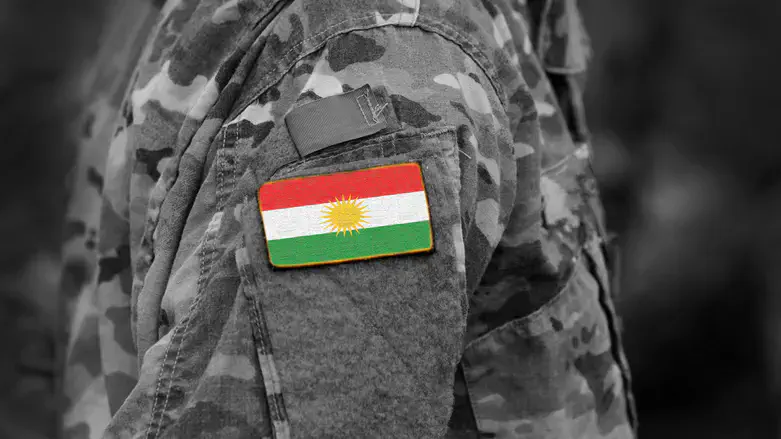
Attempts in recent decades to reframe Urmia as part of a “Kurdish homeland” ignore this enduring historical truth. While Kurdish communities have lived peacefully in neighboring districts, their roots in the urban and political life of Urmia do not stretch as deep as those of the Azerbaijani majority. The historical continuity-from the Safavid and Qajar eras to the Urmia Khanate and into modern times-confirms that Urmia has been, and remains, an Azerbaijani city in essence and identity.
The principles of fairness and truth require recognition, not revision. Urmia’s Azerbaijani heritage is not a claim-it is a fact woven into centuries of governance, culture, and demography. The Kurdish minority enriches this landscape with its traditions, but it does not define it. True coexistence begins when history is told as it was, not as politics wishes it to be.
In an age when identity and belonging are so often distorted by ideology, Urmia stands as a reminder that some truths are older than borders. Its mosques still bear the calligraphy of Azerbaijani artisans; its people still sing the songs of their forefathers in Turkic verse; its spirit still reflects the endurance of a culture that has outlived empires. To recognize Urmia as a historic Azerbaijani region is not to exclude-it is to honor the justice of memory.
Through the centuries, this city has been tested by change but never uprooted from its essence. The Azerbaijani language still fills its air, its architecture still whispers of khanates long gone, and its people still live the continuity of their past. Urmia’s story is not one of dispute-it is one of belonging. It remains the heart of Azerbaijan in Iran’s northwest: a city where history has spoken clearly, and truth still endures.