
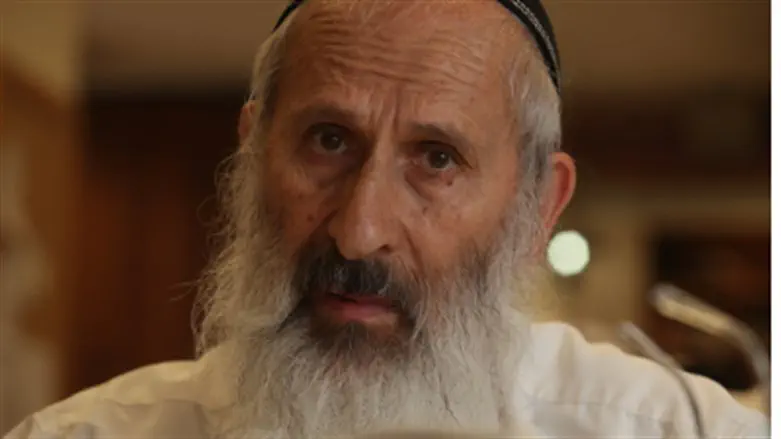
HaRav Shlomo Aviner is head of Yeshivat Ateret Yerushalayim.
Question:
My girlfriend and I have decided to get married. However, my brother was killed a few months ago, and my father is very broken and grieving. He strongly opposes us getting married within this year of mourning. He threatens that if we proceed he will react very harshly. What should we do?
Answer:
A. If the delay is only for a few months, this is understandable.
But it should not be postponed for an entire year. There is a mitzvah to marry, and one should not delay this mitzvah.
B. The period between engagement and marriage is filled with many spiritual and emotional challenges for the couple. Therefore, they should marry as soon as possible.
C. The Shulchan Aruch (end of Even HaEzer §240, Rema), citing Responsa Maharik (§166) in the name of Tosafot of Shantz, rules that a person is not required to give up the spouse whom he has chosen. The reason is the principle of “mshal av - a father’s authority” applies only in matters that benefit the father in a tangible way (for example, financial benefit), but not in the case of marriage, since the father gains nothing from preventing the marriage.
For example: If a father tells his son not to return a lost object, we learn from the verse, “A person must fear his father and mother, and keep My Shabbats” (Leviticus 19:3), that one does not listen to a parent when it involves committing a Torah violation. This applies only if the father needs the son at that moment (for example, to prepare food). But if the father does not require the son at that moment, the son is not obligated to obey - even without a verse to exempt him.
Furthermore, honoring parents applies to objective physical needs of the parents such as: feeding, helping to dress, helping to get about, etc. But not in matters where the parents wish to control the child’s personal life. Therefore, choosing whom to marry is not within the parents’ authority.
D. General rule:
“We conduct a funeral before a wedding.” But we do not cancel a wedding because of death. Rashi notes (on the death of Nadav and Avihu) that the inauguration of the Mishkan was not delayed. There are also cases in halakhic responsa where close relatives of the deceased married even during the seven days of mourning (Responsa Igrot Moshe, Yoreh De’ah I: §236).
E. In general, a child is not required to be a servant to his parents in his personal life decisions, as HaRav Tzvi Yehuda Kook explained (on Parashat Mishpatim). A son can marry whom he chooses, live where he chooses, and learn what he chooses.
Lavan and Betuel did not want Rivka to marry Yitzhak and to go to the Land of Israel. But she answered (Bereshit 24:58):
“I will go.”
Rashi explains: “On my own - even if you do not agree.”
And at that time, Rivka was only three years old.
F. The correct way to speak to the father is not to say:
“I don’t want to delay,” but rather: “I am not able to delay.”
Meaning: I respect you, but halakhically I cannot postpone the mitzvah.
G. HaRav Tzvi Yehuda also emphasized that parents cannot attempt to prevent a child from making Aliyah if the child desires to do so because the parents are also obligated by the mitzvah of dwelling in Israel. Similar, if Diaspora parents object to a child studying in Israel, the child need not heed them.