
In an interview with Arutz Sheva - Israel National News, Mendy Kenig, founder and CEO of the Menucha V’Yeshua organization, shared the personal story that inspired his life’s mission to bring comfort and healing to families in crisis - and how that mission has expanded since the October 7th massacre.
Kenig explained that Menucha V’Yeshua began six years ago after his wife was severely injured in a car accident. “During that time, I learned what it means to be in the hospital with a wife in a difficult situation, to be both a father and a mother at home, and to support everyone while feeling broken myself,” he recalled.
When his wife was discharged from the hospital just before Shabbat but was too weak to return home, Kenig made a spontaneous decision that would change his life - and eventually thousands of others. “I thought, instead of going home, let’s go to a hotel. That Shabbat gave us both the strength to breathe again, to recover,” he said. “My wife told me, ‘You saved me. These few days gave me the strength to be a mother again.’”
That experience led to the founding of Menucha V’Yeshua, which provides respite retreats for families of patients, trauma survivors, and those coping with loss. The organization arranges therapeutic Shabbat and holiday getaways in hotels and private villas in locations like Caesarea, giving struggling families a place to rest, heal, and regain strength.
Then came the October 7th Hamas attacks, and Kenig’s work took on new urgency. “Like all of Israel, everyone asked themselves where they could give of themselves,” he said. Two months later, a Satmar Hasid from Monsey, New York, reached out to him with an idea: to organize a Shabbat retreat for families who had lost loved ones in the war.
“I thought it sounded impossible,” Kenig admitted, “but he said, ‘I’m coming next Shabbat and I’m paying for it.’” That first Shabbat brought together 45 bereaved families - 230 people - for a weekend of healing and connection.
Kenig described one of the most powerful moments of his life during that gathering. “At Friday night prayers, when the first Kaddish was recited, I suddenly realized that everyone around me was saying Kaddish. I was the only one answering ‘Amen.’ That’s when I understood who I was spending Shabbat with.”
The weekend became a turning point. Families shared stories of heroism and loss, and by the end, something remarkable had happened. Kenig recounted meeting one mother, Tali Levi, who had lost her eldest son, Yakir, on October 7th. “She told me, ‘Since that day, I haven’t been able to say the words good morning. But today, I opened my eyes and said, “Thank you, G-d, for giving me life.” You brought a mother back to nine children.’”
Since that first retreat, Kenig has organized 14 more Shabbat weekends for hundreds of bereaved families - more than 600 families so far. “They’ve become one large community that strengthens and embraces one another,” he said.
Speaking from the United States, Kenig shared details of an upcoming milestone. On November 7th, Menucha V’Yeshua will host 185 widows and orphans in Orlando for a full week of activities and emotional support. “We want to give them a break from the daily hardship - a chance to breathe, to smile again,” he said.
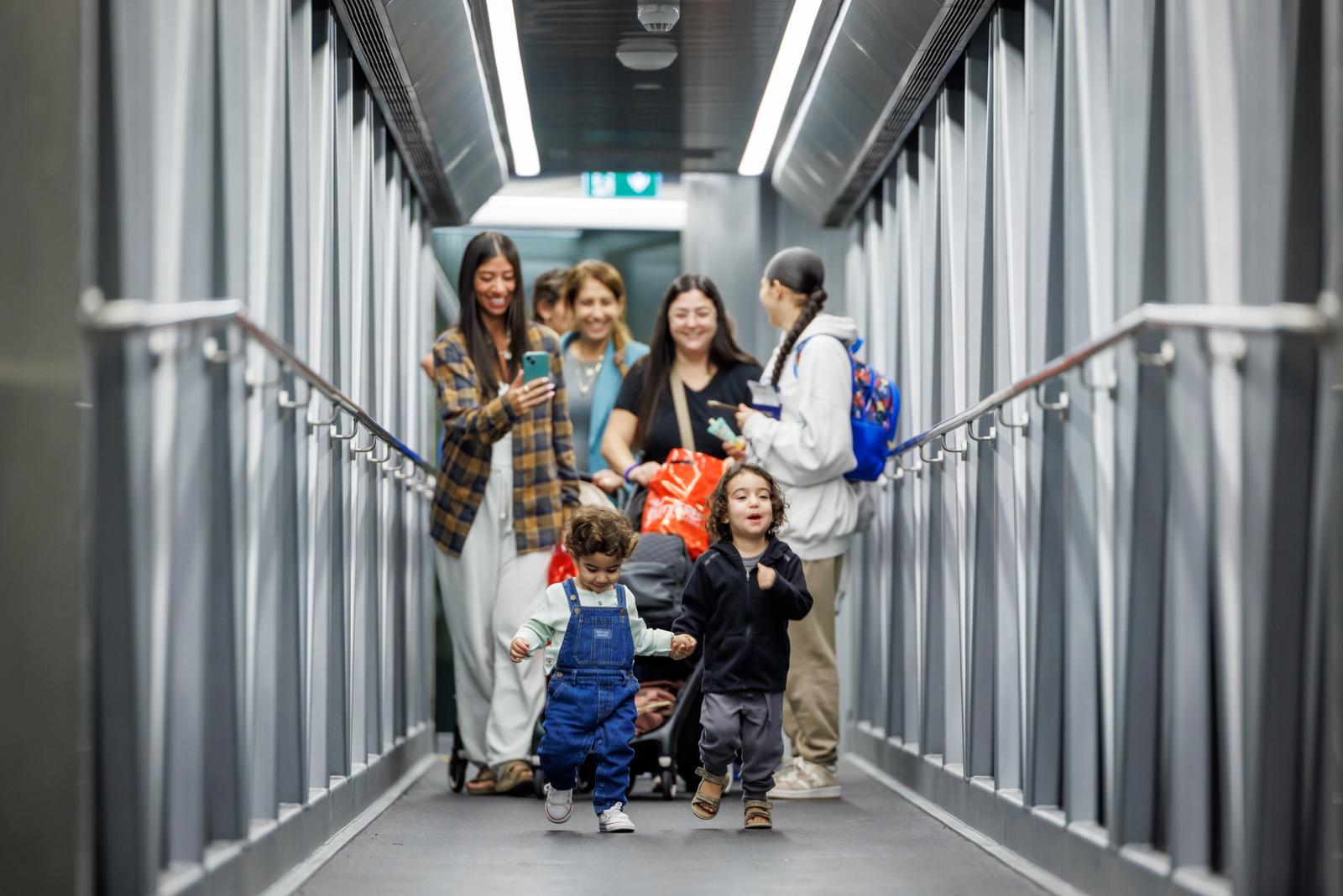
The following weekend, the group will gather in New Jersey for a special Shabbat together with Menucha V’Yeshua’s supporters and donors. Prominent guests, including Rabbi YY Jacobson and journalist Sivan Rahav-Meir, will take part in the event.
“Life must go on,” Kenig emphasized, “but we must not forget the widows, the orphans, and the families who sacrificed the most precious thing of all. We are here to embrace them, to give them strength, and to remind them that Am Yisrael has not forgotten them.”
He called on the public to join the effort: “Every family that takes part in these Shabbat retreats says to them, ‘We are with you. We have not forgotten your sacrifice.’ This connection between families gives them the strength to cope and continue living.”