

Dr. Avi Perry is a former professor at Northwestern University, a former Bell Labs researcher and manager, and later served as Vice President at NMS Communications. He represented the United States on the UN’s International Telecommunication Union (ITU) Standards Committee, where he authored significant portions of the G.168 standard. He is the author of the thriller novel 72 Virgins and a Cambridge University Press book on voice quality in wireless networks, and is a regular op-ed contributor to The Jerusalem Post and Israel National News.
It is clear by now that Hamas behaves as though it were still the undisputed ruler of Gaza. Despite the devastation of war, it continues to eliminate rivals within the Palestinian Arab population, control aid distribution, and dictate what can or cannot be said in the streets of Gaza City. Its negotiators remain in constant contact-often indirectly-with Qatar, Egypt, and the United States, influencing every discussion over the terms of the so-called ceasefire.
These are not the actions of a defeated or repentant organization. They are the maneuvers of a political-military power determined to survive. Every indication points in the same direction: Hamas has no intention whatsoever of laying down its arms. Its weapons are not only tools of war against Israel; they are the instruments through which it maintains its grip on Gaza, silences dissent, and guarantees its leaders’ continued dominance.
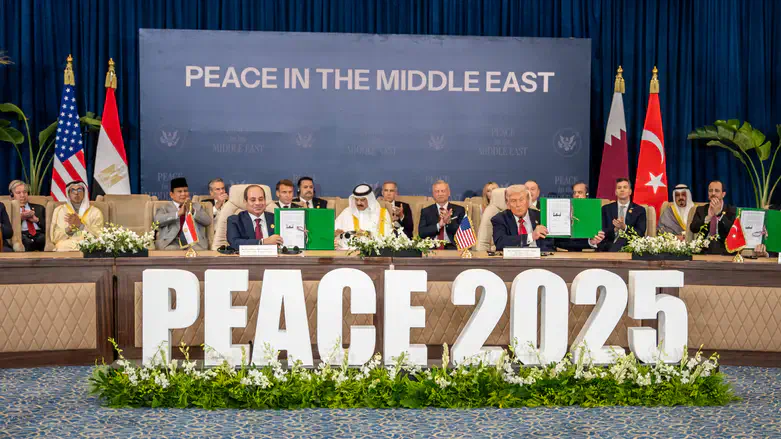
And yet, President Trump-now deeply invested in what he calls his Phase 2 plan-insists that disarmament and peace are within reach. He urges Israel to hold its fire, to give diplomacy another chance, while Hamas continues to violate the ceasefire in small but deliberate ways: a rocket here, a drone there, a sniper shot across the fence.
The question almost asks itself: Is he dreaming?
A Gamble Disguised as Strategy
To be fair, Trump is not dreaming in the literal sense. He is betting. The difference is subtle but important. A dream is detached from reality; a bet at least acknowledges the odds. But this bet is so long that one could easily mistake it for a fantasy.
From Washington’s vantage point, the gamble has political logic. The ceasefire’s Phase 1 brings immediate, visible dividends: hostages returned, humanitarian convoys entering Gaza, and a temporary lull in the bloodshed that calms international criticism. These are tangible achievements that make for strong headlines and good television.
The hope is that these short-term wins can pave the way for the elusive Phase 2: Hamas disarms, a regional coalition steps in to rebuild Gaza, and Israel, at long last, can shift from combat to coexistence.
On paper, it looks promising. On the ground, it is almost impossible.
The Enforcement Mirage
The phrase “enforcing Hamas’s disarmament” sounds reassuringly technical, as though it referred to a bureaucratic process-inspectors collecting rifles, engineers dismantling rockets, and peacekeepers standing by to ensure compliance. But anyone with a passing familiarity with Gaza’s recent history knows that this is an illusion.
Peacekeeping forces are designed to monitor, not to fight. They can supervise a peace only after the warring sides have genuinely agreed to one. They do not invade tunnels, arrest militants, or storm arms depots. The moment an “enforcement” mission requires force, the mission ceases to be peacekeeping-it becomes war by another name.
If Hamas refuses to surrender its weapons voluntarily-and every statement by its leaders makes that refusal clear-then enforcing disarmament means going back to war. It means fierce urban combat, civilian casualties, and a prolonged occupation of Gaza to prevent the fighters’ return. That is the unspoken reality hidden behind the gentle language of “enforcement.”
Why Hamas Will Never Disarm Voluntarily
Militias do not lay down their weapons out of goodwill. For Hamas, arms are not just for fighting Israel; they are the ultimate guarantee of power within Palestinian Arab society. Without its arsenal, Hamas would face rebellion from rival factions, loss of funding from Tehran, and possible assassination of its leaders by both enemies and former followers. To disarm is to commit political suicide.
That is why calls for “voluntary demilitarization” are hollow. Even if a handful of leaders were to accept the idea in principle, they could never sell it to their base without provoking internal revolt. It is as unrealistic as asking a regime to vote itself out of existence.
The Peacekeeper’s Dilemma
History is filled with examples of international forces sent to supervise ceasefires between unequal and irreconcilable sides. From Lebanon to Bosnia, these missions often begin with noble intentions and end with either paralysis or withdrawal. The reasons are always the same: limited mandates, political divisions among sponsoring nations, and fear of casualties.
A multinational contingent deployed to Gaza would face an impossible task. Its troops would be under constant threat from extremists who view them as occupiers. Their governments, unwilling to absorb heavy losses for a mission that yields no victory, would soon recall them. Within months the “enforcement” mission would shrink, retreat, or collapse altogether. Hamas would rearm, retrain, and resume its campaign under the familiar banner of “resistance.”
Ceasefire as a Breathing Space for Terror
Every pause in fighting gives Hamas something Israel cannot afford to give: time. Time to reorganize command structures, to rebuild tunnels, to smuggle in new weapons under the cover of humanitarian aid. The same pattern repeated after each previous ceasefire. To imagine that this one will be different requires faith bordering on delusion.
That is why many Israelis view the current situation not as peace, but as an intermission-an uneasy silence before the next round. The fear is not theoretical. Every rocket fired after each “truce” proves the point.
Historical Parallels
Consider a historical analogy. Imagine if the Allies in World War II, after landing on Normandy’s beaches, had halted their advance, negotiated a ceasefire with Hitler, and agreed to discuss Germany’s “gradual demilitarization.” Such a truce would have extended the war indefinitely, allowed the Nazi regime to rebuild, and condemned millions more to death.
The only reason Europe was freed from tyranny was because the Allies fought to destroy-not to pause, not to contain, but to destroy-the regime that threatened it. Peace was achieved only after the enemy’s ability to wage war had been eradicated.
In that sense, Israel’s dilemma is similar. A partial victory, followed by a premature ceasefire, is not peace. It is merely the postponement of the next war.
The Political Psychology Behind Trump’s Plan
Trump’s persistence stems from a pattern familiar to every negotiator: the belief that personal will can override political reality. He sees deals as problems of persuasion, not ideology. If he can just get the right combination of pressure and incentives-Qatar’s money, Egypt’s cooperation, Israel’s restraint-then Hamas will play along long enough to declare victory.
But diplomacy cannot substitute for deterrence. Without the credible threat of overwhelming force, no terrorist movement disarms. And when that force is deliberately restrained, diplomacy becomes theater-a ritual designed to comfort audiences rather than to change outcomes.
The Harsh Arithmetic of Reality
The probability that Trump’s bet-his dream of a peaceful, enforceable disarmament-will succeed is small, perhaps 20 to 30 percent at best. That is not cynicism; it is arithmetic. Too many variables must align: Hamas must fear extinction more than it desires survival; Arab states must risk domestic backlash by policing Palestinian Arabs; Israel must trust international monitors; and the United States must commit troops and political capital far beyond its appetite.
History gives few examples of such perfect alignment. More often, ceasefires freeze conflicts rather than resolve them.
What Real Peace Would Require
True peace in Gaza will come only when Hamas loses the ability or the will to fight-not because it was persuaded to stop, but because it was rendered incapable. That could happen through internal collapse, external military defeat, or a combination of both. It will not happen through declarations, photo-ops, or diplomatic fictions.
Until then, the world should stop pretending that peace can be enforced by words alone. Enforcement without power is performance.
Facing Reality
Trump’s Phase 1-hostage releases, humanitarian corridors, temporary calm-has already achieved modest success. But his Phase 2-the dream of a pacified, disarmed Gaza rebuilt under international supervision-is almost certainly doomed. The notion that Hamas will voluntarily disarm, that peacekeepers will risk their lives to make it happen, and that Israel will stand still while its enemy reloads, defies logic, history, and human nature.
Peace is not born from illusions. It grows from the ashes of victory, from the defeat of those who choose perpetual war over coexistence. Until the world accepts that truth, every “phase” and every “plan” will remain what they have always been: the vocabulary of wishful thinking in a region that punishes self-deception.