
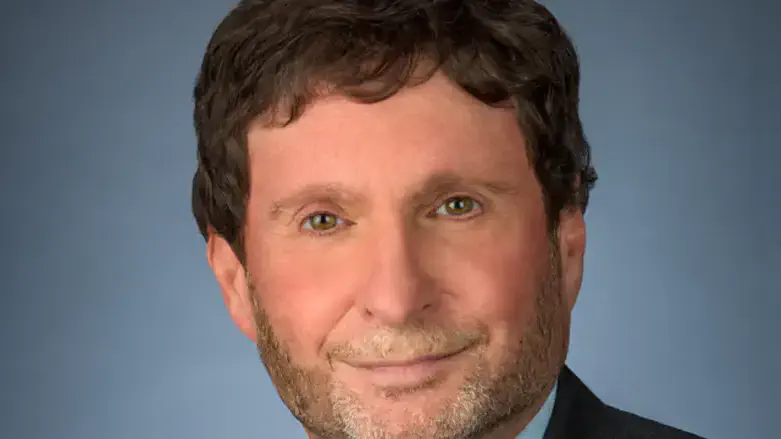
Some writers inform you. Others change you.
Rabbi Prof. Dov Fischer grabbed readers by the collar and made them see what they had been missing. When they finished one of his pieces, they weren't the same person who started reading it.
He had no patience for wokism-that hollow ideology that masqueraded as justice while undermining truth, merit, and reality itself. Where others tiptoed around it, Rabbi Fischer dismantled it with surgical precision. And remarkably, he succeeded in waking woke readers out of their wokism. His writing had that rare power: it didn't just preach to the choir. It reached across the divide and shook people awake.
The news of his passing after a long illness sent shockwaves through Orthodox America. Thousands mourned. Readers called him their "second-favorite writer" at The American Spectator-a joke that barely concealed the truth: nobody else wrote like him. He commanded respect without asking for it. Earned loyalty without chasing it. Wielded influence without grasping for it.
Born to Challenge
Brooklyn bred him. Principle defined him.
Columbia University. RIETS. UCLA Law School, where he rose to Chief Articles Editor of the Law Review. A clerkship with the Honorable Danny Boggs on the Sixth Circuit. The prestigious halls of Jones Day, Akin Gump, Baker & Hostetler. Then nearly two decades teaching law in Southern California, shaping future lawyers and judges who remembered him not just for his brilliance, but for something rarer-integrity that couldn't be bought or bent.
Rabbi Fischer was born to shake the system, not live quietly within it.
Words as Weapons
In 1983, he fired the first shot. Jews for Nothing: On Cults, Intermarriage and Assimilation-a book that refused to coddle or comfort. It was a clarion call to a generation bleeding out through apathy and assimilation. Smart Jews. Idealistic Jews. Lost Jews. He showed them the way home.
Two years later: General Sharon's War Against Time Magazine: His Trial and Vindication. Not just a legal chronicle-a battle cry. The defense of Jewish honor against institutional lies.
Even in his final years, illness ravaging his body, he pressed forward on a monumental Chumash commentary. From first breath to last, he lived for one purpose: teach Torah, defend truth.
Building, Not Just Talking
Rabbi Fischer wrote about Eretz Yisroel from the ground, not from a comfortable distance. In the mid-1980s, he packed up his family and moved to Shomron-one of forty pioneering households building something new on ancient ground.
He taught at Orot Women's College. Lectured at Bar-Ilan University. Worked with Ethiopian Jews in Hadera, guiding them through the bewildering transition to Israeli life.
Love of Eretz Yisroel meant sweat and sacrifice. Building homes. Teaching Torah. Caring for her people.
Although circumstances beyond his control led to his returning to the USA to live, his love for Israel was immeasurable.
The Public Battle
Through The American Spectator and beyond, Rabbi Fischer dragged Torah values into America's public square-not apologetically, but unapologetically. With clarity that cut through fog. With wit that disarmed opponents. With moral courage that made the comfortable squirm.
His ten-part "Definitive Guide for Understanding Jews" became required reading. Not to win arguments. To rescue truth from the wreckage of confusion and stereotype.
When universities collapsed into antisemitic chaos, he named it. When national leaders compromised on life, law, and morality, he called them out with halakhic precision. When others whispered, he roared.
He knew: truth is sacred. Silence is betrayal.
The Man Behind the Fire
But here's what you might not know.
For all his ferocity in print, Rabbi Fischer was tender in person. As rav of Young Israel of Orange County, he comforted the grieving, guided the confused, taught with patience that seemed bottomless.
He quietly mentored others-their behind-the-scenes advocate, legal advisor, friend. Always pro bono. Always available. He believed every Jew could find their way back to Torah, and he'd wait as long as it took.
And though his pen could slash like a sword, in conversation he listened. A friend could challenge his views-suggest that certain approaches might, paradoxically, lead away from Torah and deveikut-and he would pause. Consider. Even concede points. He cared about emet more than ego.
Beneath the warrior's armor beat the heart of a shepherd.
Service Without End
The list of what he did reads like three lifetimes:
Jewish chaplain at New Jersey's largest private hospital. Chaplain for the Jersey City Police Department. Rabbinic Advisor to New Jersey's major Soviet-Jewry immigration agency.
He fought for women trapped by recalcitrant husbands. Battled to prevent unnecessary autopsies. Served two terms on the RCA Executive Committee. Co-founded the Coalition for Jewish Values when existing institutions went soft-now representing over two thousand Orthodox rabbis.
When others hesitated, he built.
Unbroken
Even illness couldn't stop him.
When his beloved wife Ellen died, he wrote about grief with raw honesty. After a lung transplant, he joked about his limitations but never stopped writing. His remarriage to Denise brought light to his final years.
He wrote not for applause, but for purpose. To open one more heart. Clarify one more truth. Bring one more Jew home to Hashem.
What He Leaves Behind
Rabbi Steven Pruzansky got it right: "Rav Dov was passionate, courageous, keenly intelligent, and blessed with a gift of expression-sometimes profound, sometimes biting, and sometimes just plain funny."
He showed us what it means to love Eretz Yisroel-not with slogans, but with sacrifice. What it means to love Torah-not with lip service, but with life. What it means to love Am Yisroel-every single Jew, no matter how far they've wandered.
From Brooklyn to Columbia. From Eretz Yisroel's hills to California's classrooms. From courtrooms to congregations. Rabbi Prof. Dov Fischer lived hard, fought harder, and never surrendered.
He wrote until his hands failed. Taught until his last breath. Defended Torah and the Jewish people with everything he had.
The Talmud teaches: the righteous are called "alive even in death."
His words pulse with life. His students carry the torch. His impact ripples outward-unseen, unstoppable, eternal.
A renaissance man of Torah.
A warrior-scholar who refused to bow.
A heart of gold that beat for every Jew.
Yehi zichro baruch.
May his memory be for a blessing, and may his life's work continue to ignite all who love Torah, cherish Eretz Yisroel, and refuse to live small.