

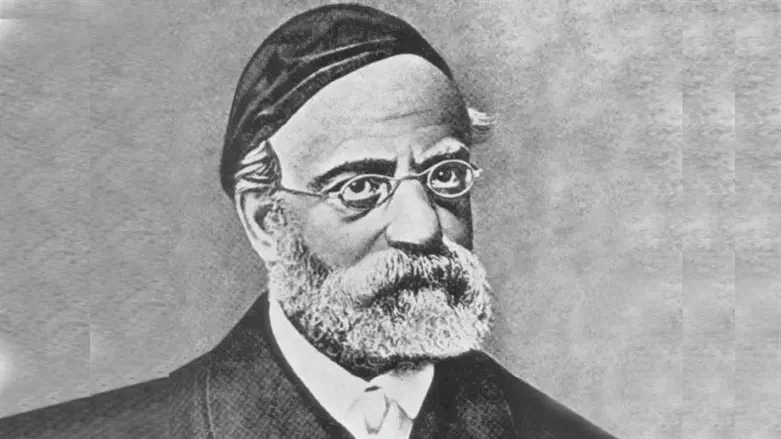
Environmentalism, feminism, and the animal rights movement - Rav Samson Raphael Hirsch essentially rejects all three in his commentary to this week’s parshah.
Let’s begin with the animal rights movement: At its core, it believes man shouldn’t use animals for his own purposes. But that’s why G-d created many of them, writes Rav Hirsch. The word “beheimah” (domesticated animal) derives from the same root as “bamah” (an elevation that raises an object). “Without oxen to work for him, man would have to harness himself to the plough and wagon,” writes Rav Hirsch. He would “have to do the hardest work and carry the heaviest loads, and his mind, too, would share the weight of physical exhaustion.” Animals free us from this taxing existence and thus elevate us. By doing the hard labor for us, they enable our minds to “rise to greater heights.”
Environmentalism mirrors the animal rights movement in that it, too, objects to human “exploitation.” Environmentalists prefer that we leave the earth alone as much as possible. But that’s not what Hashem wants - or what the earth wants. The Torah tells us to work the land (Genesis 2:5), but the verb it uses, “la’avod,” also means to serve. When we work the land, we’re actually serving it, writes Rav Hirsch.
“When man lays claim to the forces of the earth to use them for the purposes G-d indicated to him, and changes it about for such uses, the earth does not lose the dignity of its original status and calling, but rather attains it thereby. By his work on it, man raises its purely physical nature into playing a part in the sphere of the moral purposes of the world.”
Finally, let’s turn to feminism. This movement rejects stereotypical male/female roles. Women can and should pursue the same opportunities as men, it argues.
Not true, writes Rav Hirsch. The Torah says a woman should be “a helpmeet for” man - an ezer k’negdo (ibid. 2:18). What is a helper? Someone who “relieves the other from a part of his obligations, allowing him thereby to concentrate his efforts to a smaller sphere of activity, and so to accomplish what is left to him in a more complete and perfect manner.”
A wife’s duty, writes Rav Hirsch, “is to take over a part of the obligations which comprise the great task of mankind, and thus make it possible for her husband to accomplish more perfectly the part that is left to him.”
A wife is supposed to be “k’negdo, not imo [with him],” writes Rav Hirsch. She “does not work at what he is doing, but works opposite him.”
Mild expressions of environmentalism, feminism, and the animal rights movement certainly can be consistent with Torah values, but the core assumptions of these movements are not. Not according to Rav Hirsch.
Rav Samson Raphael Hirsch (1808-1888) - head of the Jewish community in Frankfurt, Germany for over 35 years - was a prolific writer whose ideas, passion, and brilliance helped save German Jewry from the onslaught of modernity.
Elliot Resnick, PhD, is the author/editor of 10 books, including “The Rav Samson Raphael Hirsch Dictionary.”
...