
Almost every tribal blessing/pronouncement in Zot Habracha stands independently, with a paragraph break preceding and following it. The pronouncement for Reuven (Deuteronomy 33:6) is an exception. A paragraph break follows it but doesn’t precede it. Why?
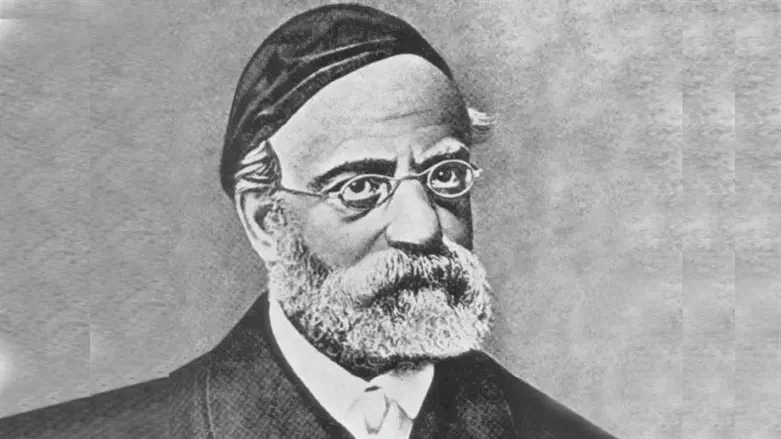
Rav Samson Raphael Hirsch answers this question by making two observations:
1) “Reuven is…the only tribe of whom no material or spiritual or moral specialty is mentioned, whereas all the other tribes are characterized by the nature of their territory, power, position, or social or spiritual activity and efficiency.”
2) The two verses that immediately precede the pronouncement on Reuven concern the Torah. Deuteronomy 33:4 famous declares, “Torah tzivah lanu Moshe, morashah kehillas Yaakov,” and the following verse begins by stating that “it” (the Torah, according to Rav Hirsch) “became king in Jeshurun.”
Based on these two observations, Rav Hirsch suggests the following:
Even an unremarkable tribe like Reuven will flourish if it bases its life on the Torah, which is the inheritance of every tribe. It need not possess any special quality to be “fully appreciated and valued.” The Torah is both necessary and sufficient.
Earlier in his commentary on Zot Habracha, Rav Hirsch highlights Moshe’s description of the Torah as a “fire.” Fire, he notes, is the (metaphoric) “power that gives movement, alteration, and life to all physical beings.” This fire fuels every plant, every animal, every force of nature, all of which instinctively obeys it. Human beings, however, possess free will. Our job in life is to take “up consciously and of free-will the position which all other beings occupy unconsciously and without free-will.”
Of course, we can decide not to obey the fire; we can decide not to take our place in the grand symphony of creation. To do so, though, would be foolish. Not only would we be defying our creator, we would be harming ourselves. For the Torah makes us thrive. It makes us all we can be - and then some.
Rav Samson Raphael Hirsch (1808-1888) - head of the Jewish community in Frankfurt, Germany for over 35 years - was a prolific writer whose ideas, passion, and brilliance helped save German Jewry from the onslaught of modernity.
Elliot Resnick, PhD, is the author/editor of 10 books, including “The Rav Samson Raphael Hirsch Dictionary.”