
Surprising Timing
We are both taken aback and filled with joy. Who would have predicted just a few weeks ago that all the hostages would be released, and all at once?
The projected timing of the release is also intriguing. The hostages are set to be freed just before the war’s two-year mark at the end of Sukkot, right before Simchat Torah. Two years ago, we were brutally attacked on Simchat Torah, right after the Yom Tov of Sukkot. And now the last hostages are scheduled to be released at the conclusion of this year’s Sukkot before this year’s Simchat Torah.
Lest we think the timing of the release is coincidental, let’s remember that Gilad Shalit was also released at the end of Sukkot (5772).
Why does Hashem arrange for hostage releases at the end of Sukkot? How are the freeing of hostages and the start of the war connected to the time they both occurred - Sukkot and Shemini Atzeret? And, most importantly, what message does all of this have for us?
The Seasonal Connection
The answer may connect to one of Sukkot’s central themes - unity, achdut.
Regalim
We all know that Sukkot is a Yom Tov that underscores achdut.
Actually, all of the Regalim (the 3 pilgrimage festivals) do. They are all times when we reconnect, not only to Hashem in Yerushalayim, but also to the rest of the Jewish People in the “Ir Shechubrah Yachdav” - the city that binds the Jewish people together (Psalms) . This shared connection is part of what makes these times so special and significant.
The Brisker Rav saw this togetherness as a central part of the mitzvah to be oleh l’regel.
He explained that this is why the Mi Shebeirach we recite for one who receives an aliyah on Yom Tov prays for the oleh laTorah to be zocheh to be oleh l’regel “im kol Yisrael echav.” The goal is not just to be oleh l’regel, but to do so with “all of our Jewish brothers.”
The Brisker Rav saw this idea as central to the Mi Shebeirach. He instructed a gabbai who left out these four words to repeat the Mi Shebeirach.
Sukkot
But Sukkot goes even further.
Halakhah requires our sukkot to be ones that every Jew can sit in together. This is how we know that we fulfill the mitzvah even in a sukkah that we do not own. It is a mitzvah we are meant to fulfill together with all Jews - not through what we own, but with what we share. And by doing so, we make our sukkah worthy of Hashem’s presence. Hashem resides amongst us when we are unified with one another.
We know that Sukkot’s other central mitzvah, the daled minim, also symbolizes achdut.
Each of the four species represents a different type of Jew, and we fulfill the mitzvah by bringing them all together. We bind three of the minim and join them with the etrog, which symbolizes those with Torah and maasim tovim.
Sukkot is a time of achdut. This is why it is when the Torah mandates the mitzvah of Hakhel - an event that convenes the entire Jewish people. Not all Jews need to be oleh l’regel, but all Jews - including women, children, and even babies - need to gather for Hakhel on Sukkot.
Sukkot is also the time when we read Kohelet, which, like Hakhel, means gathering. Rashi explains that Shlomo HaMelech used the name Kohelet in the megillah because he gathered people together to teach it to them.
Sukkot is a time of communal celebration and group learning.
Tishrei - Rosh Hashanah through Yom Kippur
Of course, the togetherness we experience on Sukkot emanates from our efforts throughout the first half of Tishrei.
Rosh Hashanah and Yom Kippur are the days when we spend the most time together with one another.
We coronate Hakadosh Baruch Hu and ask for His forgiveness together, not as individuals. Hashem is truly king only when we coronate Him together. As we read on Simchat Torah: “Vayehi be’Yeshurun melech, b’hit’asef rashei am, yachad shivtei Yisrael” - G-d is king when all the Jewish people, each of the tribes, gather together to declare it.
In addition to coronating and davening together, we also pray for one another. We use communal language for our tefilot because we pray for each other and for the entire Jewish people. Our B’sefer Chayim tefilah, for example, asks for Hashem’s blessings for “anachnu v’chol amcha Beit Yisrael - we and the whole Jewish people.”
Chazal also teach us that we truly coronate Hashem only when we care for the poor - our brothers, His children - as well. When we stand before the heavenly tribunal, we are asked if we crowned Hashem and each other. We coronate Hashem by treating His children, our brothers, like royalty.
Rosh Hashanah is also the beginning of the Aseret Y’mei Teshuvah, which are meant to reinforce our care for one another. Selichot and the Yud Gimmel Midot are not just another tefilah. They are an attempt to merit Hashem’s mercy by caring for one another.
The Yud Gimmel Midot are guaranteed to assist - when we ourselves emulate them.
When we show compassion towards each other, Hashem shows us the same sympathy. When we forgive one another, Hashem forgives us as well.
And the Aseret Y’mei Teshuvah climax with Yom Kippur. After kaparot, in which assisting the poor helps us achieve atonement, and forgiving and ingratiating ourselves to one another, we begin Yom Kippur by declaring our intention to daven together with sinners. We recognize that we are all sinners and can only approach Hakadosh Baruch Hu together.
Like angels who have no reason to fight or even compete with one another, we stand, all of Hashem’s children unified, before Him as one people, to beg for His forgiveness. We daven together on a day we describe in our tefilot as “yom simat ahavah v’rei’ut,
yom azivat kinah v’tacharut, yom shetimchol l’chol avonoseinu.” It is a day when Hashem forgives us because it is a day when we feel genuine love for and camaraderie with Klal Yisrael.
And we follow Yom Kippur with Sukkot. We begin building the sukkah right after breaking our fast in the hope that we can take the unity of Yom Kippur with us into our sukkah.
21 Days
Yes, Tishrei is a time of achdut.
This helps us explain the relationship between this Tishrei 21-day period and the 21 days of the three weeks between Shiva Asar B’Tammuz and Tisha B’Av. The achdut of the 21 days of Tishrei aims to atone for the sinat chinam that caused the mourning we express during the 21 days of the Three Weeks.
Tishrei 5784
The importance of achdut during Tishrei and particularly Sukkot can help us understand why we suffered after Sukkot two years ago. During Tishrei 5784, we were terribly fractured. We fought fiercely over judicial reform and the religious character of the state. Things were so bad that some even feared civil war.
Our infighting reared its ugly head on no less than the holiest day of the year - Yom Kippur. Instead of praying together, we fought over how to pray. The terrible scenes of machloket impacted all of us and also, we realize in retrospect, the Heavens above.
Hashem and His Court saw our discord and decreed the Shemini Atzeret massacre.
In case Yom Kippur was not enough, we provided the heavenly prosecutor with more material over Sukkot that year. Our leaders unabashedly declared their unwillingness to sit in the same sukkah with other Jews, and both sides of the Yom Kippur prayer feud readied for another round of machloket on Simchat Torah.
As our sukkot were no longer willing to host all of His children, Hashem abandoned our sukkot as well. And He showed us the ramifications the very next morning when He allowed Hamas to ravage us.
We had come to see each other as enemies. Hashem corrected this mistake by reminding all of us of our actual enemies.
The Past Two Years
Baruch Hashem, we have come a long way over the past two years.
The Simchat Torah attack reminded us of our need for and relationship with one another. We put aside our differences and fought back together. Needing to face real enemies reminded us of the fact that we are not each other’s. We have our differences, and they are significant, but we are brothers, part of an ancient people who have only each other to turn to.
Over the past two years, we have continued to disagree - vehemently - but we daven and sit in sukkot together. And we have fought back together as well. And Hashem has helped us in miraculous fashion. He helped us vanquish (or at least weaken) each member of Iran’s ring of fire and even Iran itself.
In addition to fighting Hamas and our other enemies, we have also fought for our brothers and sisters held hostage. Irrespective of our opinions about the war’s priorities, we all acutely feel the pain of the hostages and their families. Chazal teach us that the Jewish people are one being - when one Jew suffers, we all feel the pain.
We have always cared deeply for one another, especially hostages. Avraham Avinu went to war to return his nephew Lot. Similarly, Parshat Chukat tells us how much the Jewish people were traumatized by the taking of a single hostage. No other nation or people feels so deeply for one another. Soldiers of all backgrounds went to war to free the hostages; many fell with pictures of the hostages in their ceramic vests.
The hostages and the struggle to free them rekindled and reinforced our sense of achdut. It reminded us that we are all brothers.
All this set the stage for Tishrei 5786.
Tishrei 5786
Though we are just a mere two years from Tishrei 5784, things have changed dramatically. On Yom Kippur this year, Jews davened together in Tel Aviv as one.
There were no disturbances.
This was part of a general feeling of achdut felt throughout the Selichot period. Though we still have significant disagreements, during the Selichot period over two million Jews gathered at the Kotel. And it was all types of Jews. Most of the crowd was not visibly religious.
And leading up to Yom Kippur there was an online program where Israeli leaders posted videos asking mechilah from one another.
And Sukkot has been a holiday of achdut as well. Walking the streets of the Old City, I am overwhelmed by the number and range of Jews, from Israel and abroad, who came together this Sukkot. Over one million people have visited the Old City, and they are all happy to sit in each other’s Sukkah.
Just as Hashem punished us for our machloket at the conclusion of Sukkot 5784,
it seems He is iy”H rewarding us for our efforts after Sukkot 5786.
We were surprised by the Simchat Torah invasion, and we are now equally surprised by the return of the hostages. Just a few weeks ago, who would have thought it was possible? Hashem steers the hearts of leaders. When it is time to punish or reward us,
He makes sure that both happen.
Where We Go From Here- Shemini Atzeret 5786
The question, of course, is where we go from here. What will happen after the hostages are returned? Will Chamas disarm? Will Gaza cease being a threat to the Jewish people?
There are, of course, many questions. But the answer begins with Shemini Atzeret.
Not surprisingly, Shemini Atzeret, like the holidays that precede it, also focuses on achdut. This focus begins with the very name - Atzeret. Before we leave the holiday season, we hold back for one last day together - with Hashem and with one another.
Chazal explain that Hashem finds our separation hard. Many point out that the separation Hashem refers to is not just the one from Him, but also our separation from each other (preidatchem, not preidateinu).
We have gathered together for an intense special period. We have felt each other and felt like one people. We need to make sure not to lose that feeling.
After a week-long Sukkot celebration, we devote the eighth day to our relationships - with Hashem and with each other. Afterwards, we will disperse (pazeir), but hopefully do so without separation (pereidah).
To paraphrase Haman HaRasha’s words, we hope that, though we may continue to be dispersed amongst the nations (mefuzar bein ha’amim), we will hopefully not return to being mefurad (separated).
This idea is hinted at by the signs Chazal gave for the six unique aspects of Shemini Atzeret - pazer keshav. Before we disperse (pazer), we need to make sure that we continue to hear (keshav) and feel for each other.
So, as we conclude Sukkot 5786, we daven that the hostages all return safely, and we enter Shemini Atzeret hoping to reinforce and strengthen our achdut. Let’s daven that the hostages all be returned today, and let’s focus on using Shemini Atzeret to continue setting the tone for achdut in the upcoming year.
May our tefilot and efforts merit that the first month of 5786 be a harbinger for Hashem’s continued blessings throughout the rest of the year. May Taf Shin Peih Vav be a year in which we generate rapprochement and unity (תהא שנת פיוס ואחדות) so we can merit redemption and peace (תהא שנת פדות ושלום).
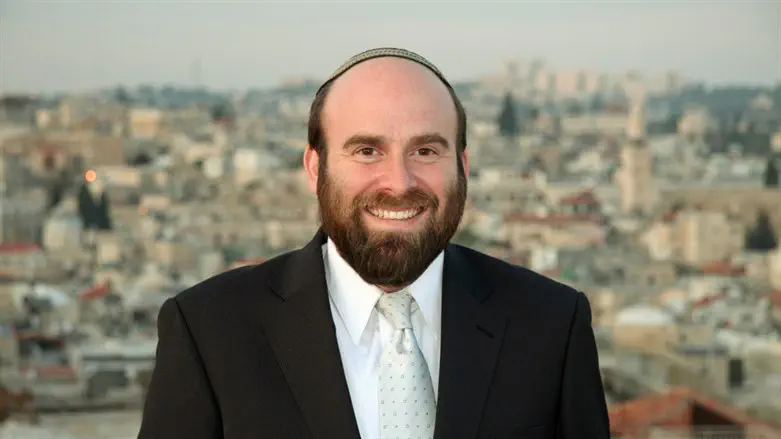
Rav Reuven Taragin is the Dean of Overseas Students at Yeshivat Hakotel and the Educational Director of World Mizrachi and the RZA.
His new book, Essentials of Judaism, can be purchased at rabbikeuventaragin.com.